IT之家 · 智能时代 · 10/16/2026, 18:18:46
Tencent Open-Sources Hy Memory 2.0 to Enhance Agent Working Memory
Tencent has open-sourced Hy Memory 2.0, an agent memory framework introducing dedicated 'working' and 'code' memory modules to maintain context in long-horizon tasks. The system outperforms competitors like Mem0 on multiple benchmarks and reduces token usage by nearly 40% in chat scenarios. The SDK, MemHub, and specialized model weights are now available on GitHub and Hugging Face.
SOURCE COVERAGEFull Original Report
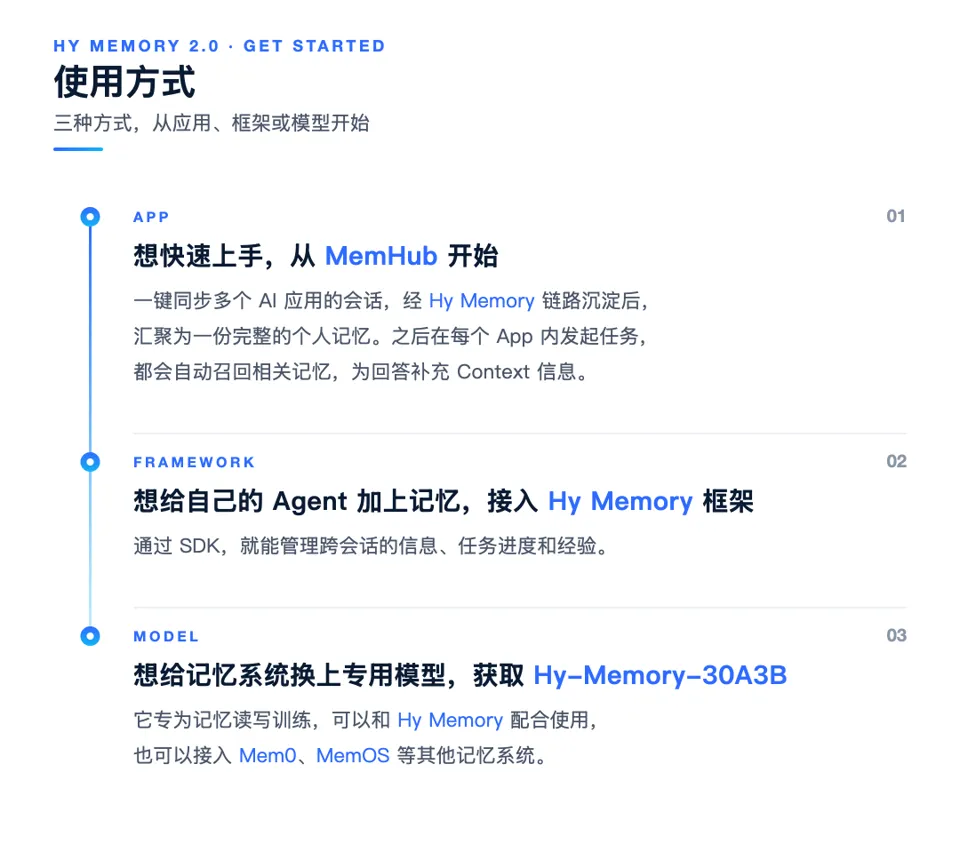
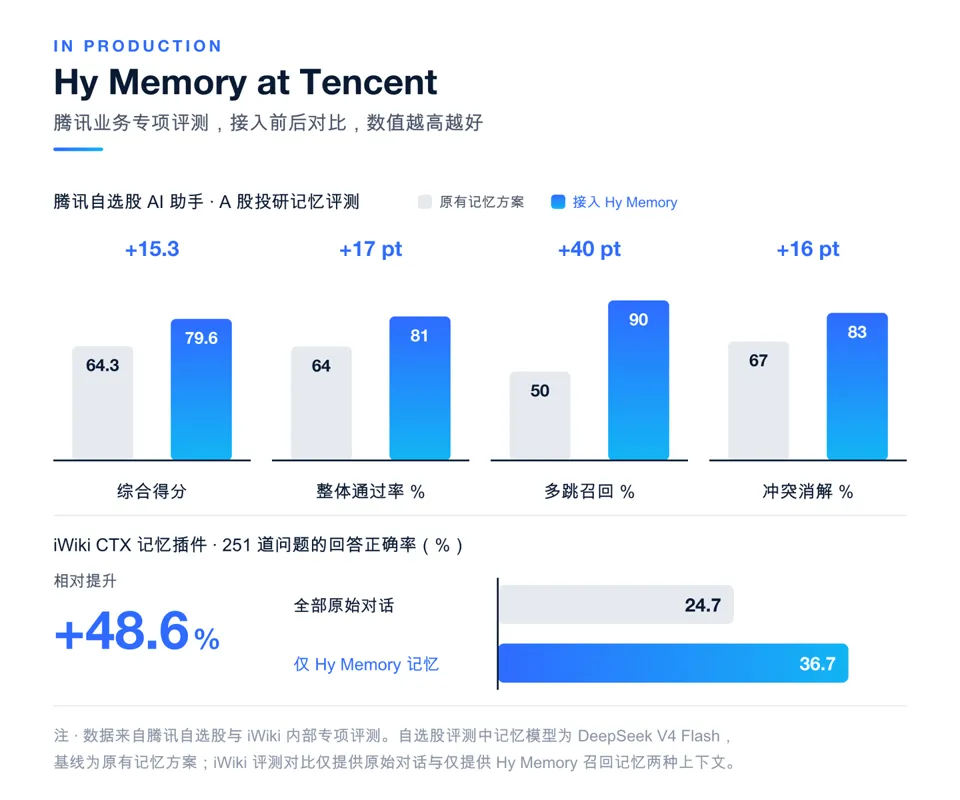
The three-layer capabilities of Hy Memory 2.0 can be used independently or combined into a complete memory solution. Currently, Hy Memory is already in use across multiple business lines within Tencent, including finance, news and information, knowledge management, office agents, social entertainment, and gaming.
According to Tencent, the framework layer of Hy Memory 2.0 handles the storage, updating, and evolution of three types of memory: chat, work, and code. Developers can integrate it into their Agents via an SDK.

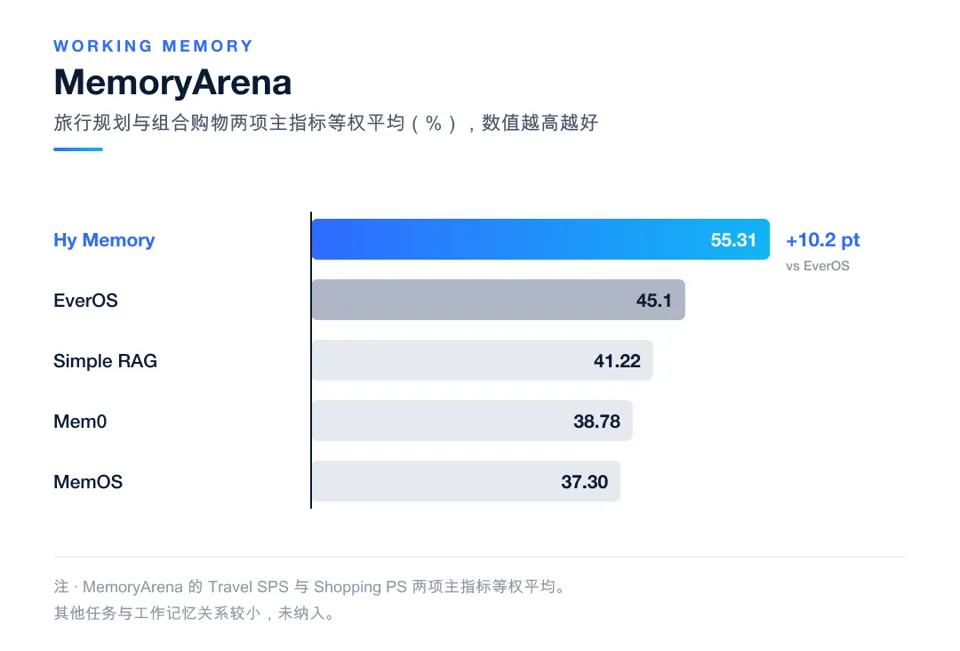
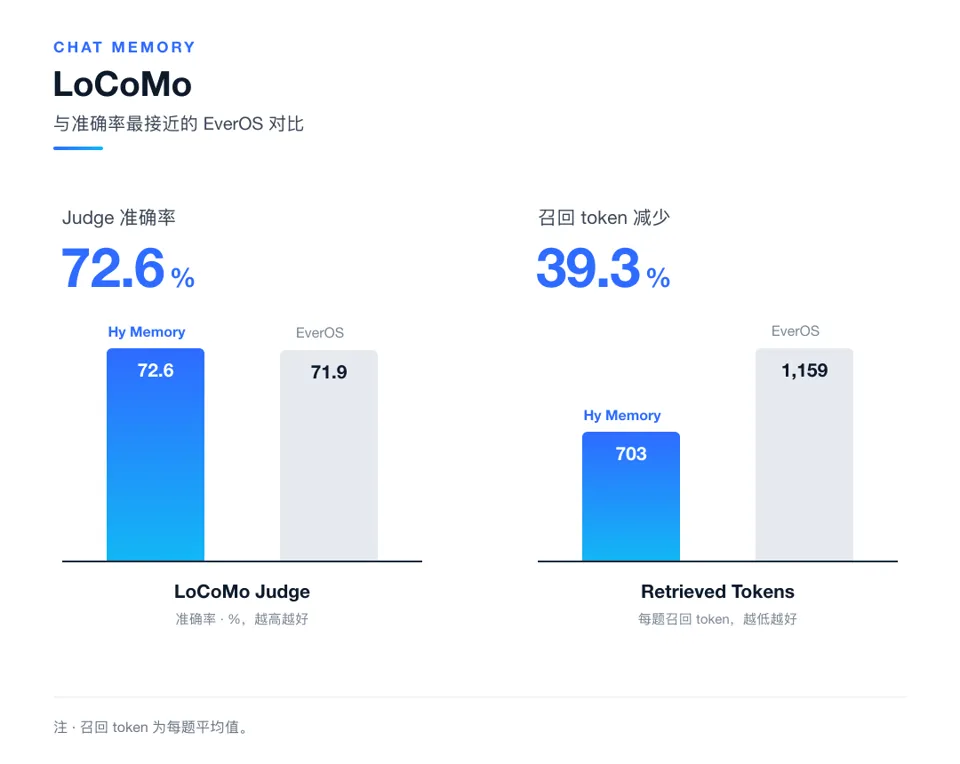
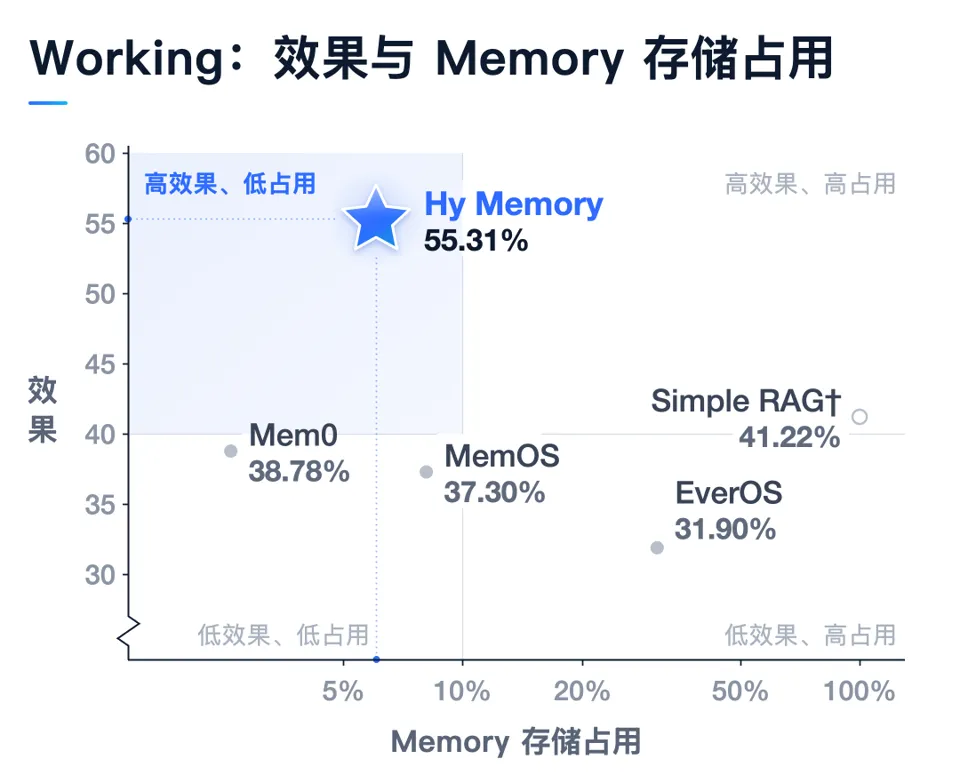
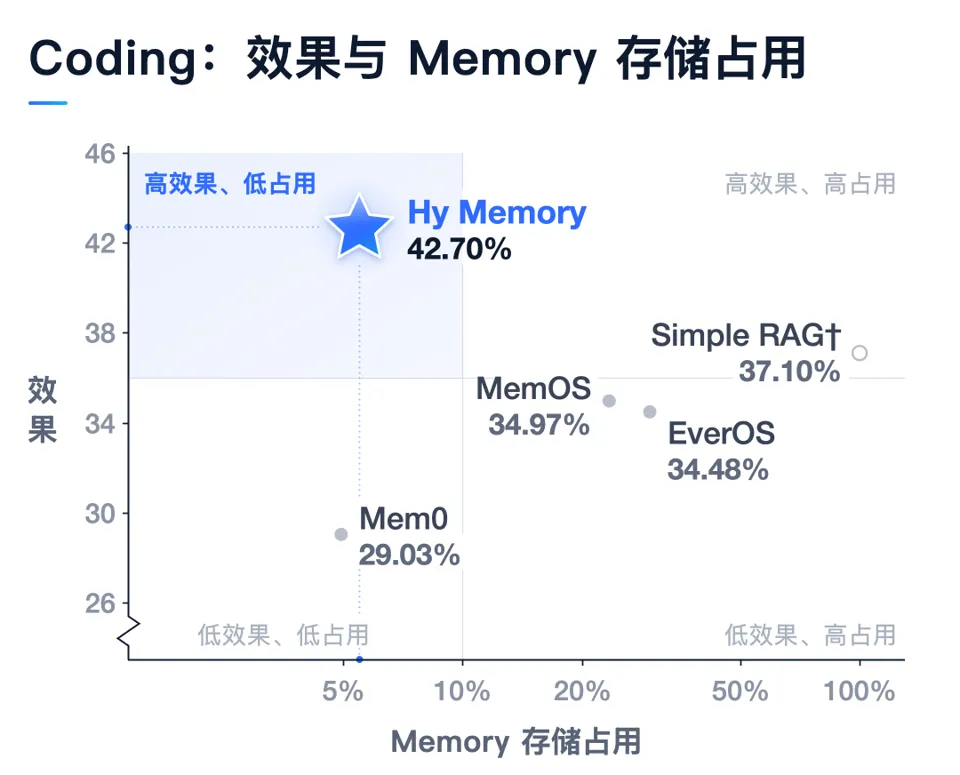
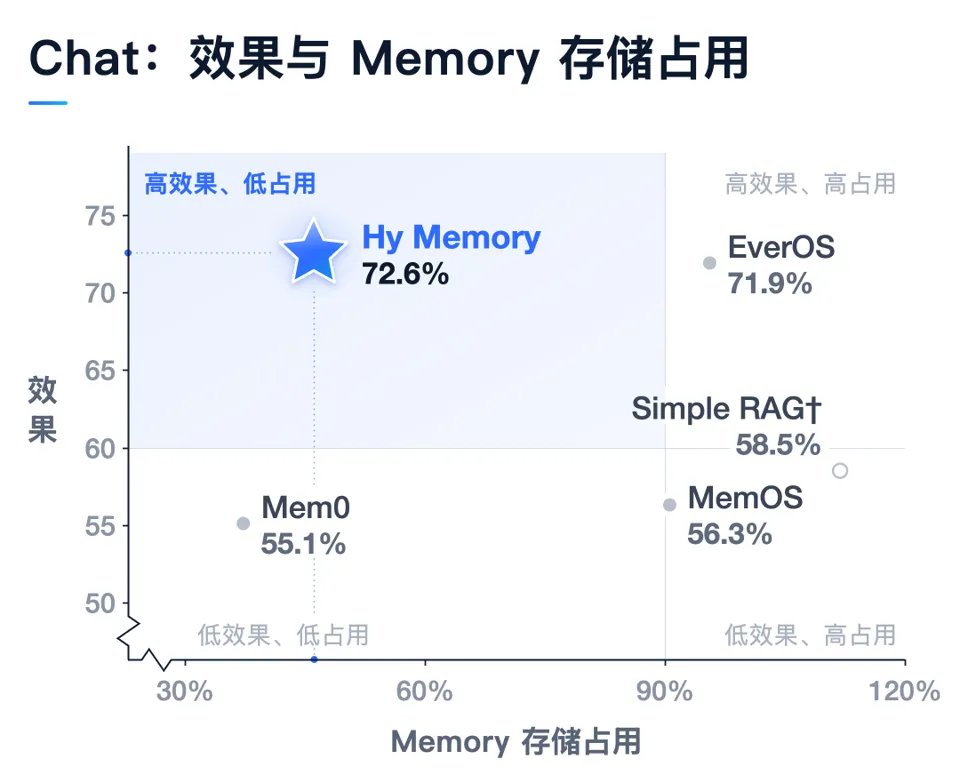
Tencent stated that this framework is the first in the industry to propose a memory architecture encompassing both working memory and code memory. Across four benchmarks covering chat, work, and code scenarios, Hy Memory ranked first against open-source frameworks such as Mem0, MemOS, EverOS, OpenViking, RepoMemory, and Simple RAG. Specifically, for working memory, it achieved an average score of 55.31% on MemoryArena’s travel planning and combinatorial shopping tasks, leading the second-best performer, EverOS, by 10.2 percentage points. For code memory, it attained a code Q&A accuracy of 64.2% and a code task resolution rate of 35.6% on CodeMemoryBench, and a code task resolution rate of 28.3% on SWE-ContextBench, surpassing the 25.3% rates of MemOS and Mem0. For chat memory, it reached an accuracy of 72.6% on LoCoMo, exceeding EverOS’s 71.9%, while reducing token usage per question from 1,159 to 703, a decrease of 39.3%.
Regarding chat memory, Hy Memory 2.0 upgrades from scattered facts to comprehensive event narratives. It organizes dispersed content across time and conversations around events as the primary unit, extracting key elements such as time, location, and participants. When answering questions that require synthesizing multiple clues, Hy Memory first merges duplicate information and resolves temporal conflicts before providing clear memories to the model. Working memory and code memory are new capabilities introduced in version 2.0. They utilize multi-dimensional memory for a single task, organizing all information updates chronologically. This includes task objectives, established approaches, stage results, as well as reusable experiences and applicable conditions. When reusing experiences, Hy Memory first determines whether the current context meets the applicability conditions of the experience, only precisely applying the corresponding experience as assistance when conditions are met. For long-horizon tasks, before resuming any task, Hy Memory first identifies the current focus, then retrieves relevant decisions, still-applicable experiences, and historical work processes.

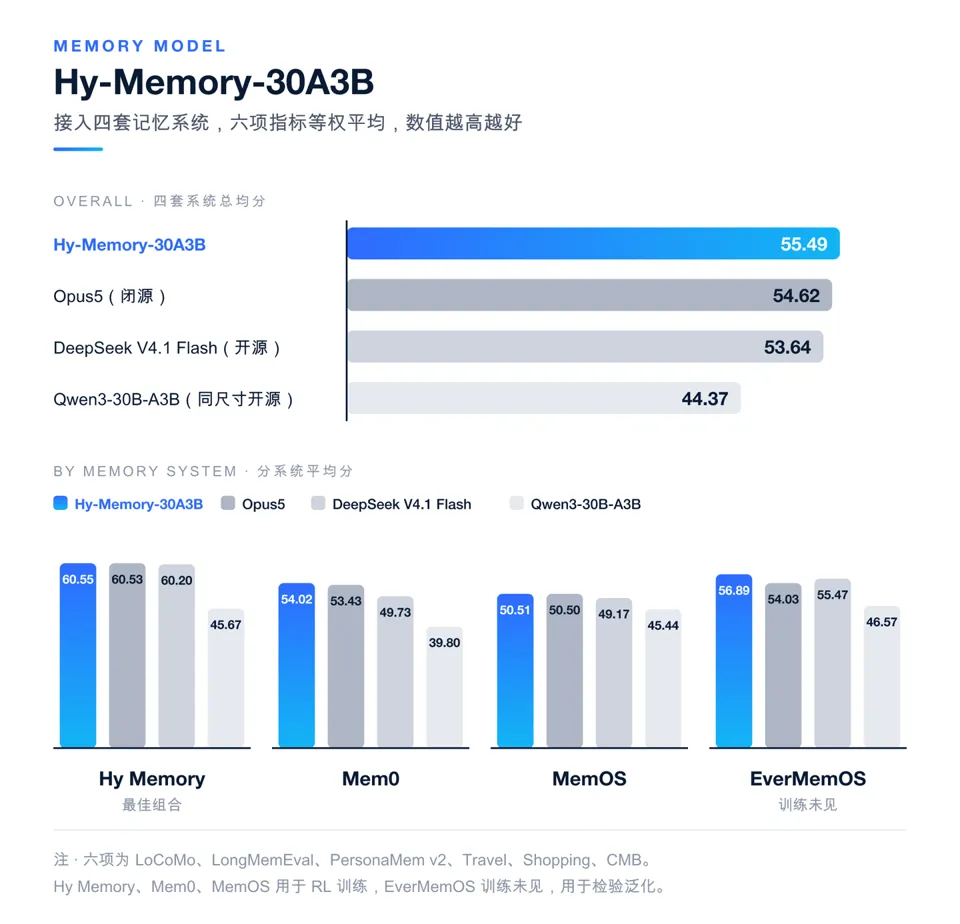
At the model level, Hy-Memory-30A3B is trained specifically for memory scenarios, with approximately 3 billion active parameters. According to the arXiv paper, this model was trained on three frameworks: Mem0, MemOS, and Hy-Memory. It ranked first across four evaluation frameworks using a fixed 20% benchmark subsample, achieving a macro-average score of 55.49%, higher than Claude Opus 5’s 54.62%.
In tests integrating four memory systems—Hy Memory, Mem0, MemOS, and EverMemOS—Hy-Memory-30A3B scored 55.49, outperforming Opus5 (54.62), DeepSeek V4.1 Flash (53.64), and Qwen3-30B-A3B (44.37).
At the application level, MemHub is a local memory management application offering two usage modes: CLI and a Mac app. After users authorize associated applications, MemHub can import historical sessions from various tools and consolidate them into local memory via the built-in Hy Memory SDK. Subsequently, new sessions generated by these tools can be synchronized in real-time into the same unified memory store.
MemHub supports one-click integration with AI tools via plugins. When users initiate tasks within any connected tool, MemHub can manage and utilize relevant memories as contextual supplements. Currently, it covers 10 AI tools, including WorkBuddy, Cursor, Codex, Pi, Qwen Code, Hermes, DeepSeek Harness, and OpenCode, spanning both commercial programming tools and open-source Agents.
Currently, the Hy Memory SDK and MemHub have been open-sourced on GitHub, and the Hy-Memory-30B-A3B model weights have been released on Hugging Face.
Tencent Hunyuan stated that they will continue to collaborate deeply with more business units, refining memory capabilities in real-world scenarios to enable Agents to maintain continuity across longer tasks and a wider array of tools.
References:
- Hy Memory SDK & MemHub: https://github.com/Tencent-Hunyuan/Hy-Memory
- Hy-Memory-30B-A3B Model Weights Download: https://huggingface.co/tencent/Hy-Memory-30B-A3B