新智元 (微信公众号) · 10/21/2026, 20:13:00
Joint Survey by UIUC and Google: Proactivity is Key to Superintelligent Agents
A joint survey by UIUC, Google, and other institutions highlights that while current LLM agents can execute instructions, they lack 'proactivity.' The paper argues that the ability to autonomously identify tasks, clarify ambiguities, and adjust plans without new prompts is essential for long-horizon task automation and the path toward superintelligent agents.
SOURCE COVERAGEFull Original Report
In 1995, Michael Wooldridge and Nicholas Jennings identified autonomy, social ability, reactivity, and proactiveness as the four fundamental characteristics of intelligent agents in their work Intelligent Agents: Theory and Practice.
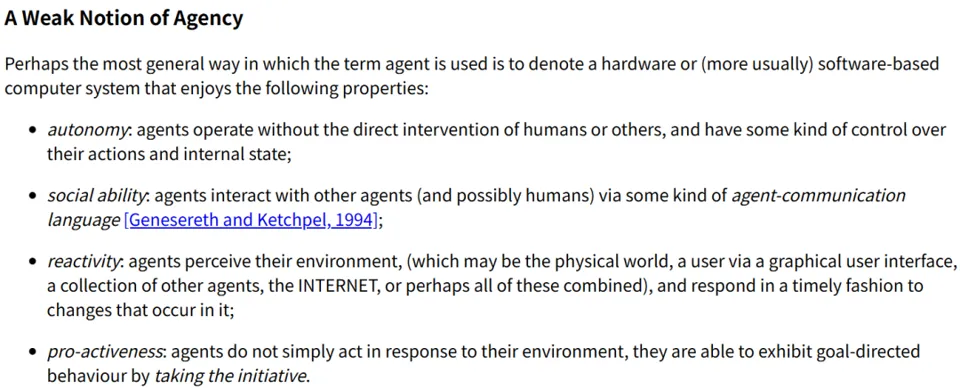
Proactiveness implies that an agent can independently initiate work centered around specific goals.
This requirement has been part of the foundational discourse on agent research for three decades.
Today, LLM-based agents are capable of understanding instructions, invoking tools, and independently completing tasks involving multiple steps. However, many systems still rely on humans to identify problems, define tasks, and then hand them off to AI for processing. Beyond this, people expect intelligent assistants to possess another capability: discovering worthwhile work and proactively initiating it before receiving new instructions.
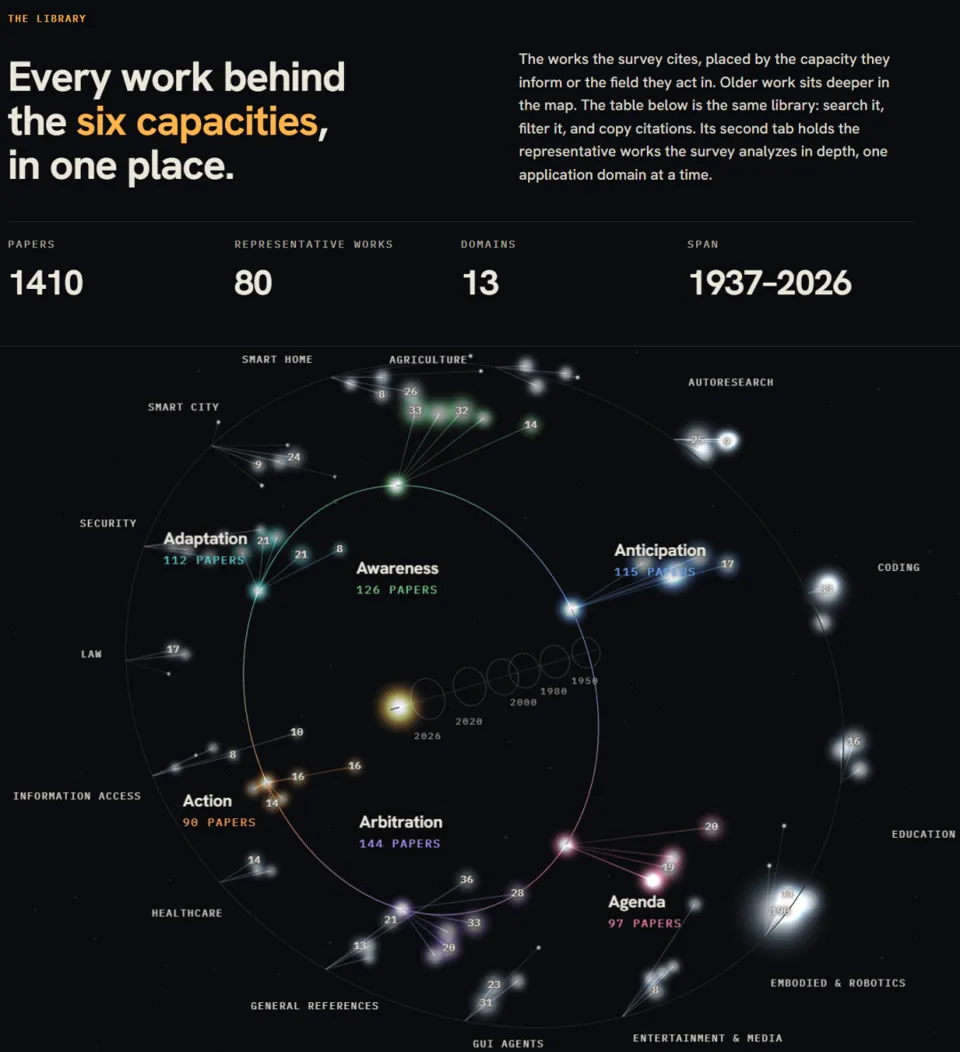
Figure 1 | Research landscape supporting proactive behavior. Continuous perception, prediction, goal maintenance, and intervention selection all have research foundations predating large models.
This capability directly impacts whether long-horizon tasks can be sustained. When a task spans days or weeks, initial instructions rarely account for every subsequent change. Information may be missing, original plans may face obstacles, and completed arrangements may require re-evaluation. To reduce the burden on humans who must repeatedly check progress and supplement instructions, agents need to proactively clarify ambiguities, seek alternatives, and adjust plans.
Consider a researcher delegating conference travel and subsequent changes to an assistant, with flights and hotels already booked. One week before departure, the conference is extended by one day, causing the return flight to depart before the meeting ends, while the hotel’s free cancellation deadline expires that same night. Continuing this trip requires the assistant to detect conflicts between these arrangements, verify adjustment conditions, prepare solutions, and promptly raise issues requiring the researcher’s decision. It is difficult to pre-specify how such a chain of events should be handled in the initial booking instructions.
For future superintelligent agents, proactiveness should be valued alongside intelligence and alignment. Intelligence relates to capabilities in understanding, reasoning, and execution; alignment concerns whether behaviors conform to human intent and values. Proactiveness further requires agents to judge what is worth doing and assume responsibility for discovering and initiating work. A long-term collaborative assistant needs competencies in all these areas.
Frontier labs have begun exploring such assistants. Meta positions Muse as a personal agent capable of proactively assisting with human goals and driving work forward. OpenAI’s dots supports continuous task tracking across conversations and can proactively investigate information from authorized sources to discover new developments related to existing work.
Academia is also researching specific implementation methods. The Proactive Agent study by Tsinghua University and other institutions explores predicting tasks based on context to provide assistance without explicit instructions. The ProAgent project by CUHK and others uses wearable devices to gather environmental data, infer needs during daily activities, and invoke tools to provide support.
How to discover needs, select worthwhile work, and sustain its progress is a common challenge faced by these explorations. Researchers from UIUC, Google, Stanford, UC Berkeley, and CMU proposed the "6A" analytical framework in Proactive AI for Superintelligent Agents, focusing on the capability of proactively initiating work. This framework outlines relevant mechanisms, evaluation methods, and 13 application domains. Readers can use this framework to understand existing systems and consider what additional capabilities a proactive agent might require.
Google Research: https://research.google/pubs/proactive-ai-for-superintelligent-agents/
What judgments must agents make autonomously?
When querying flights and completing bookings as requested, the necessary tasks have already been specified by the human. However, after a meeting is extended, the assistant must independently detect that return travel and accommodation are affected, determine which arrangements warrant re-evaluation, and propose subsequent actions.
The original participation goals and budget constraints remain applicable, but specific items requiring attention depend on the changed circumstances. This capability to autonomously identify issues and initiate work is a key focus when discussing proactivity in surveys of the field.
Surveys categorize these judgments into two questions: what is worth addressing, and whether, when, and how to intervene. Since return-travel conflicts impact participation goals, checking return arrangements has a clear justification.
After detecting a conflict, the assistant must also weigh the benefits of adjustments against their costs, consider cancellation deadlines, and decide whether it is appropriate at this stage to prepare options, request confirmation, or execute operations that have already been approved.
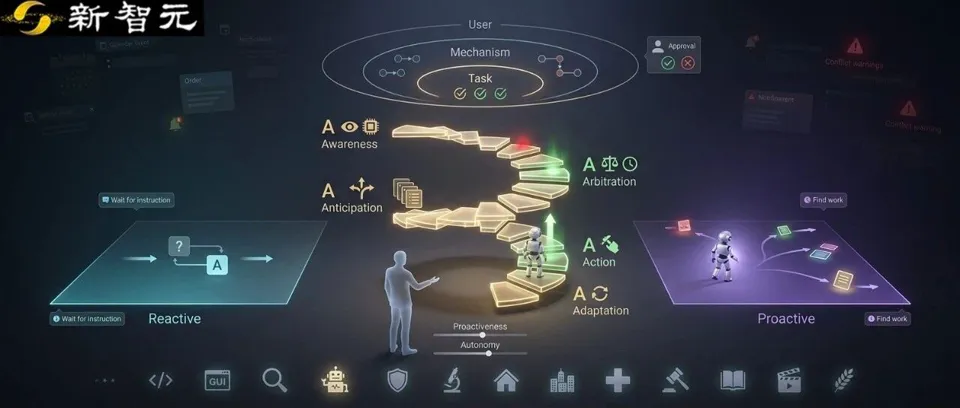
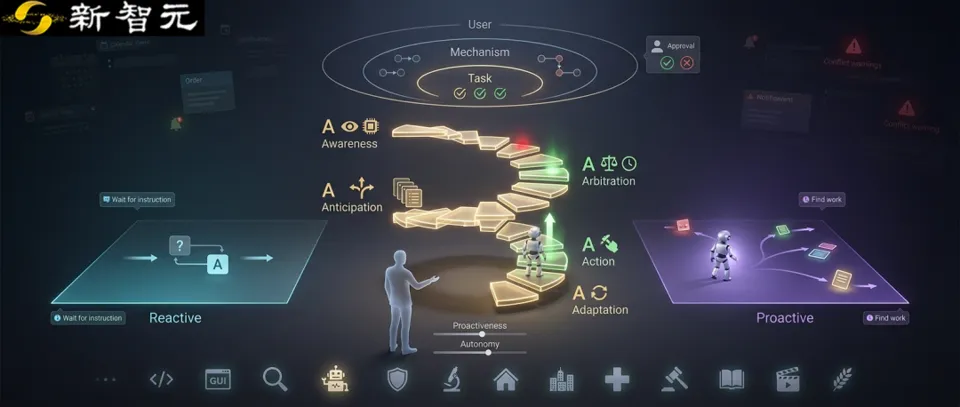
Figure 2 | Reactive vs. Proactive Behavior. A proactive agent independently determines what is worth addressing and decides whether, when, and how to intervene; explicit requests and predefined rules can still function within the same system.
A single instruction may specify conference dates, budget limits, and permitted accounts. Trade-offs between layover risks and ticket prices, adjustments when accommodations cannot be extended, and decisions on which existing arrangements to retain are often left for judgment during execution. The paper uses the term "residual decision space" to describe these choices that were not pre-specified. Proactivity can be used both to complete current tasks and to discover new specific work under ongoing responsibilities; human goals and constraints provide the basis for these choices.
Figure 3 | Within a task, some requirements are explicitly defined, while others are left for judgment during execution. The agent can handle these residual decisions within its delegated scope, with goals and constraints continuing to apply.
The ability to initiate work and execution permissions can be arranged separately. An assistant might proactively detect itinerary conflicts and prepare rebooking options, leaving payment for researcher confirmation; conversely, if a researcher explicitly requests a rebooking, the assistant can independently execute the authorized operation. Proactivity concerns how work is discovered and proposed, whereas autonomy level concerns how far the system can act independently. Intelligence supports the agent’s ability to understand and solve problems, while alignment relates to whether behavior conforms to human intent and values.
Figure 4 | Proactivity, intelligence level, and alignment jointly influence agent performance. Autonomy describes the scope of independent execution permitted, and authorization needs to reference reliability and task risk.
The same assistant can employ multiple working modes. Answering flight information upon receiving a query, sending boarding reminders at scheduled times, and proactively checking itineraries based on new meeting arrangements can all occur within a single system. As the system’s responsibilities evolve, humans can shift from item-by-item operation, to co-editing plans, to reviewing critical decisions. Reactive behavior, proactive judgment, and human involvement patterns need to be understood in conjunction with specific tasks.
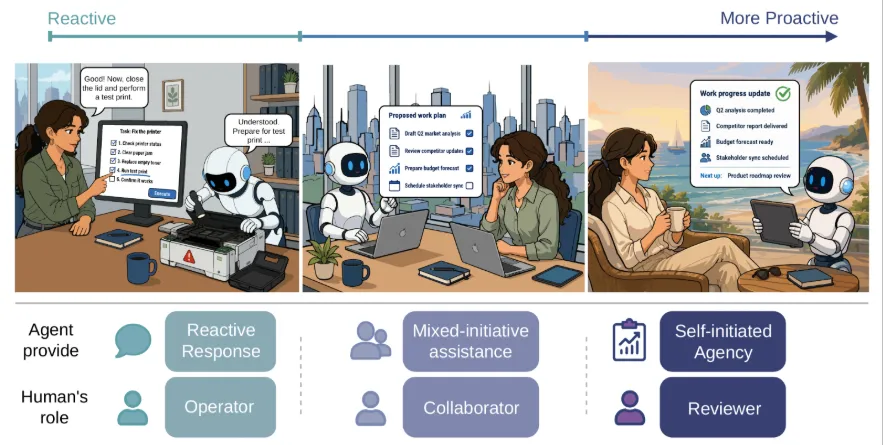
Figure 5 | Collaboration modes can vary continuously. Tasks, evidence, time scales, and permissions jointly influence the agent’s proactivity and the nature of human involvement.
From a Rescheduling Notice
To Proactive Assistance
In the itinerary example, autonomous work discovery relies on several cooperating capabilities. Notifications and orders provide the current situation, anticipation helps identify downstream impacts, agenda selection determines which items to follow up on, arbitration decides when to proceed, and action and feedback keep the work moving. Surveys categorize these capabilities into the 6A framework: Awareness, Anticipation, Agenda, Arbitration, Action, and Adaptation.
Large Language Models (LLMs) and multimodal models can process text, images, and other contextual information. Agent harnesses—providing memory, tools, skills, and execution management—extend the agent’s working capabilities, enabling it to interface with external applications, save progress, and continue tasks across sessions. The 6A framework helps explain how these capabilities are used to discover and advance work, and how different stages interact with one another.
Figure 6 | The 6A Framework. The household scenario illustrated shows how various capabilities interact; execution results and human feedback can revise prior understanding and arrangements.
Awareness
Cross-checking New Notifications Against Existing Arrangements
The new meeting end time, the originally scheduled return flight, and the hotel cancellation deadline are scattered across notifications, flight tickets, and hotel bookings. The assistant correlates this information with the current conference objectives to update its understanding of the itinerary. At this stage, the meeting extension is confirmed, while flights and hotels remain booked for the original dates, providing a clear starting point for subsequent decisions.
Cross-session work also relies on saving and updating information. Memory retains conference goals, budgets, and completed arrangements, while new notifications modify specific dates within them. When rebooking terms are missing, the assistant can proactively query for them; upon resuming work, it can reuse records that remain valid. Awareness encompasses this state tracking, information acquisition, and memory management, including how the system retrieves relevant changes even without new user prompts.
Figure 7 | When work spans multiple sessions, state and memory must remain consistent. Continuous observation also involves privacy, computational, and energy costs; the scope and frequency of information acquisition should be proportional to the task.
Anticipation
Judging the consequences of changes
With an updated itinerary, the assistant can infer that the original return flight will conflict with the final day's meeting. Delaying the return creates accommodation needs, potentially impacting the budget and subsequent schedules. As the hotel cancellation deadline approaches, waiting incurs potential costs. Anticipation transforms a single date change into unarticulated work requirements.
These judgments involve both human goals and external conditions. Conference objectives determine which time conflicts need resolution, while budgets and personal schedules influence trade-offs among options. Flight schedules, seat availability, rebooking rules, and hotel policies determine feasibility. In the paper, the user model and world model help the system understand these factors respectively, predicting future needs and environmental changes.
The assistant can also compare the outcomes of keeping the original arrangement, delaying the return, or choosing alternative options, estimating the benefits of proactive intervention. Such comparisons require distinguishing between verified facts and predictive assumptions. Speculations about seat availability or costs can trigger queries, whose results are then used to refine plans.
Figure 8 | Anticipation considers both human needs and environmental changes. Comparing action versus waiting helps judge the benefits of proactive intervention.
Agenda
Selecting and continuously following up on worthwhile tasks
After identifying impacts on return travel, accommodation, and budget, the assistant selects which items enter the to-do list, organizing them into actionable work.
The to-do list may include querying rebooking and extended stay conditions, preparing cost comparisons, and raising issues requiring researcher decisions. Free cancellation deadlines affect processing order, and flight choices also impact accommodation arrangements.
Agenda focuses on goal selection, prioritization, and continuous maintenance. Storing the rationale, progress, and dependencies for each task in the to-do list allows the assistant to follow up after waiting for confirmation or across session interruptions. If extended stay conditions have been clarified but the return flight has not yet been selected, the next session can directly address the incomplete parts. When new important tasks arrive, existing work can be reprioritized while retaining information needed for later resumption.
Figure 9 | Agenda maintains existing commitments and adjusts priorities based on new requests and environmental changes. Predicted needs must undergo selection before becoming targets for continuous follow-up.
Arbitration
Deciding how far to proceed at this moment
With return travel and accommodation already on the to-do list, the assistant must decide what approach to take now. Organizing options, reminding of deadlines, requesting confirmation, and directly modifying orders have different impacts. This step combines evidence, benefits, timing, and risk to determine whether to intervene, as well as the timing and extent of intervention.
In this trip scenario, the meeting date is confirmed and the hotel deadline is known, providing clear justification for timely plan preparation. Specific costs and extended stay conditions still require querying, while payment and cancellation operations are subject to permission constraints. The assistant can first complete information retrieval and plan organization, promptly raise matters requiring researcher decisions, and handle orders only after confirmation.
Judgments here also include uncertainty and reversibility. An adjustment might resolve a time conflict while incurring high costs; after canceling an order, the original price or room availability may not be recoverable. Arbitration incorporates these consequences into intervention choices, helping the system transform "discovered a problem" into a justified current action.
Figure 10 | Intervention judgment considers evidence, value, timing, and risk together to determine the appropriate level of progress at this moment.
Action
Implementing decisions as understandable assistance
Once the intervention mode is selected, the assistant can organize the original order, new dates, alternative flights, cost differences, and deadlines into a proposal for the researcher to compare and modify. At this stage, how information is presented affects the time required for review. The researcher must be able to clearly see which arrangements are being modified, where costs originate, and which actions have not yet taken effect.
After the researcher selects a proposal and confirms the operations, the assistant can complete rebooking or accommodation adjustments within the approved scope, then verify the results.
When operations involve multiple applications, some steps may succeed while others fail, requiring separate records of existing orders and pending items. The paper includes suggestions, inquiries, drafts, previews, and direct execution under the umbrella of Action, and also discusses how editing, undoing, human takeover, and failure recovery support collaboration.
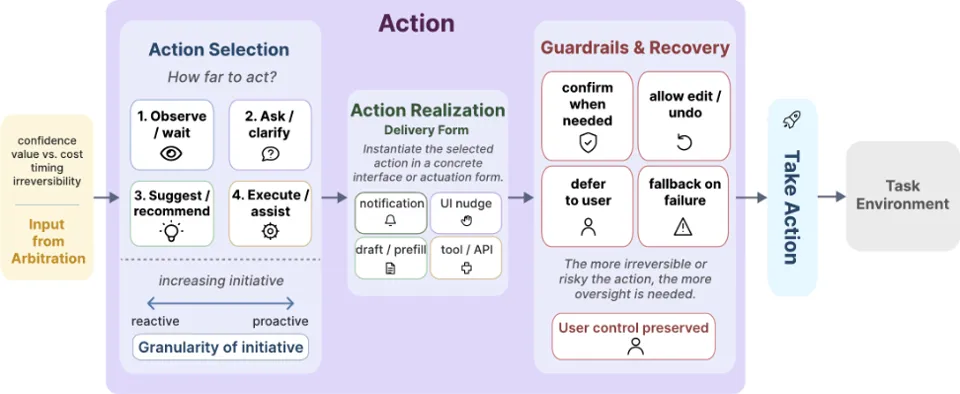
Figure 11 | Intervention modes determine how humans participate. Previews, confirmations, modifications, undos, and failure recovery make specific operations understandable, reviewable, and correctable.
Adaptation
Adjusting subsequent work based on outcomes and feedback
After itinerary adjustments, tool results indicate whether rebooking was successful, while researcher modifications provide feedback on the proposal. When an operation fails, the assistant can re-query or adjust its execution method based on the error. If the researcher modifies return flight options, the assistant can update the current arrangement accordingly. Feedback thus influences subsequent state understanding, goal maintenance, and action.
Cross-task learning also requires interpreting the scope of feedback. If a researcher replaces a suggested late-night flight with an early morning one, the reason might be a conflicting schedule that day or a long-term preference. A single choice can correct the current itinerary, but its implications for future business trips require more evidence. Similarly, ignoring a reminder could relate to busyness, timing, or content relevance.
Adaptation focuses on corrections within the current task as well as personalization and adjustments to proactivity levels in long-term collaboration. What the system needs to learn includes need assessment, reminder timing, and intervention modes. Execution success, suggestion acceptance, and whether proactive assistance aligns with human goals provide feedback with distinct meanings.
Figure 12 | Feedback has latency and noise. The system needs to interpret the meaning of signals before deciding how to correct current work, update preferences, or adjust future collaboration methods.
When new situations arise during execution, the assistant can re-acquire information, adjust goals, or modify plans. Feedback also influences subsequent predictions and intervention judgments; therefore, the six capabilities repeatedly coordinate in continuous work.
13 Application Domains: Where Proactivity Is Being Applied
Itinerary planning falls under personal assistance, but the survey also examines coding, GUI manipulation, information retrieval, embodied robotics, security, automated scientific research, smart homes, smart cities, healthcare, law, education, entertainment & media, and agriculture—totaling 13 domains. Comparing these applications reveals how the demand for proactive discovery changes with tasks, environments, and human responsibilities.
Figure 13 | The paper examines 13 application domains. The home scenario on the right depicts a future direction: humans set goals, agents continuously discover needs and arrange work, and accept human review and feedback.
The coding domain focuses on discovering unassigned issues from code, tests, and usage feedback, proposing evidence-based fixes, and following up on maintenance work.
Some systems can already prepare fixes and test results, but maintaining an entire project requires selecting worthwhile issues, prioritizing them, and preserving unfinished work. Automated scientific research systems propose hypotheses and select experiments based on directions given by researchers, then arrange follow-up studies based on results. Judgments also include whether problems and experiments are worth investing in.
Proactive assistance in home scenarios often relates to daily routines. Existing systems can remind users of forgotten device operations or predict heating needs based on usage patterns. Continuously handling household affairs involves differing preferences among family members and determining whether reminders or operations are appropriate at the moment. Urban systems use predictions to assist decision-making for public services like transportation, though specific actions are typically still decided by relevant personnel and institutions.
The paper separately records the proactivity level and execution permissions of these systems. Some research systems can independently execute longer workflows, though high-level research questions are still defined by humans; home systems can issue reminders autonomously, with the scope of device operations specified separately. Among the surveyed systems, there is still room for growth in long-term maintenance of established responsibilities, and the ability to revise higher-level goals autonomously remains immature.
Cross-domain comparison reveals three trends: foundation models and domain-specific methods share the workload; some agents begin taking responsibility for workflows involving multiple stages; and the reliability of feedback and verification costs impact continuous improvement.
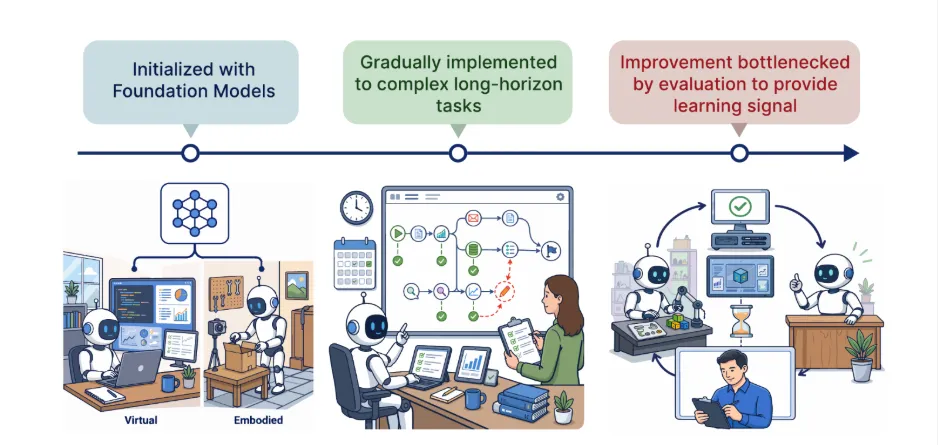
Figure 14 | Three cross-domain trends. Sustained work requires general reasoning, domain capabilities, and verifiable outcomes, with specific forms depending on application conditions.
What Exactly Does One Instance of Proactive Assistance Save?
If an evaluation directly states "Meeting rescheduled, please modify itinerary," the problem to be handled has already been identified by the tester. To assess proactive capability, it is necessary to provide the agent with formal notifications, existing orders, and current responsibilities, allowing it to judge whether there is work worth initiating. Records should be kept of which needs were discovered, what was missed, and what unnecessary changes were proposed.
The survey organizes evaluations across three levels: task, mechanism, and user. In the business trip example, the task level checks whether the return trip is scheduled after the meeting ends, whether accommodation covers the conference duration, whether the budget is exceeded, and whether duplicate orders or cancellation losses occur. The time, computational resources, and human effort required to complete these tasks should also be counted as costs. Only then can we judge the actual benefits brought by proactive handling.
The mechanism level checks whether the assistant identified the formal rescheduling notification, found related orders, correctly predicted schedule conflicts, and arranged items requiring confirmation before the deadline.
The timing of suggestions, the evidence required, and the necessary permissions must also be verified. Continuing to verify when dates are not yet determined, or stopping follow-up when requirements have disappeared, can both be considered reasonable choices in evaluation. Error logs should allow pinpointing issues to specific stages: information gathering, prediction, goal selection, intervention judgment, or execution.
At the user level, records should track how much time researchers spend verifying plans, supplementing information, and correcting errors; whether reminders interrupt their workflow; whether order statuses are easy to understand; and whether modification, rejection, or stop operations are convenient. In long-term usage, it is also necessary to assess whether users can decide when to adopt assistance and when to double-check based on the assistant’s actual reliability. Evidence is needed for both the work reduced by proactive assistance and the new review burden introduced.
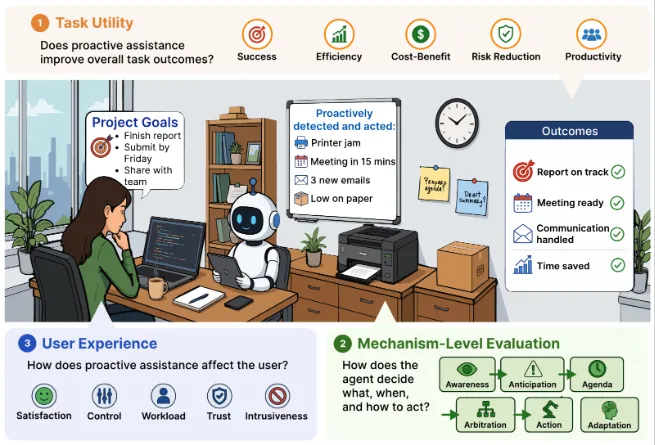
Figure 15 | The three-layer evaluation framework links work outcomes, the mechanisms generating actions, and the human user experience. Human review and correction efforts are also part of the cost of proactive assistance.
Continuing a trip days later, changing destinations for another business trip, or modifying long-term budgets can reveal issues that short-term tests fail to observe. Whether the assistant retains old preferences, can resume interrupted work, and re-verifies information after it becomes outdated requires testing across weeks and months. The paper also proposes detailed mechanism-level checks to help determine exactly where long-term performance issues originate.
How Proactivity Supports Long-Horizon Tasks and Self-Evolution
In long-horizon tasks such as scientific research, the next step often depends on new discoveries. Hidden constraints may invalidate original plans, and a single failure may expose new research questions. Even human experts cannot always provide a complete path in advance.
The paper argues that proactivity is an essential capability for agents handling such tasks: they must independently detect problems with the current path, propose new goals worth exploring, and actively seek clarification when needed, allowing work to continue without explicit next-step instructions.
Proactivity also provides direction for self-evolution. Agents can identify capability bottlenecks from unmet needs, anomalies, and their own mistakes, proactively deciding what to learn and explore next.
What is learned can then be used to improve situational understanding, future predictions, goal selection, and intervention judgments. The paper suggests studying how these two capabilities mutually reinforce each other, enabling self-evolution to improve the entire 6A process.
Autonomously generated goals and capability updates must remain under supervision. Why an agent chose a particular goal and how its behavior changed after learning should be inspectable, correctable, and ideally support rollback. Human authorization and external safety checks are also needed to constrain what agents pursue and how they improve themselves.
To move toward superintelligent agents, intelligence, alignment, and proactivity must develop together.
Agents possessing these capabilities could become partners capable of long-term collaboration: continuously discovering worthwhile work, proposing exploration directions when encountering unknowns, and improving themselves through practice.
Such collaboration promises to reduce the burden on humans of repeatedly monitoring environments, supplementing instructions, and adjusting plans, freeing up more energy for humans to decide which problems are worth researching, which goals are worth pursuing, and to explore questions without ready-made answers alongside the agents.
References:
https://empathyang.github.io/Proactive-AI-for-Superintelligent-Agents/
Chasing ASI Instantly
⭐ Like, Share, and "Watching" – One-Click Triple Combo ⭐
Star us to lock in instant push notifications from New Intelligence Era!