Rohan Paul (@rohanpaul_ai) · 10/21/2026, 02:12:23
Claude Autonomously Designs Protein Binders Targeting Scorpion Neurotoxins
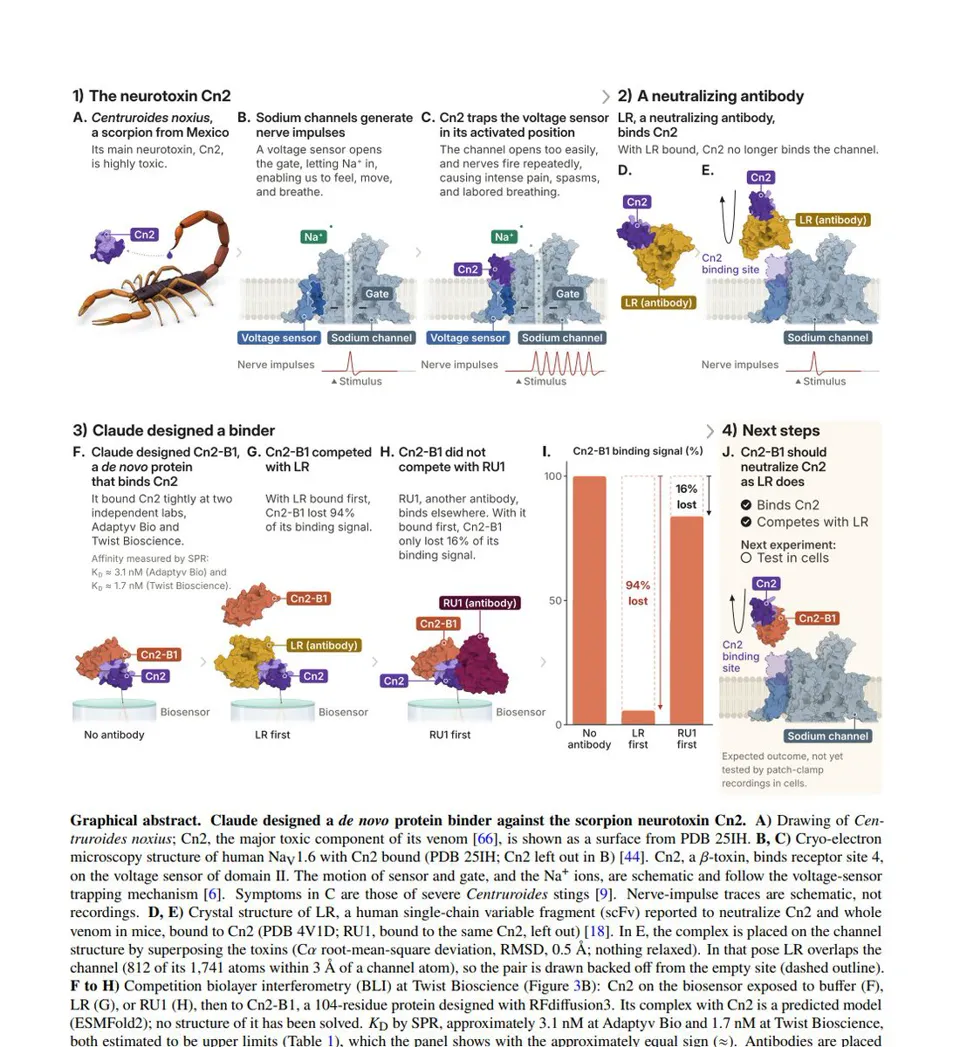
Anthropic's Claude Science agent autonomously executed the entire protein design workflow for scorpion neurotoxin binders without human expert intervention. From generating over 318,000 molecules, the agent selected 180 for synthesis, resulting in 17 confirmed binders. While not yet an antivenom, this demonstrates a significant milestone in end-to-end autonomous scientific research by AI agents.
SOURCE COVERAGEFull Original Report
Rohan Paul (@rohanpaul_ai) · 2026-10-20 18
Claude did the protein scientist’s job and came back with 17 molecules that grip scorpion neurotoxins.
Claude, running as an agent inside Anthropic’s Claude Science setup, ran the whole protein-design campaign itself:
it picked which patch of each scorpion toxin to attack, drove 12 protein-design programs, set its own scoring cutoffs, and chose 180 molecules out of the 318,484 it generated for physical synthesis, and 17 of the 211 designs tested bound their toxin at Adaptyv Bio and Twist Bioscience.
Citrini Research, a finance firm with no lab and no protein expertise, asked for this work, and Claude designed proteins that two labs confirmed latch onto scorpion venom toxins.
Scorpion stings kill more than 3,250 people a year, so the prize is real, if this method works. However, Anthropic is not calling this an antivenom, because the test that would justify the word has not been run yet.
↳ 引用 @AnthropicAI (Anthropic): New on our Science Blog: designing protein binders against scorpion neurotoxins.
Scorpions sting about 1.2m people every year, and antivenoms are often costly or in short supply. Claude has made an early step toward finding new treatments.
https://www.anthropic.com/research/claude-scorpion-toxin-binder-design