Rohan Paul (@rohanpaul_ai) · 10/15/2026, 05:55:26
Open-Science: An Apache-2.0 Desktop App for Traceable AI-Assisted Research Workflows
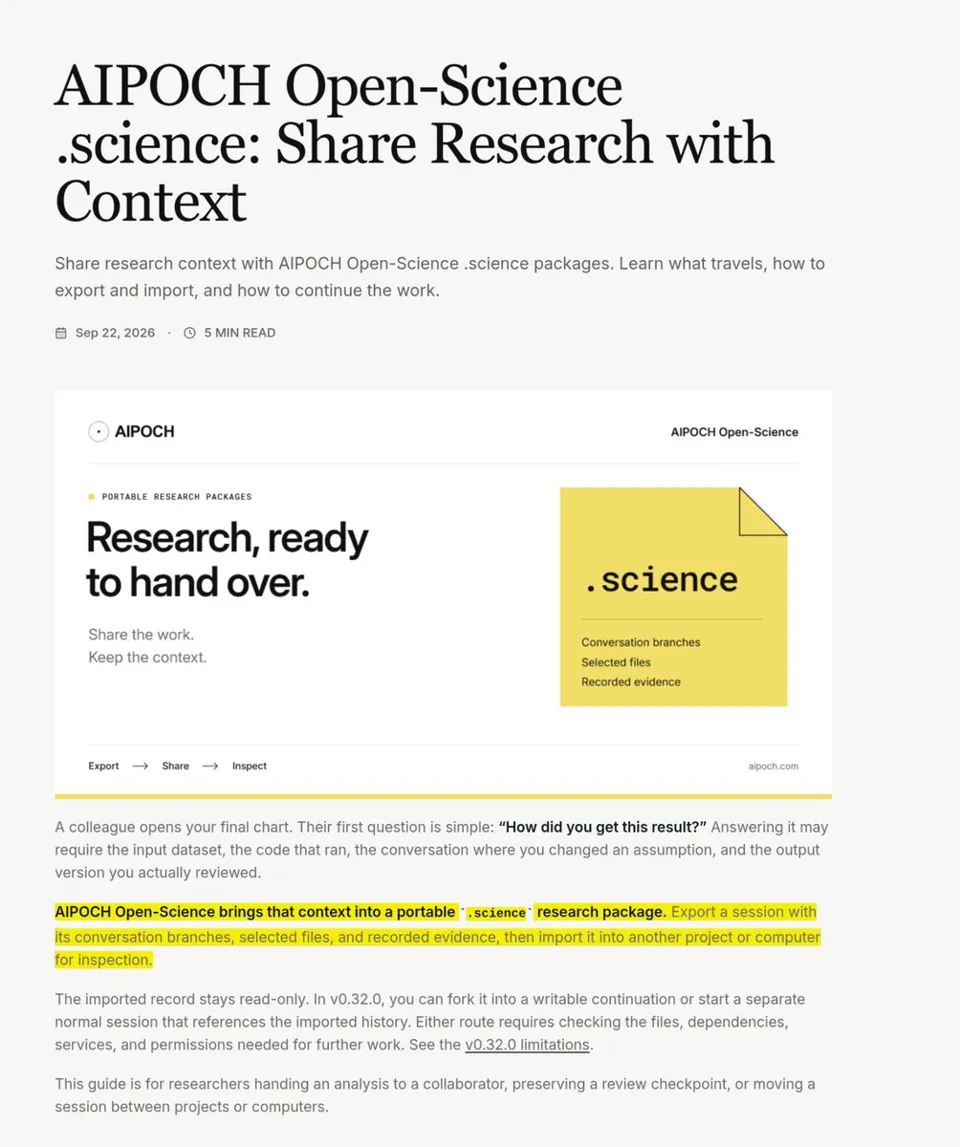
The open-source project Open-Science has released an Apache-2.0 licensed desktop application designed to bridge the gap between AI-assisted research results and their underlying data and code. The app features an AI agent that automatically reads papers, extracts data from scientific databases, writes and executes Python or R code, and exports the entire session—including conversations, files, and evidence—into a single .science file for full traceability.
SOURCE COVERAGEFull Original Report
Rohan Paul (@rohanpaul_ai) · 2026-10-14 21
An Apache-2.0 app with 4.8K GitHub stars is trying to make AI-assisted science as traceable as checksummed, versioned code.
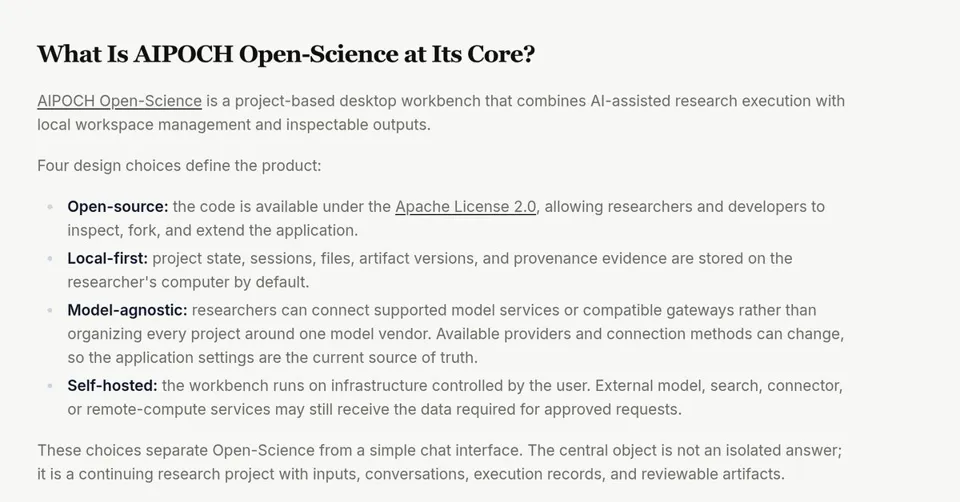
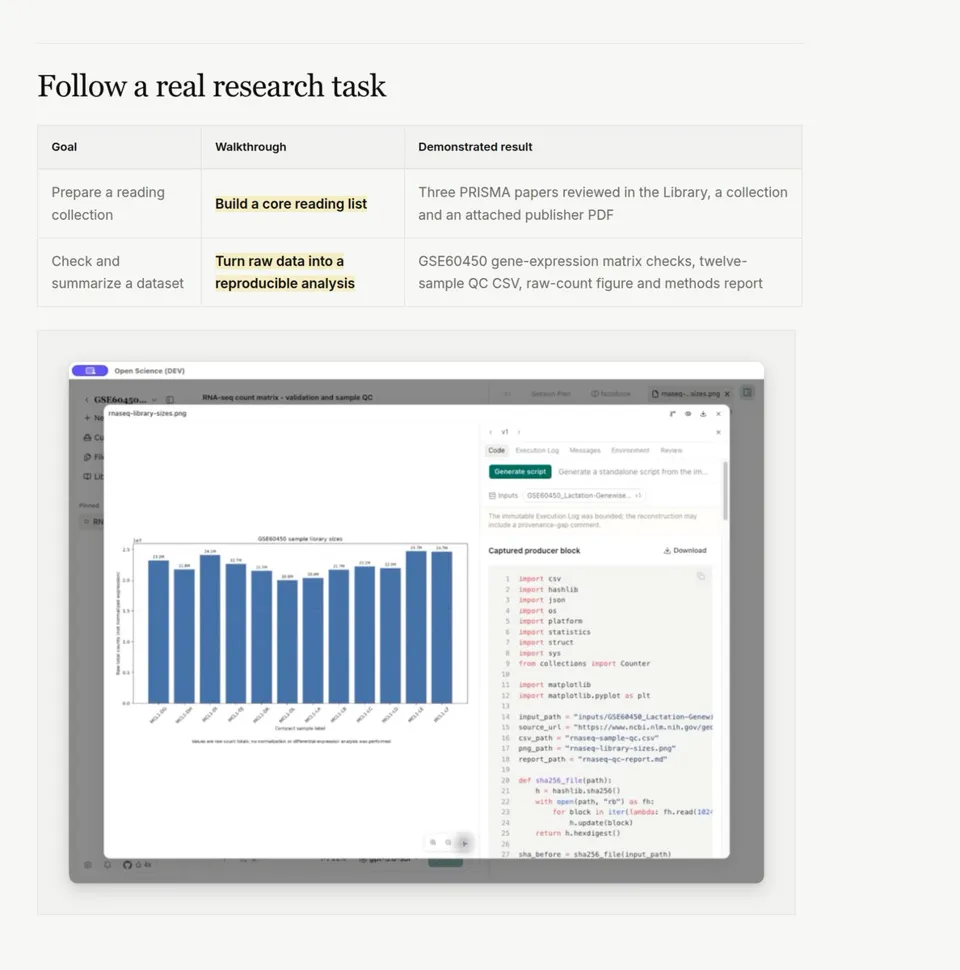
@aipoch_ai’s Open-Science is a free, open-source desktop app where an AI agent reads papers, pulls data from science databases, writes and runs Python or R code, and saves the charts and reports, all in a single workspace on your computer.
Research is usually split across PDFs, spreadsheets, code editors and terminals, so results lose their link to the data and code behind them.
Open-Science keeps that link: every result records its input data, code, software setup and run history, and the whole session exports as a single .science file that holds the conversation, the chosen files and the evidence, minus your API keys.
A public example shows it in action: in “AI Math Citations: Do They Check Out”, the session took 5 references from each of 20 AI-written math papers and checked whether each points to a real publication.
A direct check against publication records matched 80 of the 100 and found none to be fake, and after notes the researcher added, the final count was 88 matches, 7 small slips like an online date versus a print year, and 5 unresolved.
Because the .science record keeps those 2 evidence sources apart, anyone opening it can see which verdicts rest on human notes, including all 6 positive verdicts in a smaller test of whether cited papers really back 10 specific claims.
It is model-agnostic, so it works with whichever AI model you choose (cloud providers, custom gateways, or a Claude or Codex subscription), and local-first, so projects stay on your machine by default.
The agent runs code only after you approve it, and it ships with science skills like AlphaFold2 (predicts a protein’s 3D shape) that you can extend with your own.
It is Apache 2.0 licensed and runs on macOS, Windows and Linux. 🧵1/n