IT之家 · 智能时代 · 10/18/2026, 10:06:43
China Unveils First 100k-Card AI Supercluster with Native HPC-AI Fusion
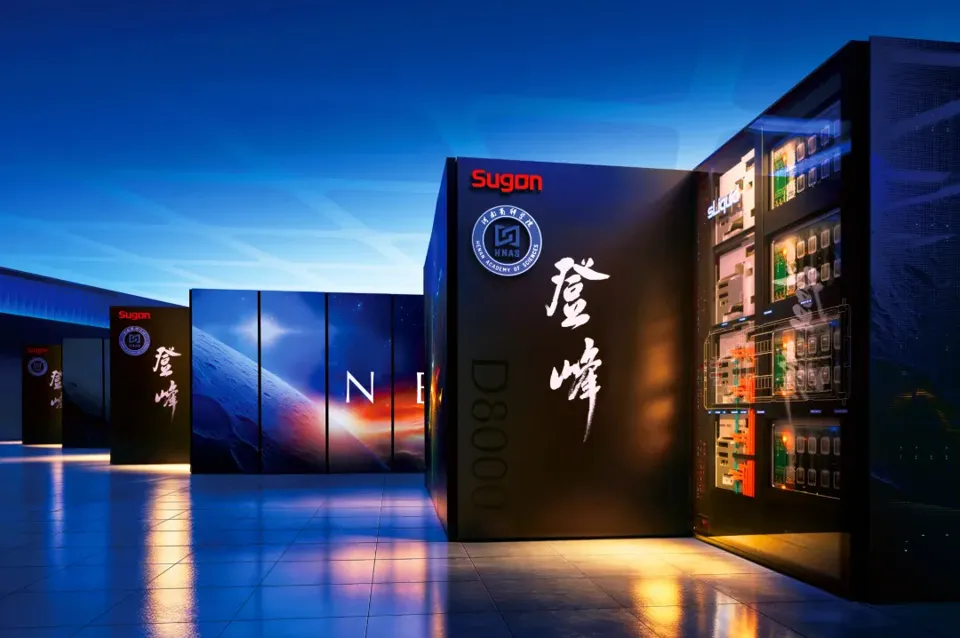
China's first fully domestic 100,000-card AI supercluster, Sugon 8000, has officially debuted in Shenzhen, marking a milestone in large-scale compute infrastructure. Its key innovation is the native fusion of High-Performance Computing (HPC) and AI computing on a single base, enabling simultaneous support for high-precision scientific simulations and large model training to mitigate AI hallucinations caused by lack of causal logic.
SOURCE COVERAGEFull Original Report
On October 18, CCTV News reported that at the ongoing 2026 National High-Performance Computing Academic Conference in Shenzhen, China’s first fully domestic 100,000-card AI supercluster—completed this year—was unveiled in physical form. Ten major application achievements are set to be announced. Its computing power is sufficient to create a digital twin brain within a computer, and even simulate the evolution of a universe spanning tens of billions of light-years.
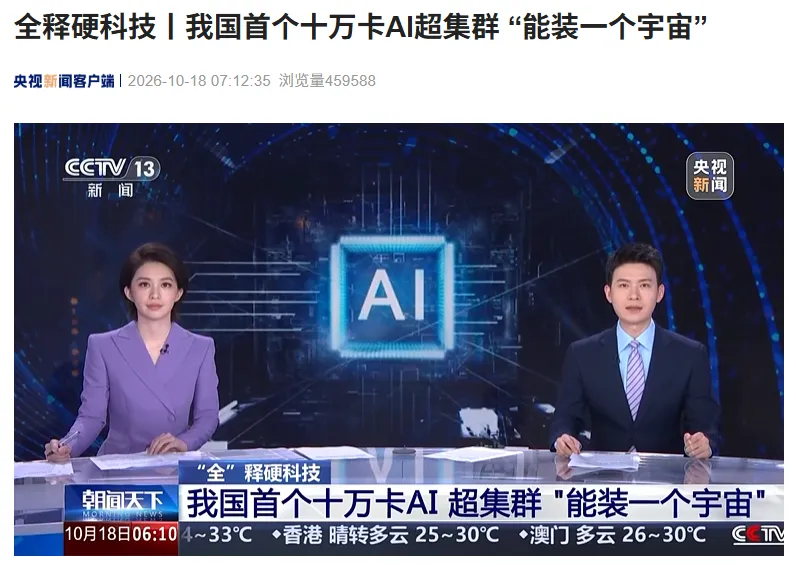
According to reports, “100,000 cards” refers to the high-speed interconnection of 100,000 AI accelerator cards. The most critical breakthrough of this computing infrastructure lies in its ability to maximize two fundamental modes of human thought—high-performance computing (HPC) and intelligent computing (AI)—on a single unified computing foundation.
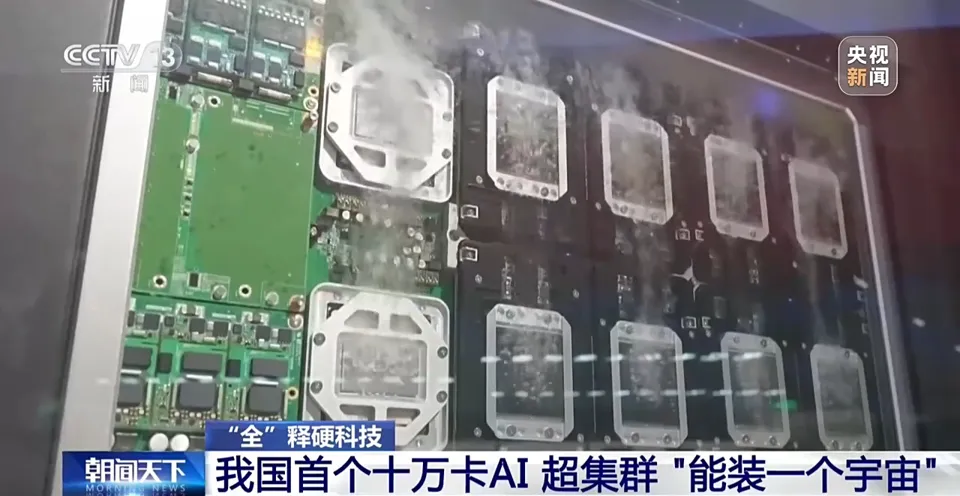
However, scale is not its most impressive feature. Sugon 8000 explicitly follows a path of “native fusion between HPC and AI,” serving as a computing system capable of running both the highest-precision scientific simulations and large model training and inference on the same underlying architecture.
- HPC: Essentially involves mastering fundamental physical laws and projecting future states step by step. By encoding physical equations into computers and starting from initial conditions, it advances the simulation forward incrementally—the more complex the simulated object, the more exponentially the demand for computing power surges.
- Intelligent Computing: Essentially involves summarizing patterns by inducing empirical data. For example, ancient people did not understand atmospheric fluid dynamics equations but could predict weather using simple heuristics like “red sky at morning, sailors take warning; red sky at evening, sailors’ delight.” Scaling this mode of thinking to its extreme is best represented by Large Language Models (LLMs). However, rules derived solely from data correlations mean that AI does not truly grasp the underlying causality, making it prone to AI hallucinations.
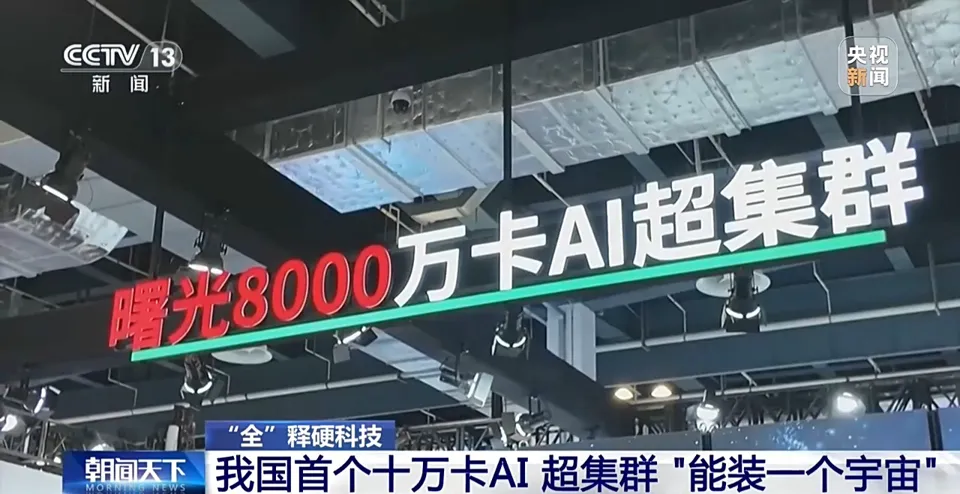
As previously reported by IT Home, China further solidified its computing infrastructure in August this year with the official announcement that the first fully domestic 100,000-card AI supercluster had been put into operation. This marks a new phase in China’s computing infrastructure development, reaching the 100,000-card deployment level. According to reports, this new computing cluster possesses peak computing capabilities equivalent to all of humanity continuously calculating for 200 years per second. It currently supports over 300 types of computing tasks across 26 fields, including new materials, innovative drugs, and artificial intelligence.