China's 100,000-GPU Suprcluster Wins Gordon Bell Prize in Six Months
A USTC-led team won the ACM Gordon Bell Prize at SC26 for quantum chemistry calculations of iron-molybdenum cofactor, marking China's return to the award after five years. Both this work and a kilometer-scale weather simulation finalist from Zhongke Tianji ran on Sugon 8000, a fully domestic 100,000-card AI supercluster that produced world-class results within six months of deployment.
Related Entities
Full Report
Yunzhong, from the Non-Linear Lab | QuantumBit | WeChat Official Account QbitAI
After a five-year gap, the ACM Gordon Bell Prize has once again returned to a Chinese team!
But this time, the backdrop of the story is entirely different.
Recently, at the 2026 International Supercomputing Conference, a project on quantum chemical calculations of iron-molybdenum cofactors, completed by the University of Science and Technology of China in collaboration with the Institute of Physics of the Chinese Academy of Sciences and the National High Performance Computer Engineering Technology Research Center, successfully won this "Nobel Prize" of the high-performance computing field.
At the same time, the Zhongke Tianji SD3 global kilometer-scale numerical weather simulation system was shortlisted as a finalist for the Gordon Bell Climate Modeling Prize. This also marked the first time a Chinese enterprise team appeared on the finalist list for this award.
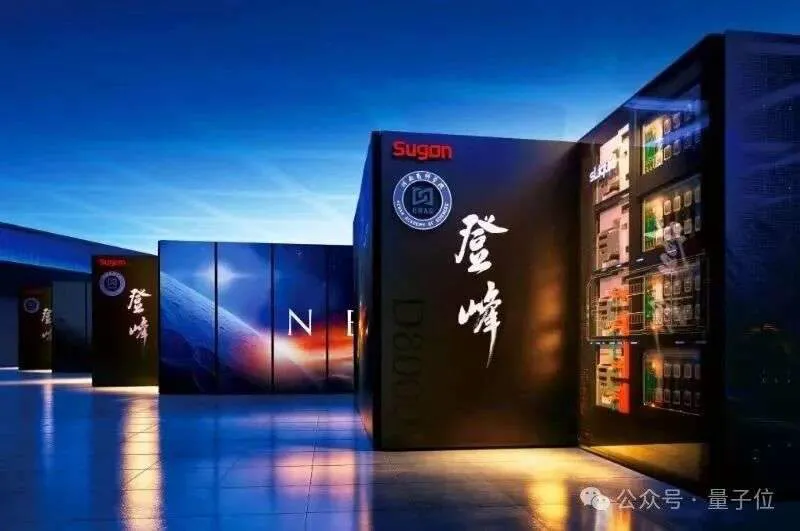
The two applications—one delving into the quantum level within matter, the other surveying the ever-changing atmosphere of the Earth from above—differ vastly in computational models, data organization, and precision requirements, yet they share the same computing foundation: the fully domestic 100,000-card AI supercluster Sugon 8000.
From its official commissioning and connection to the National Supercomputing Internet in July of this year to the Sugon 8000's computational results standing on the world's top application podium, less than half a year has passed. This timescale speaks more eloquently about the weight of China's high-end computing than any benchmark score.
Add image caption, no more than 140 characters (optional)
100,000 cards from zero to one, world-class scientific research results reproduced
In the field of high-performance computing, when a new machine comes online, the usual rhythm is to first run benchmarks, then migrate mature applications, go through several rounds of tuning, and only then can one talk about producing substantive scientific results. Using peak computing power to boost benchmark scores is the shortcut for high-performance computing players to stand out.
As the first fully domestic 100,000-card AI supercluster, the Sugon 8000 itself stands at the forefront of the heterogeneous super-intelligence fusion route. Producing multiple world-class scientific research results within just half a year of going online is indeed very rare in the industry.
If one only looks at "speed," it is easy to misinterpret it as a lone advance by some application team. The actual situation is closer to another description: the Sugon 8000 was never designed as a machine that is "built first and then looks for work."
It is reported that the research team behind the award-winning quantum chemistry project and Sugon's collaboration can be traced back to the application adaptation stage of the Sugon 7000. At that time, there was no various score-boosting and leaderboard-climbing promotion, only continuous refinement around application algorithm design and heterogeneous system characteristics.
It was not until the Sugon 8000 achieved the "from zero to one" breakthrough of 100,000 cards that the research team continuously advanced model evolution, while Sugon continued to invest in technical support and performance optimization. This application finally completed the leap from thousand-card validation to ten-thousand-card and 100,000-card operation.
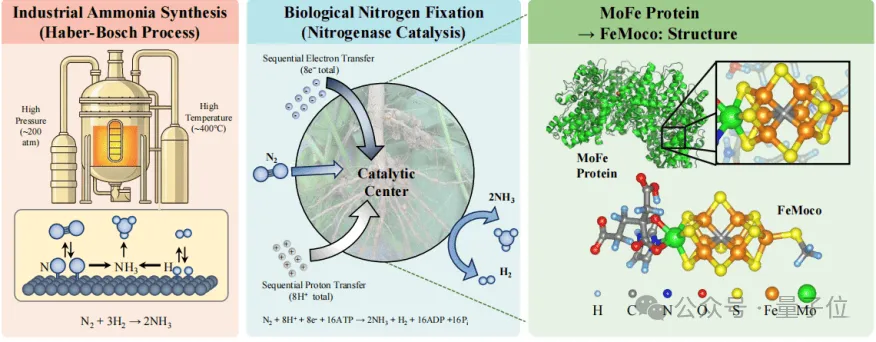
According to the award information, the significance of this scientific research application lies in extending neural network quantum state methods to larger-scale strongly correlated electron systems, further demonstrating the potential of AI methods entering the core computational links of quantum chemistry.
Add image caption, no more than 140 characters (optional)
With the support of large-scale computing power, complex chemical systems containing transition metals and key structures of biocatalysis have also gained new high-precision computational pathways. China's ability to collaboratively solve fundamental scientific problems through AI and high-performance computing has received world-class recognition.
From the quantum microscopic to the meteorological macroscopic, another shortlisted result simultaneously reproduced the heterogeneous super-intelligence fusion computational achievements of the Sugon 8000.
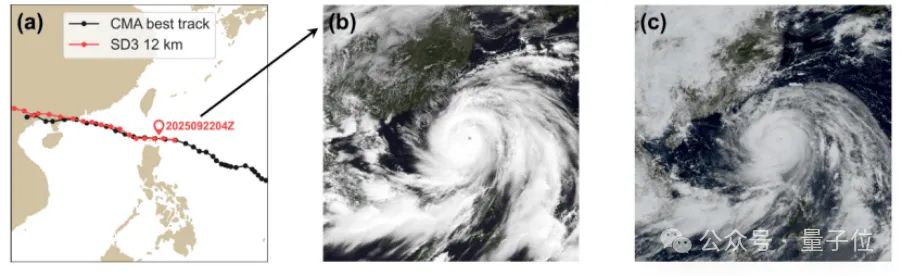
Data shows that the SD3 global kilometer-scale numerical weather simulation system, independently developed by Zhongke Tianji, has achieved global 1.5-kilometer resolution weather simulation based on the Sugon 8000, providing a new pathway for refined weather forecasting and Earth system science research.
It is not difficult to see that behind a scientific research result's journey from initial exploration to the world stage are often countless rounds of deep磨合 involving computation, verification, and adjustment.
For the research team, the difficulty is not obtaining more or higher peak computing power, but enabling complex applications to run stably and efficiently on larger-scale computing platforms, so that every bit of computing resource can serve scientific questions and deliver real results.
To date, more than 300 key applications have completed deep optimization on the Sugon 8000, covering more than 30 scientific research and industrial fields. A batch of major results in astronomy, meteorology, materials, life sciences, and other fields continues to emerge.
The weight of China's high-end computing has long extended beyond peak computing power and benchmark leaderboards.
Heterogeneous super-intelligence fusion, breaking the bottleneck of single computing architecture
In an industry norm where "benchmark scores define heroes," the Sugon 8000, compared with traditional single-architecture computing power stacking, demonstrates a completely different heterogeneous computing approach, which also allows it to quickly adapt to various computing scenarios and greatly reduces the burden on computing power users.
To understand why the Sugon 8000 can simultaneously support quantum chemistry and global weather simulation, one must first look at how "split" the hardware requirements of these two types of tasks are.
The core difficulty of the iron-molybdenum cofactor problem lies in describing the quantum behavior of dozens of electrons in the active center of nitrogenase; the computational cost of exact solution expands exponentially with the number of electrons. The USTC team's approach is to use neural networks to describe the complexity of electron quantum states, smoothly suppressing the previously "exponentially exploding" computation in an AI manner.
However, AI entering the core computational link does not mean lower precision requirements. On the contrary, it requires the underlying system to flexibly switch among multiple precisions: the neural network part relies on low-precision, high-throughput matrix operations, while the convergence and credibility of quantum chemistry solutions still require high-precision computation as a foundation.
SD3 takes almost the opposite extreme. Global 1.5-kilometer resolution numerical weather simulation requires cutting the Earth's surface and atmosphere into grid cells with a side length of 1.5 kilometers, and the computational cost grows geometrically with grid density. For most of the time and under most operating conditions, such tasks must "honestly" use the highest FP64 double precision, with no room for bargaining.
Add image caption, no more than 140 characters (optional). One aims to embed AI into core computing and shuttle between multiple precisions; the other takes double precision as its baseline while offloading the vast majority of workloads onto accelerators. A single-architecture route faces a structural asymmetry between these two types of tasks: a pure-CPU architecture route can achieve the utmost in the double-precision dimension, but when a task requires large-scale low-precision matrix throughput to be tightly coupled with high-precision solving, an architecture deeply optimized for a single precision can hardly maintain the same efficiency across the two modes. By contrast, the Sugon 8000's solution is not a compromise of "being able to compute a little of everything," but rather an active response to this split through heterogeneous division of labor: CPUs handle complex logic scheduling and high-precision serial dependencies, GPUs take on large-scale parallel matrix operations, the chips themselves support multiple precisions such as FP64, FP32, and BF16, and networking, storage, and scheduling satisfy diverse computing needs as one system. This is by no means about making HPC and AI into two physically stitched-together "partitions," but about directly confronting the more than 40% of "super-intelligence convergence" computing tasks in existing applications and using a system-design approach to break the efficiency bottleneck of the single-computing-architecture route. As the industry defines this cluster—the Sugon 8000 has stepped out of the model of simply stacking computing resources, performing native optimization from the very beginning of architectural design for diverse mixed-precision computing needs, and is a system-level solution that can be deployed, operated, and verified. This also reflects a reality: China's high-end computing is moving out of the laboratory and heading straight for composite computing scenarios on the front lines of research and industry. China's computing divide: chase scores, but more importantly chase results. In the early days of the domestic computing industry, breakthroughs in double-precision peak performance along the single-architecture route deserve respect. Especially in scenarios where FP64 is absolutely dominant, pure-CPU systems still have irreplaceable strategic value and are more likely to deliver benchmark scores. But with the rise of AI for Science, the workload structure of high-performance computing is changing, and more and more scientific applications no longer run on a single precision: quantum chemistry solving requires high-precision iterative convergence, while the neural network wavefunction part relies on low-precision, high-throughput matrix operations; weather simulation takes FP64 as its baseline while offloading more than 99% of computation onto accelerators. What such applications demand of a system is not "running fastest at some precision," but rather that when switching among multiple precisions, efficiency does not drop, scale can expand, and the software stack does not have to be torn down and rebuilt. The heterogeneous computing route deploys the CPU's complex logic scheduling capability and the GPU's parallel matrix throughput capability separately, then organizes them efficiently through a unified memory hierarchy and scheduling system—essentially using architectural division of labor to correspond to workload division of labor. The scaling data publicly disclosed by the Sugon 8000 demonstrates the advantages of this division of labor in engineering deployment: the computing performance of CPU+GPU heterogeneous nodes reaches more than 3 times that of pure-CPU nodes; the BF16 weak-scaling test scales from a single card to 45,000 cards while still maintaining 94.9% scaling efficiency, with the whole-machine weak-scaling efficiency at 93.93%. Maintaining near-linear scaling efficiency at the scale of tens of thousands of cards is difficult not because of single-card peak performance, but because of whether interconnect, scheduling, memory hierarchy, and software stack can keep every accelerator from sitting idle. This is the truly "hard bone" of the heterogeneous route, and also the part that is hardest to replace once it works. An easily overlooked detail is that the Sugon 8000-supported quantum chemistry award-winning project achieved the whole-machine computing effect of a traditional CPU-architecture system with only a computing resource of ten-thousand-card scale. This shows that the efficiency advantage of a heterogeneous system is not bought by "stacking more cards," but by placing every unit of computing power at the right position at the right precision. At present, winning a Gordon Bell Prize in half a year and being shortlisted for a climate modeling final is certainly a bright enough start. But more noteworthy than the awards is the way this path has been validated: it is not about first arguing that a route is theoretically superior and then using a carefully selected application to prove it; rather, it is about letting dozens of fields and hundreds of applications run continuously on the same foundation, and then having authoritative review results provide external verification. After all, domestic computing has come to this point and must face the real scenario requirements under the "AI+" initiative. Capturing reproducible application results is more substantial than benchmark scores in a narrow track. Ultimately, what is truly scarce for China's computing in the next stage is not only machines that set records in individual metrics, but a system-level capability that allows different precisions, different disciplines, and different workloads to all be usable and runnable. *This article is published by QbitAI with authorization; the views are solely those of the original author. All rights reserved. No reproduction or use in any form without authorization is permitted; violators will be held accountable.