IT之家 · 智能时代 · 10/23/2026, 06:48:15
Intel CTO: Leading-Edge Wafer Capacity Can Only Double, Constraining AI Compute
Intel CTO Ranade stated that leading-edge wafer production can at most double due to supply chain constraints, ruling out a tenfold increase. With ASML producing fewer than 100 EUV lithography machines annually and delivery lead times of 18 months, equipment shortages will cap AI compute expansion, with new capacity unlikely to materialize before 2028.
SOURCE COVERAGEFull Original Report
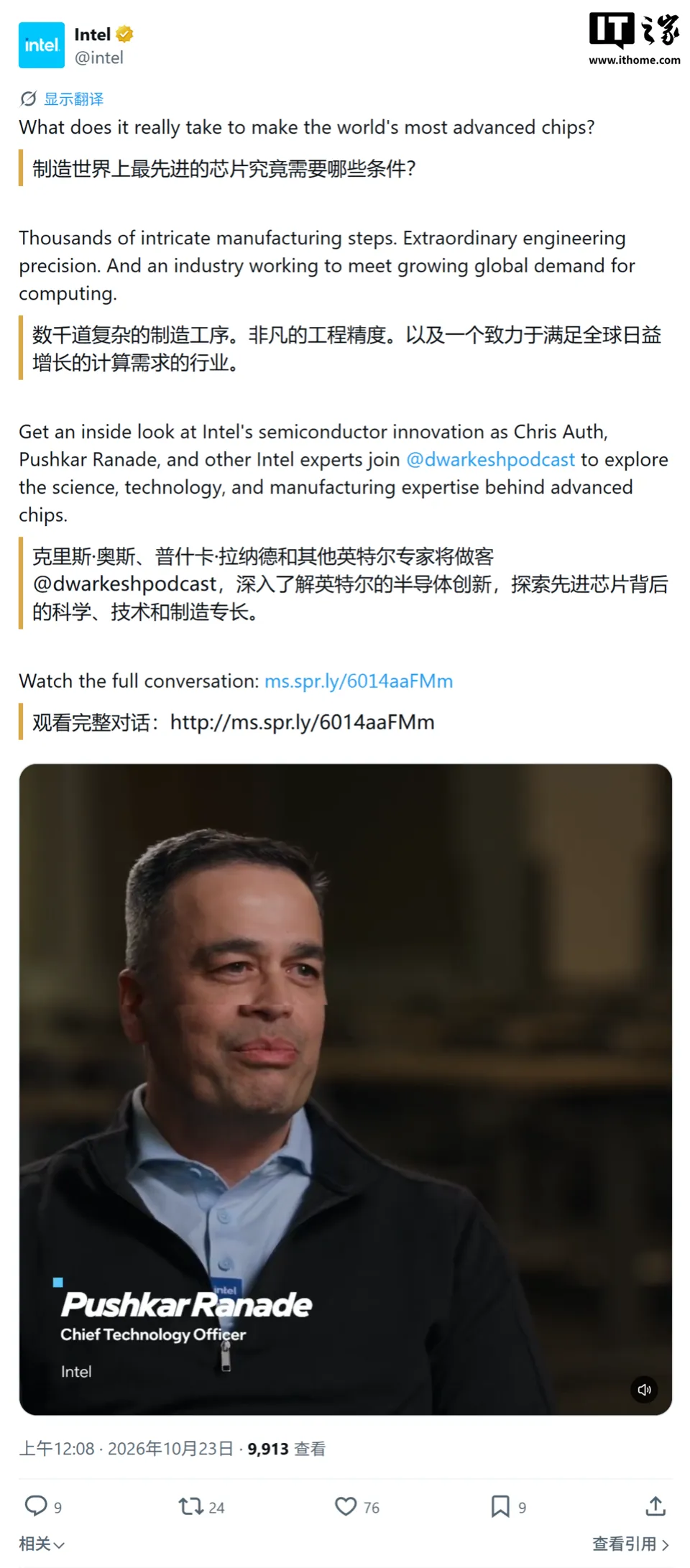
In a podcast interview, Ranade was asked whether the world has enough tools to increase leading-edge wafer production by 10x. He responded, "Not 10x, but perhaps 2x—yes." He attributed this limitation to the entire semiconductor supply chain's ability to scale in coordination, rather than any single bottleneck.
As reported by IT Home citing the blog post, Ranade noted that while AI computing power has grown at roughly 3x per year over the past decade, the critical equipment, cleanrooms, and fab capacity required to manufacture advanced chips are becoming the new ceiling for production capacity.
Specifically, ASML produces fewer than 100 EUV lithography machines annually, with little prospect of significant expansion by the end of this decade. Intel, TSMC, and memory manufacturers like SK Hynix are all competing for these limited resources.
He further explained that equipment ordered today typically takes about 18 months to deliver, meaning new capacity won't materialize until around 2028. Building new fabs does not automatically yield more wafers, primarily because equipment supply cannot keep pace.
Ranade elaborated that increasing overall output requires simultaneous capacity expansion among equipment suppliers, their upstream vendors, and even deeper-tier sub-suppliers. In other words, if any link in the chain—whether lithography tools, critical components, materials, inspection equipment, or factory construction—is constrained, the final output of advanced wafers will struggle to surge significantly.