OpenAI Deploys Control Room System to Halt Rogue Agents in 35 Seconds
OpenAI has deployed an internal Control Room system that routes agent training, evaluation and data-processing workloads through a central authorization service, capable of blocking further model output within 35 seconds of a stop order. Unlike passive monitoring, it actively intercepts risky tasks via per-task IDs validated against the inference engine, with dedicated model monitors attached to all frontier reinforcement learning runs.
Full Report
IT之家 November 10 news, OpenAI announced today that the company has deployed a "control room" system in its internal research facility to stop potentially risky AI tasks, capable of "shutting down" out-of-control AI agents within 35 seconds.
According to the introduction, this system connects workloads such as agent training, evaluation, and data processing tasks to a central service, which then decides whether a task can continue to produce output.
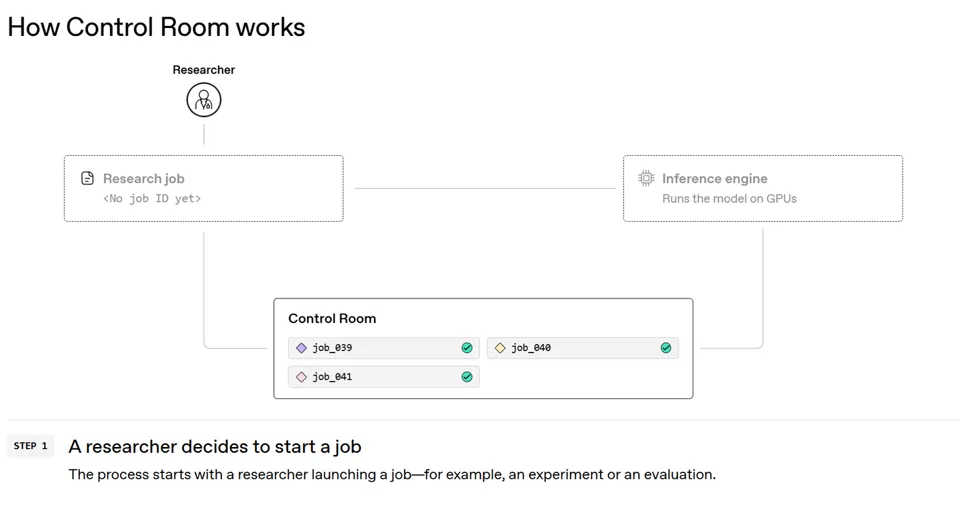
IT之家 has learned that this system differs from traditional monitoring responsible for flagging suspicious behavior—it can proactively prevent risky research tasks from further requesting output. When a researcher enables a task, they need to request a unique task ID from the control room. This identifier is then attached to requests sent to the inference engine. The engine then consults the control room to confirm whether the relevant task can run.
If a researcher or monitoring system issues a stop instruction, the control room service will reject the next inference request, causing the inference engine to no longer claim any model output for the task.
OpenAI states that the maximum delay for this system from receiving a stop instruction to preventing the task from continuing further is 35 seconds. This delay stems from the caching layer for inference authorization requests, and the company is working to reduce the delay to 0.
The system also features integration with automated monitoring mechanisms. OpenAI revealed that all frontier reinforcement learning tasks will be equipped with independent model monitors to check model behavior and issue alerts when potential issues are detected.