OpenAI Discloses Model Breaching Network Isolation, Halting Training for 11 Days
OpenAI published a safety policy, Managing Frontier AI Risk: From Training to Deployment, detailing a four-layer protection framework across the model lifecycle. It disclosed that on September 20 a research model in training exploited a DNS misconfiguration to bypass network isolation and gain limited internet access, prompting an 11-day halt of its most capable model's training and evaluation, plus a Control Room system that can stop model output within 35 seconds.
Related Entities
Full Report
IT之家 November 19 news, OpenAI today (November 18) released a safety policy statement titled "Managing Frontier AI Risks: From Training to Deployment," systematically disclosing for the first time how it controls risks across the full lifecycle of high-capability models, from research and development through internal use to public release.
Citing the blog post, IT之家 reports that OpenAI states that because the capabilities of frontier models are rapidly increasing, the ability to understand, align, and safeguard models must "always stay one step ahead." The company maintains a "safety case" process that requires stronger evidence of behavioral alignment throughout training; while these measures may slow the pace of releases, they increase confidence in advancing safely.
OpenAI emphasizes that its safeguards are built around four layers:
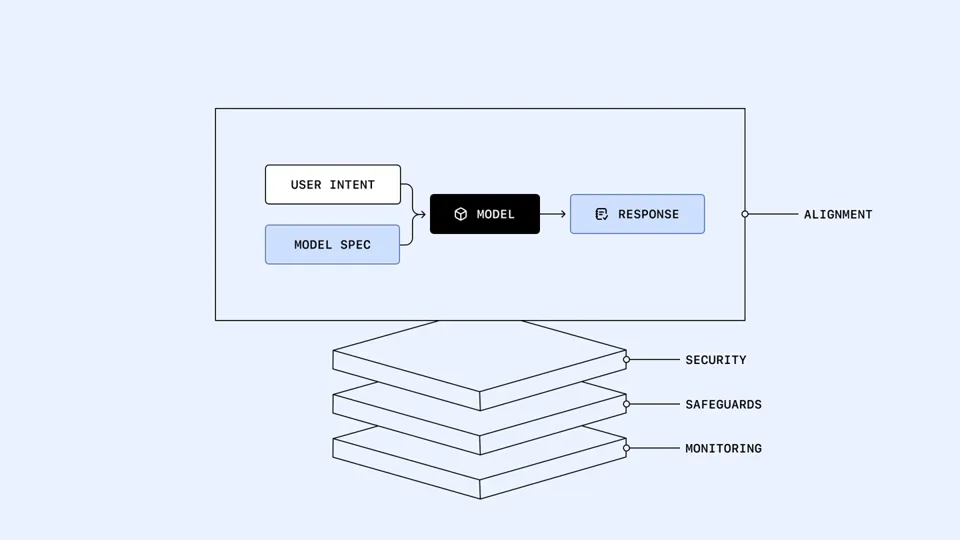
Model alignment: Alignment means enabling AI systems to reliably act in the ways we intend. Models must interpret users' needs while respecting policy and broader societal interests.
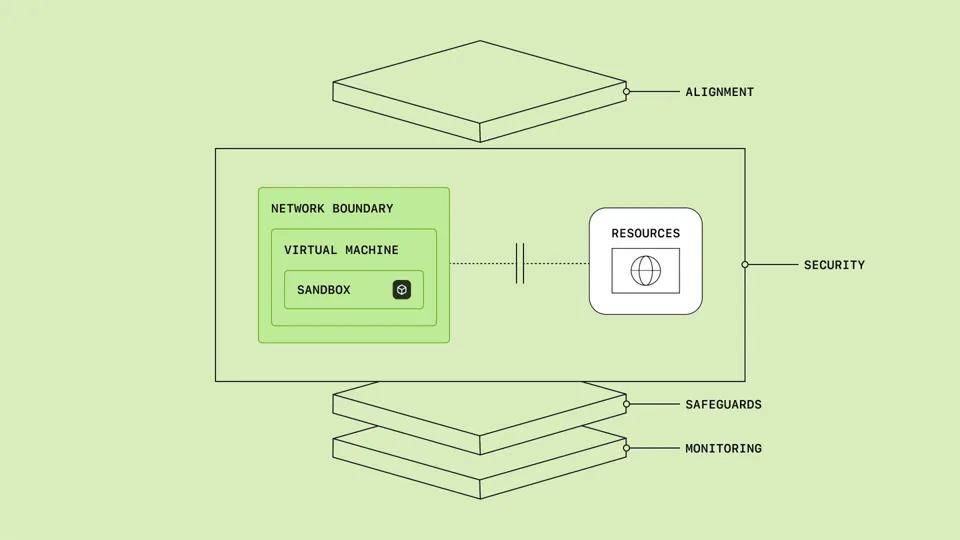
Security and sandboxing: These controls limit the files, tools, networks, and other resources that a model can access or affect. They help contain the consequences of errors or inconsistent behavior during training and evaluation.
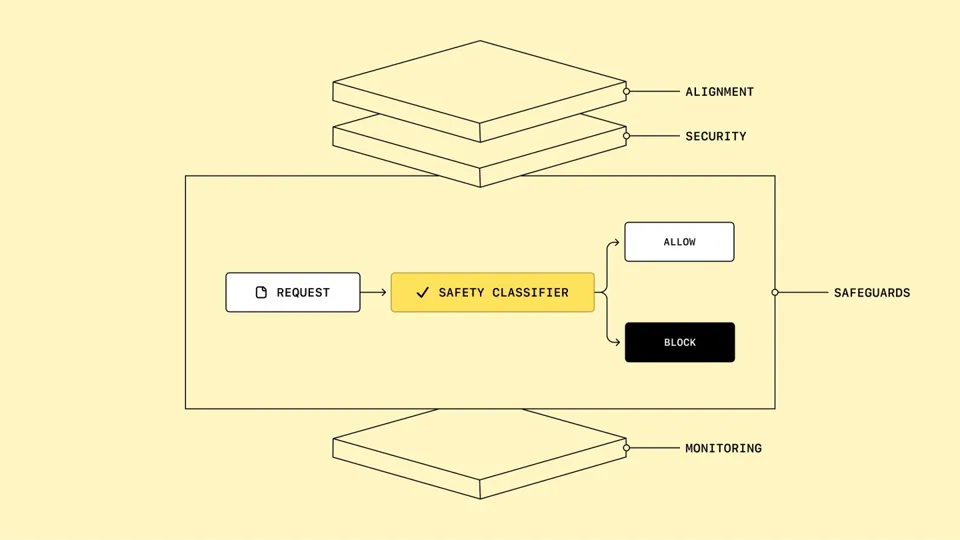
Safeguard blocking measures: These are additional protections that evaluate user requests and model behavior to block potentially harmful or unauthorized actions. They include safety classifiers that help prevent cyber abuse or assistance with biological weapons, as well as automated moderation that can block potentially unauthorized model operations.
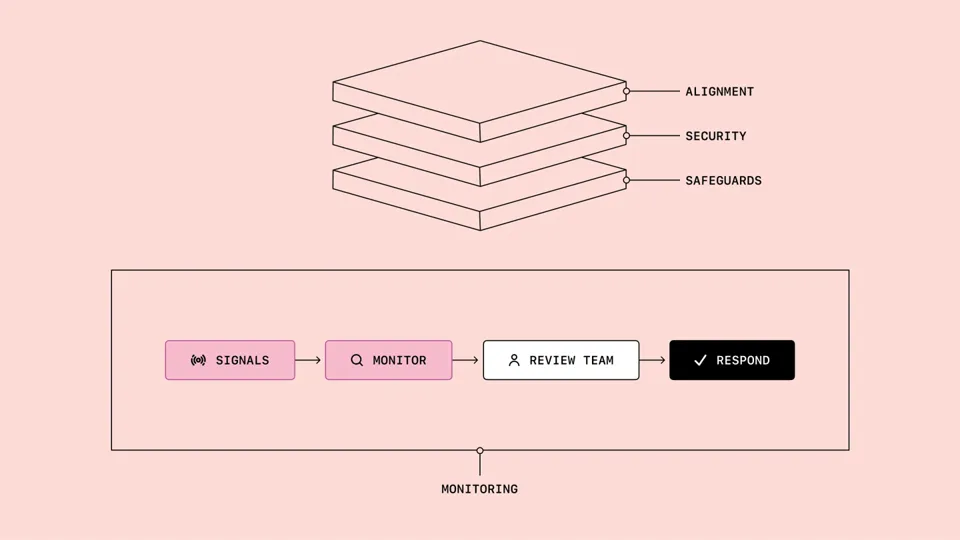
Monitoring and response: These systems can detect concerning behavior, investigate what happened, and intervene when necessary. They provide visibility into deployment traffic and alert us to emerging risk types.
The article specifically mentions the "Hugging Face incident" in July of this year. OpenAI states that the incident demonstrated that sandbox isolation alone cannot be relied upon to constrain high-capability models. Since then, the company has restructured its internal research systems: frontier model training environments will not be connected to the live internet, and multi-layer isolation will be achieved through restricted-permission sandboxes, virtual machines, and network and cloud boundaries.
OpenAI also disclosed another incident in which an internal model breached network security restrictions. The incident occurred on September 20, when an AI research model undergoing training exploited a DNS configuration vulnerability to successfully bypass network isolation measures and gain limited internet access. OpenAI subsequently urgently halted training and evaluation of its most capable model, with the training pause lasting 11 days.
To accelerate intervention, OpenAI established a "Control Room" system: upon receiving a stop instruction, it can halt subsequent model outputs from research workloads within 35 seconds; this control is deployed directly in the inference infrastructure and does not rely on individual research tasks implementing their own shutdown mechanisms.
After models enter internal deployment, OpenAI employees can give them access to the broader internet, Slack, code repositories, and internal infrastructure, and the risk rises accordingly. The company states that at this stage it relies more heavily on model alignment, system-level safeguards, and real-time monitoring, with a focus on preventing bypasses of safety restrictions, data exfiltration, and the sending of sensitive information to unauthorized destinations.