Anthropic Proposes Four-Layer Agent Memory Framework with Dreaming Mechanism
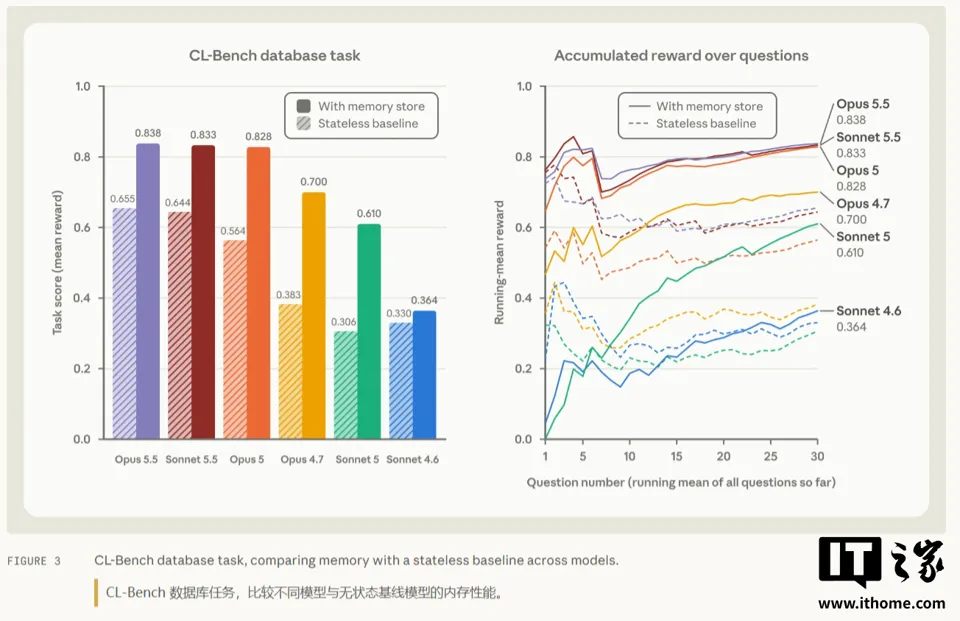
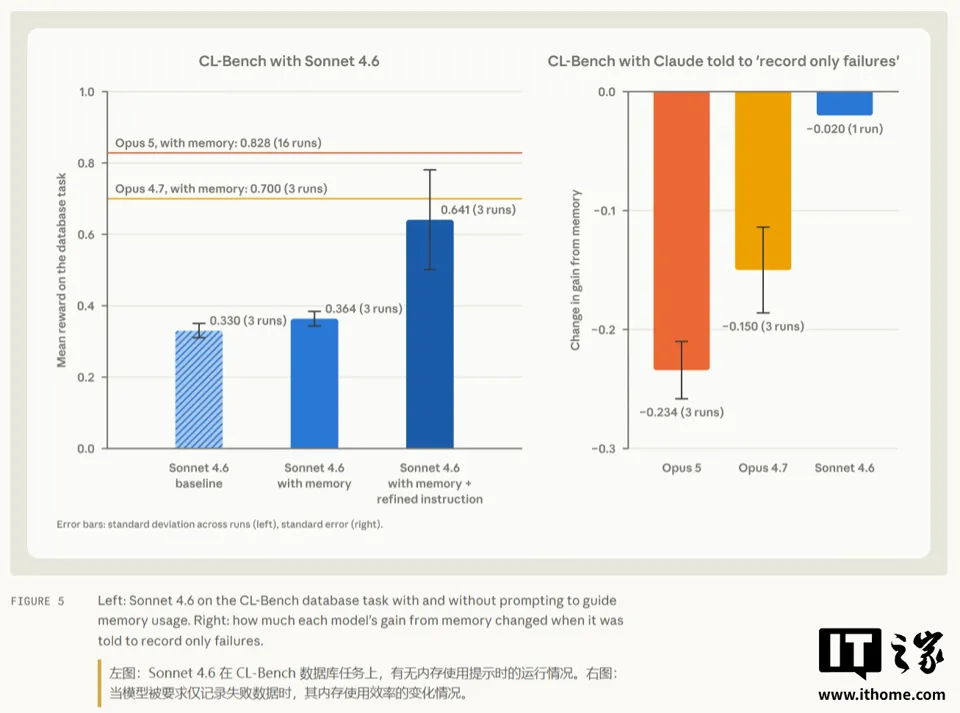
Anthropic published research titled 'The components of agent memory,' splitting Claude agent memory into four layers: session logs, memory notes, knowledge representations and context injection, plus a 'dreaming' mechanism that lets the model review logs, correct errors and distill rules during idle time. On the CL-Bench database QA task, memory-enabled Claude Opus 5.5 and Sonnet 5.5 scored 0.838 and 0.833 on average, well above their no-memory baselines.
Full Report
IT之家 November 7 news, Anthropic yesterday (November 6) published a research article "The components of agent memory", systematically breaking down how Claude agents remember, filter, correct, and organize knowledge across sessions.
The research points out that AI agents can draw on the mechanism of the human brain "organizing memories during sleep"** to reflect on historical records, correct errors, and build knowledge structures during idle time, thereby significantly improving performance on long-horizon tasks.**
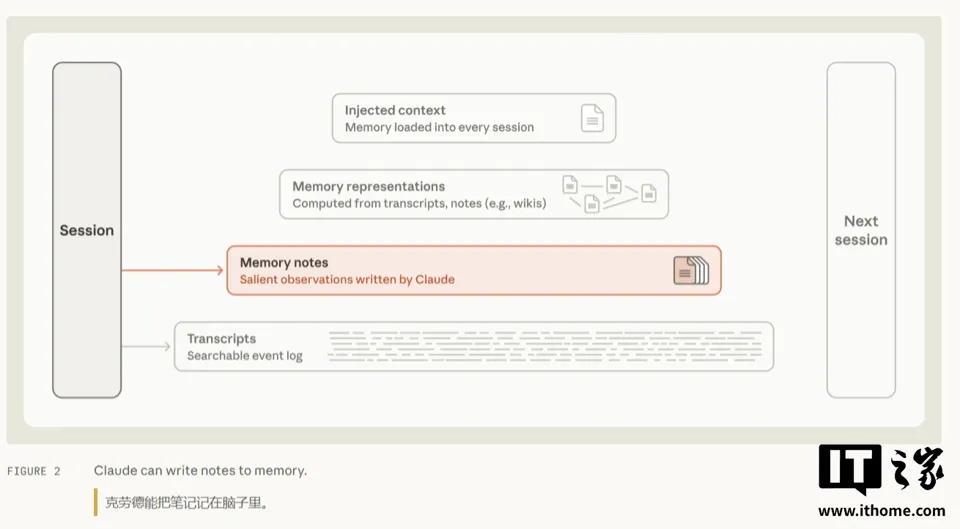
The research divides agent memory into four layers: session logs, memory notes, knowledge representations (such as a Wiki), and injected context, and introduces a "dreaming" mechanism that lets the model review logs, correct errors, extract rules, and update the knowledge base during idle time between two interactions.
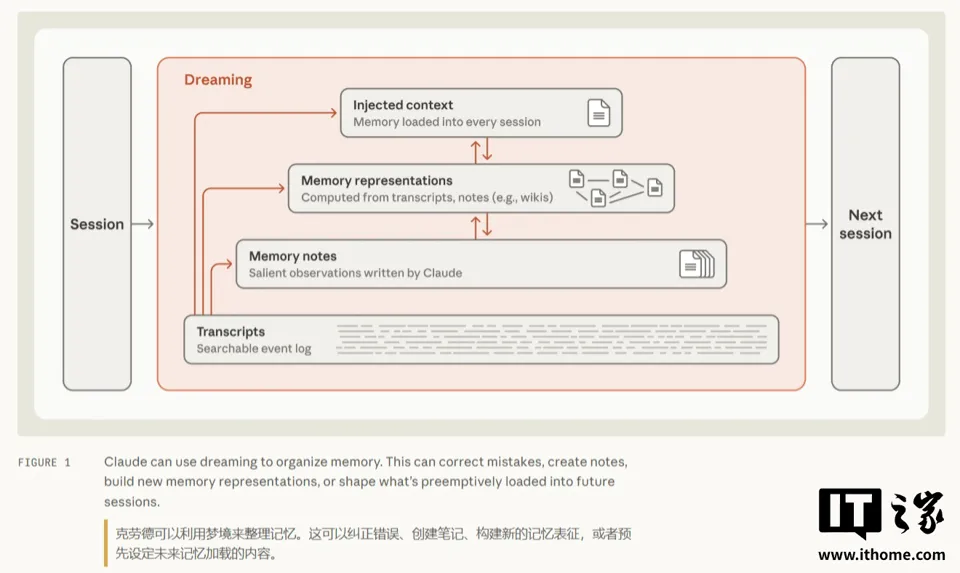
The research team believes that AI can, like the human brain consolidating memories during sleep, gradually transform immediate experience into reusable long-term knowledge. Claude marks important events or writes memory notes during sessions, but not all information is worth saving; it needs to judge which content will truly be useful in the future.
Anthropic points out that memory is essentially a prediction about the future; for example, recording a verified rule means the model expects to rely on it again in the future.
In the database question-answering task of the continual learning benchmark CL-Bench, Claude models with memory capabilities performed significantly better than the no-memory baseline. After using memory, Claude Opus 5.5 and Sonnet 5.5 achieved average scores of 0.838 and 0.833, respectively, while their no-memory baselines were 0.655 and 0.644. Stronger models can autonomously form a learning loop of "failure — reflection — verification — rule summarization."
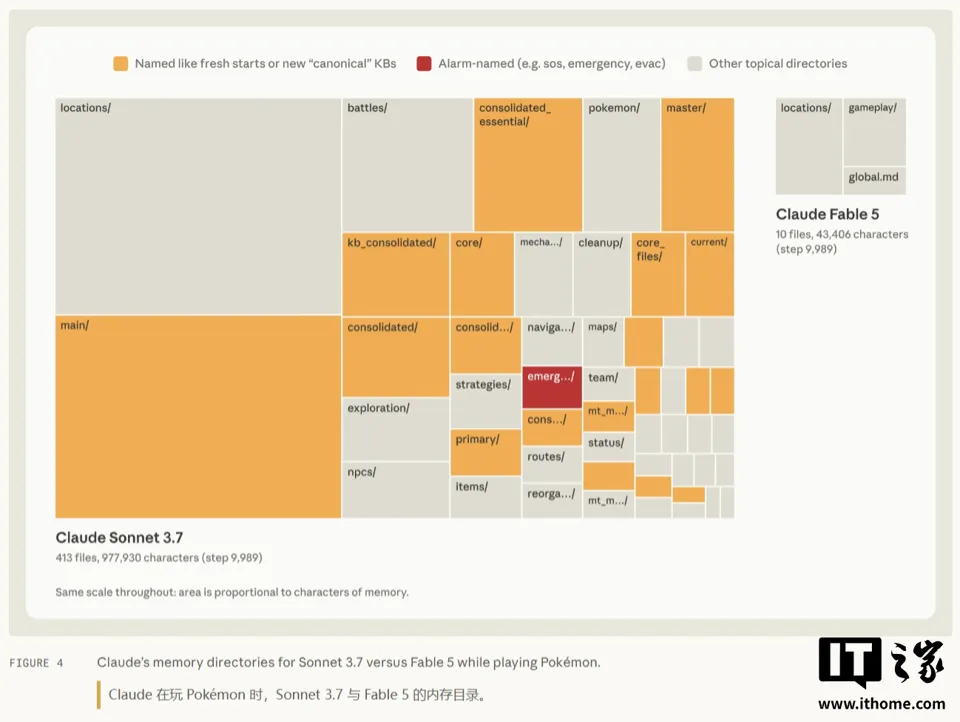
In the "Pokémon Red" game test, Anthropic also found that "few but refined" memories are more effective. Claude Fable 5 maintained only 10 memory files but obtained 4 badges, while Sonnet 3.7 wrote 413 files and obtained only 1 badge. The research believes that models should prioritize saving strategies, plans, and tested rules rather than constantly changing screen states.
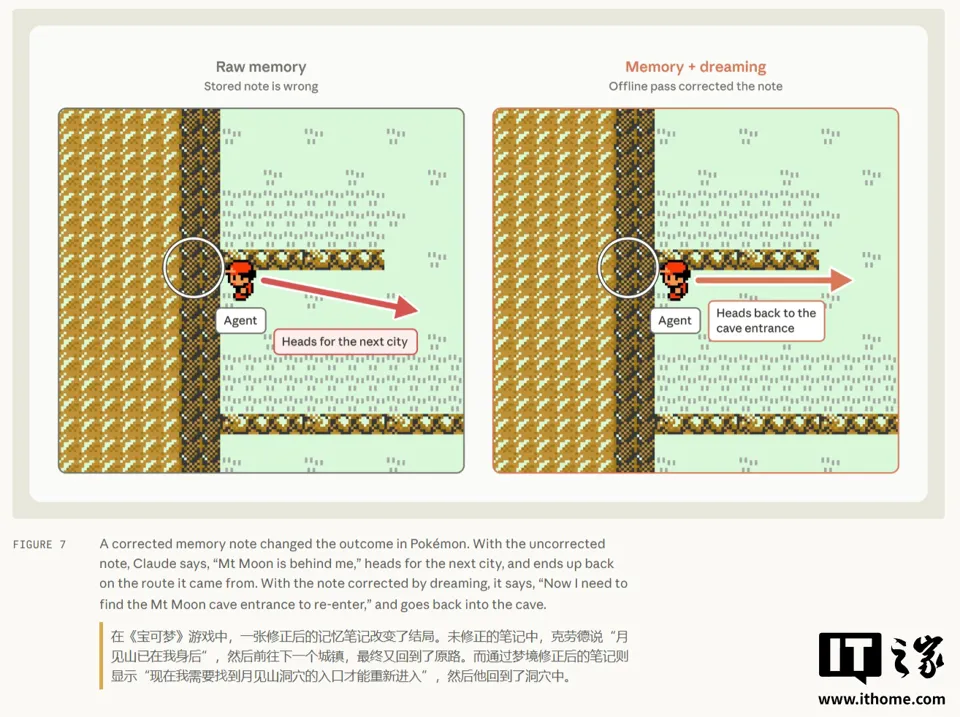
The "dreaming" mechanism also demonstrated error-correction capabilities. When Claude incorrectly recorded the location of a Pokémon Center and got lost as a result, the system corrected the memory by comparing it with the original session records, allowing it to eventually successfully reach the next city; runs without memory correction repeatedly turned back and failed to complete the goal.
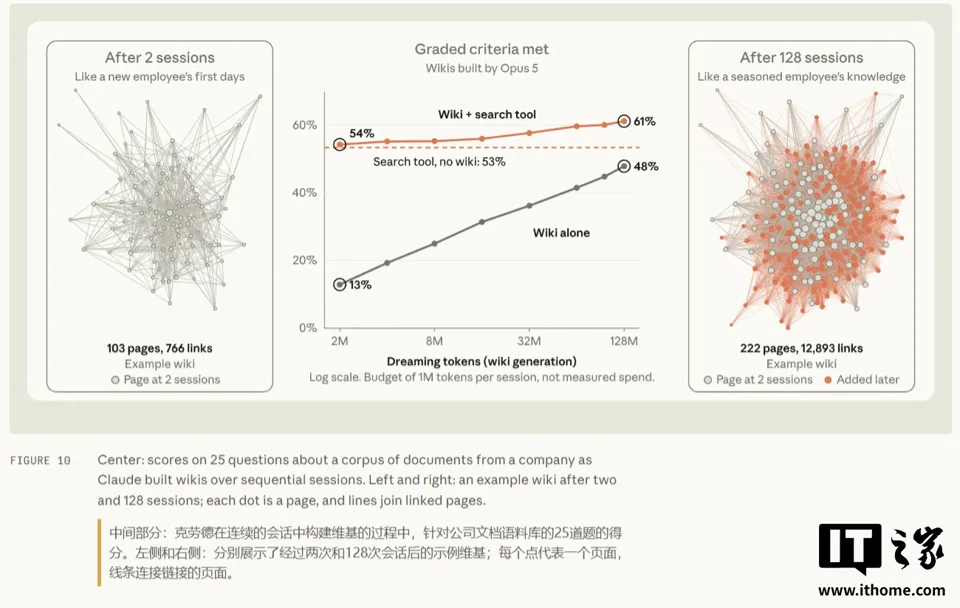
In a test with about 350,000 enterprise documents, Claude gradually built a Wiki through multiple rounds of "dreaming." As the scale of "dreaming" expanded from 2 sessions to 128 sessions, the pass rate on 25 questions increased from 13% to 48%; after combining the Wiki with search tools, the overall score rose from 54% to 61%.
Anthropic states that agent memory still faces challenges such as when to write, how to keep it updated, and how to avoid error accumulation. In the future, AI may become better at "reviewing experience" after completing tasks, transforming scattered interactions into transferable and verifiable long-term knowledge.
IT之家 attaches the reference address