US Voters Reject Data Centers in Ballot Measures
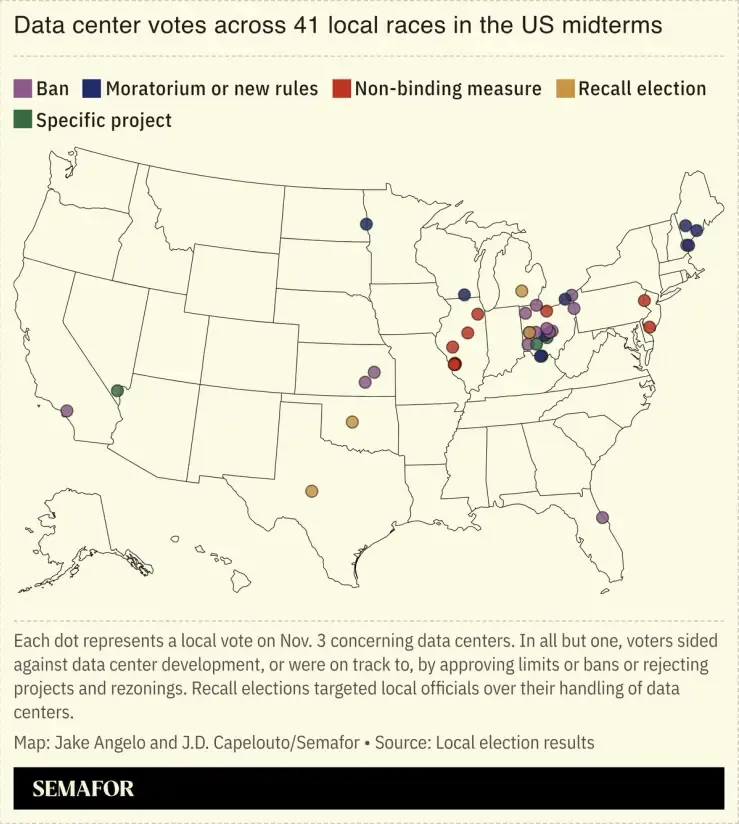
In November 2026, voters across more than 30 localities in nine US states overwhelmingly rejected data center projects or imposed strict constraints via ballot measures. This outcome poses a significant headwind to the ongoing AI infrastructure buildout, forcing tech companies to reassess siting strategies and attempt rebranding efforts to mitigate public resistance.
Full Report
From Semafor BusinessIn your inbox, weekday morningsSign up
US voters roundly reject data centers in ballot measures
Nov 4, 2026, 8 EST
Daniel Cole/File Photo/Reuters
American voters roundly rejected data centers nearly anywhere they were on the ballot Tuesday, a rebuke sure to rattle investors already growing skittish about the AI buildout.Residents in more than 30 localities across nine states voted for moratoriums, outright bans, and other measures, some in direct response to specific projects underway. Edgewater, Fla. overwhelmingly voted to embed a data-center ban in the city’s charter, and voters in Perry, Ohio passed a measure placing financial and operational constraints on hyperscalers seeking tax breaks. Democrats running in more than 130 federal and gubernatorial races aired anti-tech or anti-data center ads this cycle, one analysis showed. The pressure pushed some Republican candidates including Texas Gov. Greg Abbott, an AI booster just a few months ago, into promises of tougher regulation; he lost anyway.
Banks and asset managers financing the buildout have already begun treating local opposition as a credit risk, while hyperscalers are rushing to hire community liaisons. Meanwhile, tech companies bracing for the vibe shift are trying to rebrand the data centers as “compute campuses” with mixed results, Semafor’s Ashley Gold reported.