Alibaba XuanTie RISC-V Chips Ship 6 Billion Units as Android 17 Adds Support
Alibaba DAMO Academy disclosed at ICCAD-Expo 2026 that cumulative shipments of its XuanTie RISC-V IP chips have surpassed 6 billion units across IoT, industrial control and automotive use cases, alongside the new ASIL-D-grade E908A core. More significantly, Android 17 now officially supports the RISC-V architecture; combined with fully ratified server-level extensions and a TORQ AI software stack supporting vLLM and SGLang, RISC-V is moving from embedded territory toward high-performance computing and AI-native workloads.
Related Entities
Full Report
IT Home News, November 26: The 2026 Integrated Circuit Development Forum (Beijing) and the 32nd Integrated Circuit Design Industry Exhibition (ICCAD-Expo 2026) were held in Beijing Yizhuang from November 19 to 20. Meng Jianyi (IT Home note on pronunciation: yì), Chief Scientist of Alibaba DAMO Academy, delivered a keynote speech titled "XuanTie RISC-V IP Technology Innovation and Large-Scale Application," pointing out that after more than a decade of development, RISC-V now has 125 extensions and over 1,000 instructions, with applications expanding from embedded fields to high-performance computing, AI, and cloud servers.
Meng Jianyi revealed that XuanTie IP has achieved large-scale deployment, with cumulative chip shipments exceeding 6 billion units, covering scenarios such as IoT, industrial control, and automotive; the newly released XuanTie E908A supports ASIL-D level, and XuanTie is also actively participating in the RISC-V software ecosystem and international standards development.
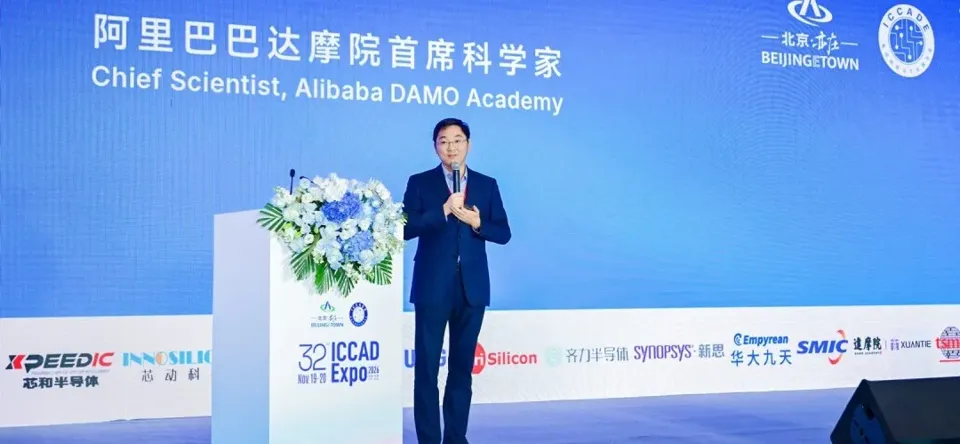
According to a report by Chip Ranking, Meng Jianyi also specifically mentioned that Android 17 has officially supported the RISC-V architecture. This will create new opportunities for RISC-V to enter the broader smart terminal market.
IT Home has learned that at the IP Empowering IC Design sub-forum, Chen Chen, Senior Technical Expert at DAMO Academy and head of XuanTie processor R&D, delivered a keynote speech titled "From High-Performance Computing to AI-Native: The Architectural Leap of XuanTie RISC-V Processors." He pointed out that RISC-V needs to win two battles to move into the next decade: the general-purpose high-performance battle benchmarked against X-architecture and A-architecture mainstream cores, and the AI breakthrough battle spanning from training and inference to Agentic.
Currently, RISC-V server-level capabilities have been largely completed, with H extension, AIA, Nexus Trace, IOMMU, RERI, and Server SoC Specification all ratified. In the Agentic AI era, CPU and GPU are shifting from serial alternation to tight collaboration, with the CPU re-entering the critical logic path, transforming from a "logistics manager" to an "execution partner"; value migration combined with deep scenario-specific customization demands is driving open ISA from an architectural choice to platform innovation, giving RISC-V a historic window of opportunity.
Shang Yunhai, Senior Technical Expert of XuanTie RISC-V at DAMO Academy, introduced the progress of XuanTie's full-stack software capabilities:
- XuanTie GCC and LLVM achieve 1.4 to 2 times the performance of open-source versions on Coremark and Whetstone, and have contributed 148 GCC patches and 172 LLVM patches to the community;
- The TORQ AI software stack supports mainstream frameworks such as PyTorch, vLLM, and SGLang, covering large models including Qwen, DeepSeek, and Llama as well as over 100 operators, with typical operator hardware utilization exceeding 90%.
At the ecosystem co-building level, XuanTie has carried out deep cooperation with Ruyi Community, OpenHarmony, OpenKylin, Ubuntu, and OpenAnolis in areas including kernel upstream, edge AIoT, desktop ecosystem, the first RISC-V LTS version, and cloud computing server scenarios, driving the RISC-V software ecosystem from adaptation toward maturity.