Nvidia Prepones Raises and Equity Grants After Huang's Departure
A week after Jensen Huang's departure, Nvidia held its first all-hands meeting without him, where interim CEO Colette Kress announced December pay raises and expanded equity grants ahead of schedule, addressing compensation as the top concern among roughly 700 employee-submitted questions. The meeting also exposed board pressure over transparency and succession, with Jeff Bezos warning against hiring an outside CEO and Bill Ackman questioning the board's process, turning an internal transition into a public debate over founder power and board accountability.
Related Entities
Full Report
Contents4 sections
One week after Jensen Huang left NVIDIA, this AI chip giant held an unusual all-hands meeting.
For the past 33 years, NVIDIA employees had long been accustomed to seeing Jensen Huang at quarterly all-hands meetings. For some employees, his internal addresses were not just a briefing on the company's business operations, but more like a highly anticipated performance. But this time, the person standing at the front was interim CEO Colette Kress.

Yes, there was no Jensen Huang at this all-hands meeting, and no one could immediately replace him.
On November 18, according to meeting remarks obtained by WIRED, just a few minutes into the meeting, Kress announced an important decision to employees: the company would raise salaries ahead of schedule in December and increase equity incentives, months earlier than originally planned. For a tech company worth trillions of dollars in market capitalization with nearly 49,000 employees, this was not an ordinary compensation adjustment.
Especially against the backdrop of Jensen Huang's sudden departure and the obvious rift between the board and employees, the early salary increase and additional stock incentives were seen by outsiders as an important move by NVIDIA to steady the troops.
More notably, this roughly 50-minute all-hands meeting revealed NVIDIA's most thorny issues at present: What exactly are employees worried about? Will the board bring Jensen Huang back? Who is capable of taking over this tech giant spanning chips, software, and AI infrastructure?
At the same time, prominent figures in Silicon Valley and on Wall Street also began to publicly weigh in on the debate.
Amazon founder Jeff Bezos reminded NVIDIA's board not to casually look for a CEO from outside; billionaire investor Bill Ackman directly aimed his criticism at the board, questioning its decision-making process in the matter of Jensen Huang's departure.
What was originally an internal management transition at NVIDIA is turning into a public debate about founder power, board responsibility, and the future of the company.
700 employee questions, with compensation and board transparency the top concerns
Kress clearly knew that this meeting had to first address employees' most pressing concerns.
According to WIRED, employees submitted about 700 questions before the meeting, and the most frequent topic was not NVIDIA's future GPU products, nor competition in the AI chip market, but compensation.
Close behind were calls from employees for the board to increase transparency.
Kress promised at the meeting:
"I came here today to tell everyone that what we most want to do is take care of every employee here, to make sure you have confidence in this company and don't need to worry about your compensation and benefits."
She then announced that employees could expect salary increases and more equity incentives in December, without having to wait for the originally scheduled compensation adjustment period. This commitment directly addressed employees' financial interests, but it also reflected another layer of risk facing NVIDIA.
For many long-tenured employees, joining and staying at NVIDIA was not only because of generous pay. The corporate culture, technical vision, and personal leadership style that Jensen Huang had long cultivated were also important factors in attracting talent.
After Jensen Huang's departure, investors had already begun to worry about whether some top engineers and core managers would choose to leave.
Just the day before the all-hands meeting, during NVIDIA's third-quarter earnings call, an analyst from BofA Securities asked Kress questions about talent retention, company resilience, and financial strategy.
Kress acknowledged that stabilizing the workforce might be management's most important task at present. She said NVIDIA has always cared about employees' circumstances, and that different groups will inevitably hold different opinions. The company will take care of employees during the leadership transition and ensure they can continue to work with peace of mind.
Chairman makes clear: We will not look for a "clone of Jensen Huang"
If the early salary increase was Kress's way of reassuring employees, then the remarks by chairman Harvey Jones drew a line around this closely watched leadership controversy.
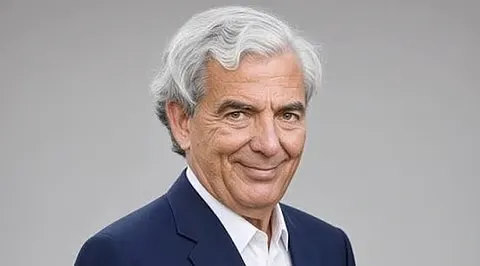
Employees at NVIDIA headquarters told InfoQ that Jones reiterated at the meeting that the board accepted Jensen Huang's resignation because of his personal conduct and lack of candor.
A day earlier, Jones had already said on NVIDIA's earnings call that Jensen Huang voluntarily disclosed personal conduct that did not conform to the company's code of conduct, standards, and cultural norms, and that the board unanimously accepted his resignation and did not intend to reappoint him as CEO.
Jones also said something noteworthy at the all-hands meeting:
"We will not find a clone of Jensen Huang."
But he stressed that there are still dynamic leaders in the market who possess proven intelligence, high-tech engineering experience, strategic thinking, compatibility with the company culture, and a track record of successful leadership.
Jones further stated:
"We will not lower our standards for selecting people in pursuit of speed."
The board is also willing to accept employee suggestions regarding CEO candidates, and this statement shows at least two things.
First, NVIDIA's board wants to send employees a clear message: the next CEO does not have to be a copy of Jensen Huang, and the company needs to find a new figure capable of leading the next phase of development.
Second, the board is not prepared to rush to settle on a successor simply to end the transition period as quickly as possible.
At present, NVIDIA is evaluating both internal and external candidates, but that is precisely where the problem lies.
Jensen Huang was not only NVIDIA's CEO for the past 33 years, but also the company's co-founder. From graphics chips to the CUDA software ecosystem and then to AI data center infrastructure, NVIDIA's current business system is closely tied to his long-term decisions.
Who can succeed him? This is no longer merely a question of finding a professional manager.
What's more, calls from employees for Jensen Huang's return have not disappeared because of the board's statement. According to WIRED, thousands of employees have already participated in efforts urging Jensen Huang's reinstatement. A public petition also gathered about 200,000 signatures in support, with some well-known tech executives joining as well.
It is thus clear that the rift between the board and some employees and investors remains unresolved.
Co-founder: NVIDIA's culture will not disappear with Jensen Huang's departure
At this all-hands meeting, another NVIDIA co-founder, Chris Malachowsky, also appeared and spoke.
His remarks did not directly discuss who the next CEO should be, but instead raised a more fundamental question: how can NVIDIA preserve the corporate culture it prides itself on?
Malachowsky recalled that when he, Jensen Huang, and the other founders built NVIDIA together, they did not agree with turning so-called corporate culture into slogans and printing them on posters. In their view, doing so was meaningless. True corporate culture should be reflected in how employees act every day, how they collaborate, and how they get work done. Therefore, even if the founders leave, he still believes these values can withstand the test of time. He concluded by telling employees:
"We'll be fine."
As the meeting drew to a close, Kress chose a rather vivid metaphor. She likened Nvidia employees to the 90,000 spectators packed into a University of Florida football game. It was a hot, crowded, feverish match, and by the third quarter, everyone would sing together.
Kress said that seeing tens of thousands of people singing in unison and responding to one another was an awe-inspiring experience. She believes that Nvidia can also rediscover that kind of cohesion. Finally, she called out to the employees:
"We will definitely hear that song again. I believe every one of you will sing it together. Nvidia, we can get through this!"
This roughly 50-minute all-hands meeting ended amid such words of encouragement.
But compared with the optimistic statements from management, external investors clearly still had more questions.
Wall Street heavyweight Bill Ackman opens fire: the board's decision is shocking
In stark contrast to Nvidia management's attempt to steady the troops, Wall Street investor Bill Ackman launched a fierce criticism of the board.
Bill Ackman is a well-known American hedge fund manager and activist investor. He founded Pershing Square Capital Management in 2003 and currently serves as founder, CEO, and chairman of Pershing Square. He graduated from Harvard University and earned an MBA from Harvard Business School.
On November 18, Ackman published a long post on X, directly questioning how the Nvidia board handled Jensen Huang's departure.
He stated at the outset that he believed the board's actions were neither in the best interests of shareholders nor consistent with the fiduciary duties directors should bear.
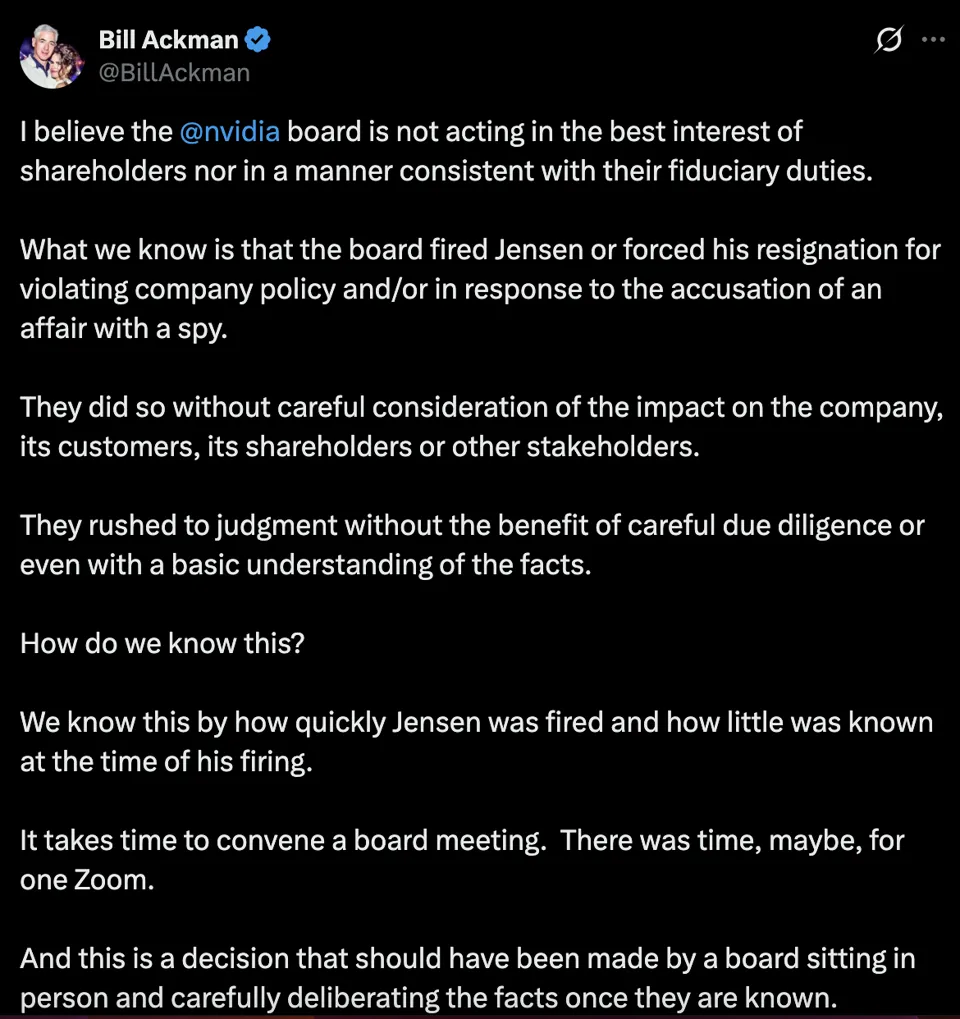
In Ackman's view, the board's most serious problem was not the decision to let Jensen Huang leave, but that the process by which that decision was made may have been too hasty.
He argued that the board had not fully considered the potential impact of the decision on the company, customers, shareholders, and other stakeholders, nor had it conducted sufficiently prudent fact-checking. Ackman even questioned whether the board had enough time to hold a formal meeting, fully understand the situation, and deliberate.
He wrote:
"It takes time to convene a board meeting. Perhaps they only had time for a single Zoom call."
In his view, faced with such a major decision, the board should have met in person after establishing the facts, fully discussed the risks and consequences, and perhaps even met again the next day, rather than acting quickly after media reports triggered enormous attention.
Ackman also stressed that the board certainly has the right to dismiss a CEO for an improper relationship with a subordinate, but it should not act mechanically. He argued that the board needed to determine whether the relationship was consensual, whether there was an abuse of power, and what impact the CEO's departure would have on the company.
At the end of the post, he offered a very harsh assessment: the board may have panicked under the public pressure caused by media reports and been more worried about damage to its own image than about making a decision in the company's long-term interests.
Ackman was not the only figure in the investment world to question the board's decision.
Just one day before Nvidia held its first all-hands meeting, Amazon founder Jeff Bezos also spoke publicly about Jensen Huang and Nvidia's successor issue.
On November 17, at the Silicon Valley & The World event hosted by Semafor, Bezos was interviewed by Semafor reporter Liz Hoffman. In a conversation lasting about 32 minutes, Bezos talked about his own AI startup project, industry investment, and corporate management. Halfway through, the topic turned to Jensen Huang's departure.
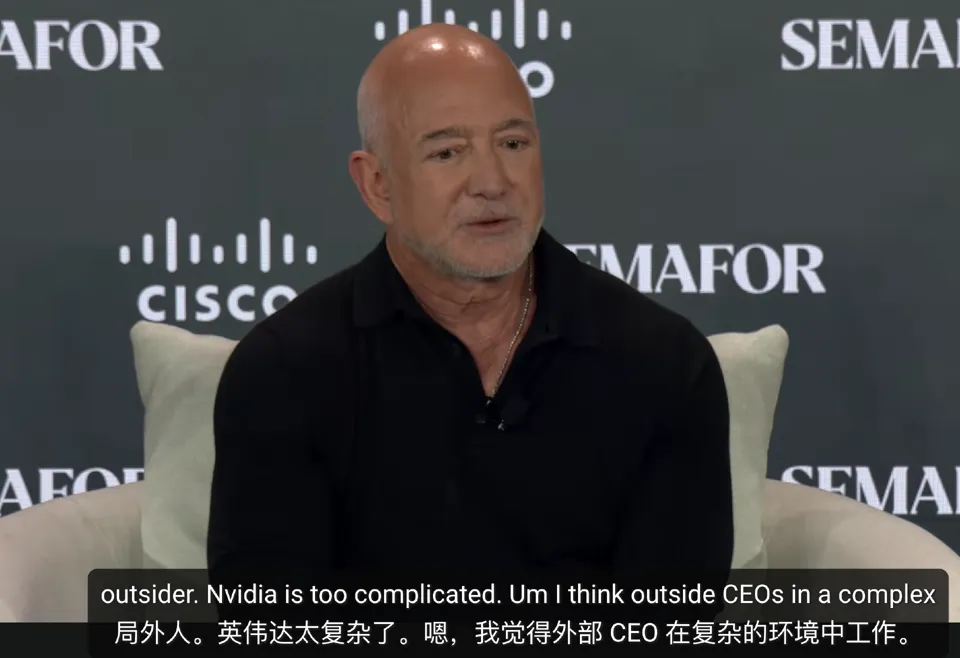
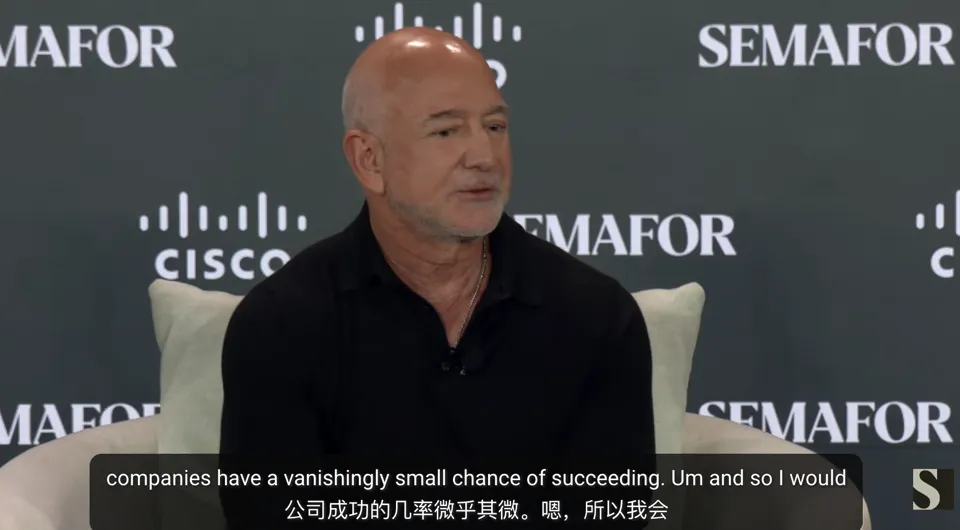
Bezos first said that he did not have all the details of the internal discussions of Nvidia's board, so he could not judge whether Jensen Huang should return as CEO. But he gave a very clear assessment of Jensen Huang's historical contributions. Bezos admitted:
"What I can say for certain is that Jensen is an extraordinary person. He founded and built an extraordinary company, put enormous effort into it, and demonstrated long-term vision. No matter what happens, he deserves admiration and respect, and that will never change."
When the interviewer further asked how the board should choose the next CEO if Nvidia did not reappoint Jensen Huang, Bezos gave a very direct piece of advice:
"If you don't bring Jensen back, the company is not in a good position."
He then explained that Nvidia is too complex internally, and the probability of an outside CEO succeeding is very low.
In contrast to the uncertainty surrounding leadership, Nvidia's operating performance remains strong.
The third-quarter financial report released on November 17 showed that Nvidia's revenue for the quarter reached $115.8 billion, up 103% year over year. Of that, data center business revenue reached $107.6 billion.
The earnings report continued to reflect strong demand for Nvidia chips from global AI infrastructure buildout. The company also raised its growth forecast for the next fiscal year.
On November 18, Nvidia's stock price rose about 5%.
Reference links: