Anthropic IPO Surges Then Slumps as AI Selloff Deepens
Anthropic listed on Nasdaq on Nov 19 at an $83 IPO price, spiking to $111.50 before fading and dropping roughly 9% on day two back toward the offer price. The debut failed to reverse a broader AI selloff, with the Nasdaq down 10% for the week and Nvidia off 23%. Claude also suffered a performance degradation on listing day that Anthropic did not explain.
Related Entities
Full Report
Contents5 sections
Anthropic officially listed on Nasdaq on November 19, 2026, local time. Its issue price was $83, and its actual opening price was $111.50, about 34.3% above the issue price.
"Before trading even began, people in the gray market had already made a 20% profit." Some netizens remarked. But after the opening, the stock price quickly surged, then pulled back somewhat. During intraday trading, it reached a high of $115.1 and at one point fell below the opening price to $95.05.
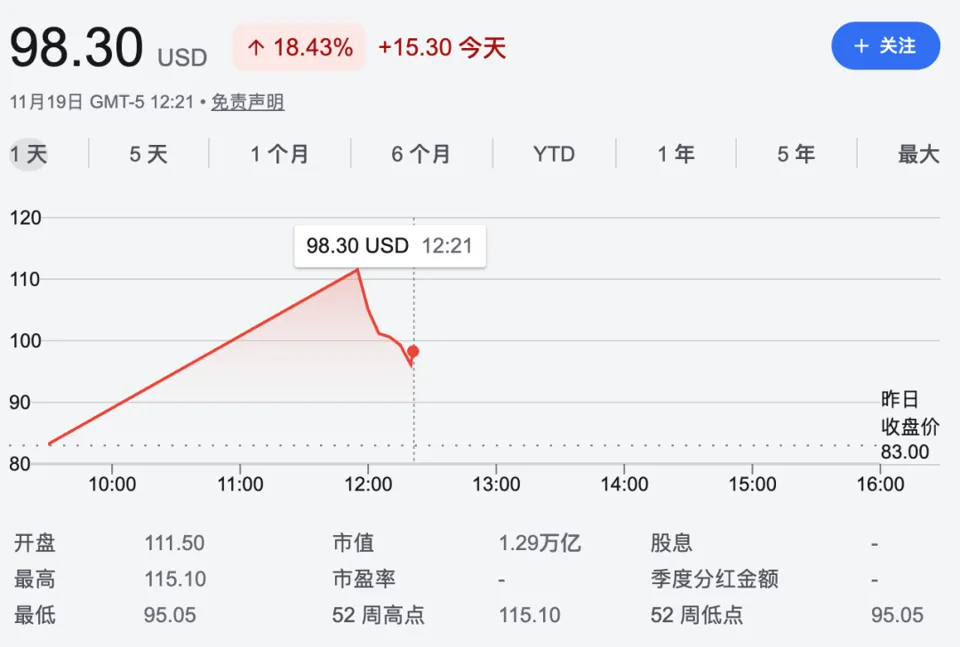
For a period after the listing, the Nasdaq, Dow Jones, and S&P 500 all experienced declines of varying degrees, and the stock prices of well-known technology companies also fluctuated repeatedly.

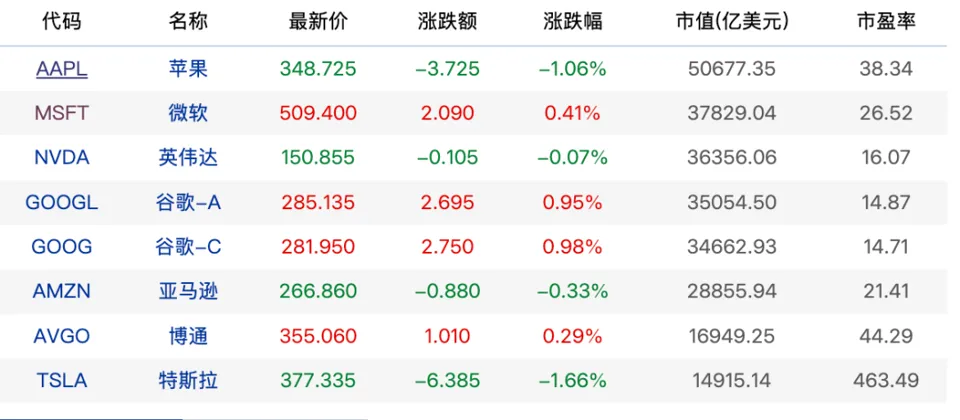
The optimism brought by the listing did not last. On November 20, Anthropic's stock price fell about 9% on its second trading day, at one point dropping to around $85 intraday, close to the $83 issue price. Retail investors who had chased the stock at high prices in the secondary market began to face losses. According to Vanda Research data, retail investors traded more than $750 million worth of Anthropic shares on the first day of listing, setting a record for first-day retail trading in an IPO tracked by the firm.
Greater pressure came from the entire AI sector. On November 20, the Nasdaq Composite fell 5.3% in a single day, the S&P 500 fell 3.7%, and the Nasdaq fell 10% for the week, marking its largest weekly decline since 2020. Nvidia fell 14% that day and 23% for the week; the semiconductor index fell 11%. Anthropic's listing did not stop capital from withdrawing from AI-related stocks.
Coincidentally, on the day of the listing, Claude experienced performance degradation. The status page listed Claude as "degraded," while the Claude API and Claude Code were operating normally. As of the publication of this article, officials have not explained the specific reason.
This IPO took place at a rather contradictory moment. AI-related stocks have undergone a correction, and investors have begun to re-examine how much return data center construction, compute procurement, and model training can actually bring. Yet Anthropic both received high attention from the capital market and, at the same time, faced severe scrutiny from all sides.
"Going public will only make us more determined to do the right thing. We will never bow to commercial interests or political pressure!" Amodei's remarks before ringing the bell were an indirect response to skeptics and also a way to show the outside world his determination:
"We will control the pace of training and deploying AI systems, and if necessary, take longer until we are confident they are safe and will remain under human control. We will not yield to commercial pressure, nor will we yield to political pressure. Putting the company in a stronger financial position today only strengthens our determination to do the right thing. If we can prove that it is possible to build an extremely successful company while making the right choices on safety, then others in the industry will also be inspired to follow us."
But some netizens are not optimistic about Anthropic's future trajectory, and the stock price changes may also illustrate this point.

The scale of Anthropic's IPO exceeded SpaceX's previous base offering size of $75 billion, making it the largest IPO in global capital markets. According to reports, Anthropic's record-breaking IPO attracted about 1,200 institutional investors to submit subscription orders, but share allocation was clearly skewed toward U.S. domestic investors, with more than 50% of institutional investors failing to receive share allocations.
Anthropic issued 980 million shares this time, expecting to raise about $81.34 billion. Of these 980 million shares, Anthropic itself sold 956.35 million shares, corresponding to about $79.38 billion in proceeds; another 23.649 million shares were sold by some existing shareholders, corresponding to about $1.96 billion, and the company will not receive this portion of the funds. In addition, Anthropic plans to raise $26 billion through a private placement. If the public offering and private placement are combined, the scale of this capital transaction is about $107.3 billion.
What is special about Anthropic is that it is turning the expectation of AI replacing human labor into a fast-growing business. From Claude Code to enterprise Agents, AI is beginning to take over more and more work that originally required professionals. The market space for model companies has therefore expanded from software procurement budgets to enterprises' enormous labor cost budgets.
However, shortcomings in computing power at the commercial level and excessive emphasis on the "safety" narrative have cast a shadow over the impressive stock price performance. Compared with the first-day stock price, Anthropic's performance in the several quarters after listing may be more important.
How Does Unemployment Anxiety Become a Business?
Dario Amodei's warnings about AI-driven unemployment have become an unavoidable topic when the tech industry discusses employment issues. But behind these predictions there is also a judgment directly related to Anthropic's business model: if more and more work that originally required professionals can be handed over to models, AI companies will no longer face only the software market, but also enterprises' enormous labor cost expenditures.
In May 2025, in an interview with Axios, Amodei proposed a widely discussed prediction: in the next 1 to 5 years, AI may replace about 50% of entry-level white-collar jobs in the United States and may push the unemployment rate up to 10%–20%. He specifically mentioned industries such as technology, finance, law, and consulting, arguing that entry-level positions in these fields may be the first to be affected.
In June 2026, Amodei further discussed the impact of AI on employment and income distribution in the article "Policy on the AI Exponential." He worried that while AI drives rapid economic growth, it may also cause sustained labor displacement and income inequality. To this end, he proposed policy measures such as wage insurance, employee retention incentives, and vocational training, and even discussed funding universal income mechanisms by taxing AI companies or raising capital gains taxes.
These warnings touch on the public's most realistic anxiety about AI: when machines begin to have the ability to take on professional work, will technological progress benefit them, or will it cost them their jobs?
This anxiety is changing how people use AI. Employees are proactively learning new tools and trying to bring models into their daily work, hoping to stay competitive by improving efficiency. Subscribing to models, using agents, and exploring automated workflows are gradually becoming choices for proactive adaptation and even self-protection. People worry about being replaced by AI, yet dare not fall behind it.
And this personal-level enthusiasm for usage is becoming an important entry point for Anthropic to open up the enterprise market.
Anthropic disclosed in its prospectus that the spread of Claude in enterprises relies largely on bottom-up organic growth: software developers and individual users first use Claude in their own work, then become internal champions within their organizations, bringing the tool into teams and departments and driving broader deployment. Anthropic even regards this group of individual users as an important customer acquisition channel for its enterprise business.
This path is worth noting. Enterprise adoption of AI does not necessarily begin with top-down technology selection; it may also start with an employee's daily work. When individual users are the first to validate Claude's value and then drive teams to expand usage, a tool originally aimed at individuals has the opportunity to enter an enterprise's core workflows. What Anthropic gains is not only individual subscription revenue, but also a growth channel to enterprise customers.
Employees use it first, teams then spread it, and finally enterprises pay for larger-scale deployment. This bottom-up penetration approach gives Anthropic a chance to bypass the lengthy sales and procurement processes of traditional enterprise software and find customers directly from real work needs.
The reasons enterprises buy AI are also changing. In the past, software mainly helped employees improve efficiency; today, products such as coding agents and office agents are beginning to attempt to complete part of the work independently. What enterprises see is the possibility of reducing repetitive human input, slowing new hiring, lowering outsourcing costs, and completing more business with fewer people. At the same time, pressure from competitors that are the first to complete AI transformation is also pushing enterprises to accelerate deployment.
Anthropic happens to be at the center of this round of demand expansion. The company's revenue grew from $41 million in 2023 and $386 million in 2024 to $4.585 billion in 2025; in the first nine months of 2026, it had already reached $33.242 billion, up about 1,206% year over year. As of September 30, 2026, more than 11,900 customers had contributed at least $100,000 in revenue over the past 12 months, more than 12 times the number a year earlier.
From individual users to enterprise customers, from developer tools to business process deployment, Anthropic is turning expectations of AI's impact on the labor market into business growth. Employees hope to use AI to stay competitive, enterprises hope to use AI to reduce costs and expand output, and model companies are beginning to earn more and more revenue from this change.
The problem is that the more work enterprises are willing to hand over to AI, the more Anthropic needs to prepare in advance the compute required to take on that work.
AI Takes Over Work, and Compute Spending Increases Operating Pressure
The continued increase in the workload borne by AI means that model invocation and inference demand will also grow in tandem. But compute is not an ordinary resource that can be purchased on demand. To maintain model leadership and meet future demand, Anthropic must lock in large amounts of computing resources in advance; whether these investments can be recovered depends on whether enterprises will really hand more work to AI.
Amodei is quite optimistic about the future market. He believes today's AI market is only a starting point. As model capabilities improve, AI's application scope may continue to expand from software development to fields such as scientific research, biotechnology, cybersecurity, and robotics. These new scenarios mean AI has the opportunity to take on more professional work and also give Anthropic visibility into a larger market than current coding and enterprise knowledge work.
But the market has not yet fully opened up, while infrastructure investment has already moved ahead. According to the prospectus, as of September 30, 2026, Anthropic's signed compute procurement commitments and lease agreements totaled approximately $900.9 billion. Of this, about $451.6 billion is expected to occur by the end of 2030, with most of the remainder expected to occur between 2031 and 2045.
This is a resource commitment spanning decades, and it will tightly bind Anthropic's operating performance for many years to come to compute supply, usage efficiency, and customer demand.
Amodei calls compute the deepest business dilemma Anthropic faces. Model companies usually need to lock in computing resources one to two years in advance, but AI capabilities and market demand change extremely quickly, making it difficult to accurately judge how much compute will actually be needed in the future and how much economic value the resources locked in advance can ultimately create.
In other words, enterprises may begin purchasing AI services today, while model companies may need to pay years in advance for future demand. Once enterprise automation demand does not grow as expected, long-term resource commitments already signed may become operating pressure.
Anthropic's approach is to arrange long-term compute procurement based on relatively cautious demand forecasts, then use short-term resources to cover the portion exceeding expectations, striving to strike a balance between insufficient compute and overinvestment. As of the end of September 2026, the company had approximately $95.6 billion in cash and cash equivalents, $36.3 billion in short-term investments, and additional credit facilities, providing a large financial buffer for continued investment.
There is already a set of noteworthy data on whether compute investment can generate sufficient returns.
The prospectus shows that Anthropic's revenue per dollar of compute investment rose from $0.40 in the first quarter of 2025 to $2.08 in the second quarter of 2026, but fell back to $1.72 in the third quarter. The company explained that one important reason was approximately $5 billion in additional short-term compute procurement in that quarter, with prices for this portion of resources significantly higher than multi-year procurement.
This means that continued expansion of model usage and revenue scale does not mean unit compute costs will keep declining. Especially when the company needs to rely on short-term procurement to cope with surging demand, higher resource prices may directly affect operating efficiency.
Profit data shows a similar contradiction. In the first nine months of 2026, Anthropic achieved approximately $4.081 billion in adjusted operating profit, with an adjusted operating margin of about 12%, but it still had an operating loss of approximately $1.26 billion. The difference between adjusted profit and operating loss under accounting standards indicates that the company is still in a stage of rapid expansion and large-scale investment in parallel.
Anthropic has already proven that enterprises are willing to pay huge fees for model services and has initially demonstrated operating efficiency, but it still needs to answer a harder question: how can ever-increasing AI workloads continue to generate commercial returns sufficient to cover compute investment?
If enterprise automation demand growth slows, long-term compute commitments could become a heavy fixed cost; if demand continues to grow rapidly, expensive short-term compute could erode profit margins. The capital raised through an IPO can strengthen the company's ability to withstand pressure, but it cannot eliminate the time lag between compute investment and commercial returns.
Foreign media estimates suggest that Anthropic would need to achieve annual revenue of approximately $602 billion to earn a 20% return on its roughly $1 trillion compute commitment.
Specifically, based on $1 trillion in capital investment, a 40% operating margin, and a 17% tax rate, achieving a 20% return on investment would require Anthropic to generate approximately $602 billion in annual revenue. That revenue scale would exceed Alphabet's current annual revenue of about $471 billion and Apple's roughly $478 billion, equivalent to about two-thirds of the combined revenue ($908 billion) of all 76 software and IT services companies in the S&P 1500 index.
Amodei is betting that as model capabilities improve, the compute being built today will ultimately support an AI industry far larger than the current market. But whether fields such as scientific research, biotechnology, cybersecurity, and robotics can generate sustained customer demand still requires time to verify.
Models Are Getting Cheaper—How Long Can Anthropic's Premium Last?
Even if AI can enter more and more enterprise workflows, Anthropic may not be able to exclusively capture this incremental market.
As model capabilities gradually become widespread, enterprises have more and more vendors to choose from, and relying solely on leading model performance to command high premiums will become increasingly difficult.
Competition among frontier models is creating a new contradiction: training stronger models requires more compute and R&D resources, but once model capabilities are caught up by competitors, enterprise customers may not be willing to pay higher prices for performance improvements.
Enterprises do not need to buy the strongest model for every task. For simple information organization, text processing, and basic code generation, lower-cost models can already meet many needs; but in complex programming, financial analysis, professional research, and high-risk business, accuracy, reliability, and task completion capability still determine whether enterprises are willing to pay higher prices.
This means that what Anthropic must defend is the market segment that demands higher model capabilities and task reliability and is more willing to pay a premium.
As open-weight models continue to improve, vendors such as DeepSeek are also driving a rebalancing between model capabilities and usage costs, and the technical and price advantages of frontier closed-source models are both facing challenges. Anthropic also acknowledges that competitors may achieve comparable model capabilities at lower cost, and enterprise customers may purchase services from multiple model providers simultaneously, allocating different workloads based on task complexity, price, and performance. Once the capability gap between models narrows, maintaining a price premium solely through technical leadership will become increasingly difficult.
The commercial performance of Claude Code has already pointed to another competitive direction. What enterprises are buying when they purchase AI is expanding from pure model capabilities to a complete task execution experience.
Whether a model can generate code is a different matter from whether it can understand an entire codebase, invoke development tools, plan tasks, locate errors, and complete fixes. Systems engineering capabilities such as tool calling, context management, codebase understanding, task planning, and error repair also determine whether AI can truly take on work. Products such as OpenAI Codex are also filling in similar capabilities, and competition among model companies is gradually extending to product experience, enterprise workflows, and tool ecosystems.
For enterprises, model capability is only the starting point. Whether a task can be handed to AI from start to finish determines whether it is worth shifting the corresponding budget from labor or outsourcing spending to AI services. Whether an agent can reliably complete tasks, integrate into existing workflows, connect to enterprise tools and data systems, and continuously reduce the cost of human intervention will all affect enterprise purchasing decisions.
Anthropic is expanding its market along this path. It started with chat and API services, then expanded into programming, using Claude Code to translate model capabilities into actual software development work; in the future, it hopes to extend this capability to scientific research, life sciences, cybersecurity, and other professional fields. Each time it enters a new work scenario, the company has an opportunity to access new enterprise budgets.
A promotional video released on IPO day to capitalize on the momentum
However, a larger market space does not mean Anthropic will automatically capture the corresponding revenue. In the first nine months of 2026, the company's top five customers contributed about 25% of revenue, but some large customers do not have long-term purchasing commitments and can adjust or even stop spending based on business needs. Enterprises can also allocate budgets across multiple model providers or switch to lower-cost solutions after a pilot ends.
This puts Anthropic under a dual test: on the one hand, it must continuously improve model capabilities and product experience so that AI can take on more high-value work; on the other hand, it must keep enterprise customers expanding usage rather than switching to other vendors after model prices fall.
The real competitive moat must ultimately be embedded in workflows. The fact that an enterprise has purchased Claude does not mean it will keep using it in the future; only when Claude can reliably take on work that enterprises are unwilling to easily hand back to human employees, and when switching costs are high enough, will Anthropic have the opportunity to turn a one-time purchase into long-term revenue.
Chinese Model Companies Will Face Stricter Tests
Anthropic's IPO also provides an important public-market reference point for other frontier model companies. In the future, when investors evaluate the commercial value of companies such as OpenAI, they may not only focus on model capabilities and user scale, but also further examine enterprise customers' actual usage, revenue quality, compute costs, and whether AI can truly take on enterprise work. This influence will also extend to Chinese model vendors.
In a report released in September 2026, Rhodium Group compared the valuations and annual recurring revenue (ARR) of Chinese and U.S. model companies. The report estimated that Anthropic's valuation/ARR multiple was about 21x, and OpenAI's about 34x; China's Zhipu was about 46x, Moonshot AI about 50x, and DeepSeek reached 163x.
These figures reflect that the valuations of some Chinese model companies already incorporate high future growth expectations. Different companies differ in business structure, revenue scale, commercialization stage, and financing environment, but after Anthropic's IPO, the market will have more opportunities to observe how a frontier model company supports its valuation through enterprise customers, product services, and sustained revenue.
If Anthropic maintains a strong performance in the public markets, it could further strengthen capital's confidence in the commercial value of frontier model companies. For already-listed companies such as Zhipu and MiniMax, as well as other model companies like DeepSeek and Moonshot AI, Anthropic's financial disclosures also provide a new dimension for comparison: how fast enterprise customers are growing, whether customers continue to expand usage, whether revenue can cover compute investment, and whether model services can generate stable profit margins.
Chinese model vendors do not necessarily need to catch up with the most advanced closed-source models on every task. Open weights, low-cost inference, and local deployment can still create advantages in a large number of enterprise scenarios. Especially for enterprises that are budget-sensitive, have high data security requirements, or wish to independently control model deployment capabilities, these approaches may have stronger practical appeal.
But low prices and openness also bring another business problem: widespread use of a model does not mean the original developer can obtain revenue commensurate with the scale of usage. If enterprises can acquire models at low cost and then build agents and business systems themselves, how can model vendors earn sustained revenue from this?
This requires Chinese model companies to think further: how to convert model capabilities into productivity that enterprises are willing to pay for over the long term through API services, enterprise deployment, industry solutions, agent products, and ecosystem partnerships.
Anthropic's commercial path offers a sample worth observing: starting with individual developer usage, entering specific workflows through products such as Claude Code, and then expanding commercial revenue through enterprise APIs and agent services. Its growth shows that model companies have the opportunity to move from enterprise software procurement budgets further into labor cost budgets.
Chinese model companies need to find their own entry points, translate technical capabilities into real business outcomes for enterprises, and establish a sustainable business model among an open ecosystem, low-cost inference, and enterprise services.
Anthropic's IPO will ultimately test more than whether Claude can continue to maintain model leadership, and more than whether the company can achieve higher revenue and profits.
Over the past few years, one of the grandest commercial imaginations in the AI industry has been that machines will gradually take over part of human work, and that enterprises will therefore reallocate the costs originally used to pay for human labor. Now, this story is beginning to enter the pricing system of the capital markets.
Wall Street is pricing the future of human labor. What Anthropic needs to prove next is whether it can turn this imagination of the future into productivity that enterprises are willing to pay for every day.
The "Safety" Narrative May Face Backlash
However, the test facing Anthropic may go beyond business models and technological competition. For a company that takes AI safety as its core mission, another harder question to avoid is: as it continues to pursue more powerful AI, can it still uphold its original safety commitments?
There is a notable contradiction in Amodei's strategic logic: he believes superintelligence may pose an existential risk to humanity, but at the same time firmly believes that the best way to avoid this outcome is for Anthropic to develop superintelligence first. This line of thinking is called the "race to the top," and its basic judgment is that the AI race is inevitable, that the ultimate winner will gain enormous technological and social influence, and that Anthropic is more capable than its competitors of using this power responsibly.
But this logic has not won the agreement of all employees. Some employees hope the company will proactively slow down frontier model research and even limit the compute investment required for training. Amodei believes that even if Anthropic stops research, competitors will not stop. Rather than withdraw from the competition, it is better to strive for a leading position and ensure that superintelligence ultimately rests with a company more capable of developing it responsibly.
Divisions have also emerged within the company around AI regulation and policy lobbying. Some employees are dissatisfied with Anthropic's participation in promoting draft policies that restrict state-level AI regulation, believing that such actions are in tension with the company's long-emphasized safety mission. When an AI company emphasizes technological risk while trying to influence regulatory rules, whether it is promoting more effective safety governance or seeking a more favorable competitive environment for itself has become an unavoidable question.
This skepticism extended beyond the company on the eve of its listing. Before the IPO, Hugging Face co-founder Thomas Wolf, xAI co-founder Igor Babuschkin, Harvard professor Steven Pinker, Turing Award winner Judea Pearl, and others signed the "MisAnthropic Statement."
The statement pointed out that Anthropic, on the one hand, warns that recursive self-improvement (RSI) may lead to concentration of power and even cause AI to escape human control, while on the other hand, it is racing to develop this technology and trying to gain a competitive advantage first. The statement also accused Anthropic of using its safety image to attract investors, employees, and the public, while weakening previous safety commitments and promoting regulatory policies that serve its own interests. The statement ultimately reached a rather sharp conclusion: "Anthropic is not a safe AI company."
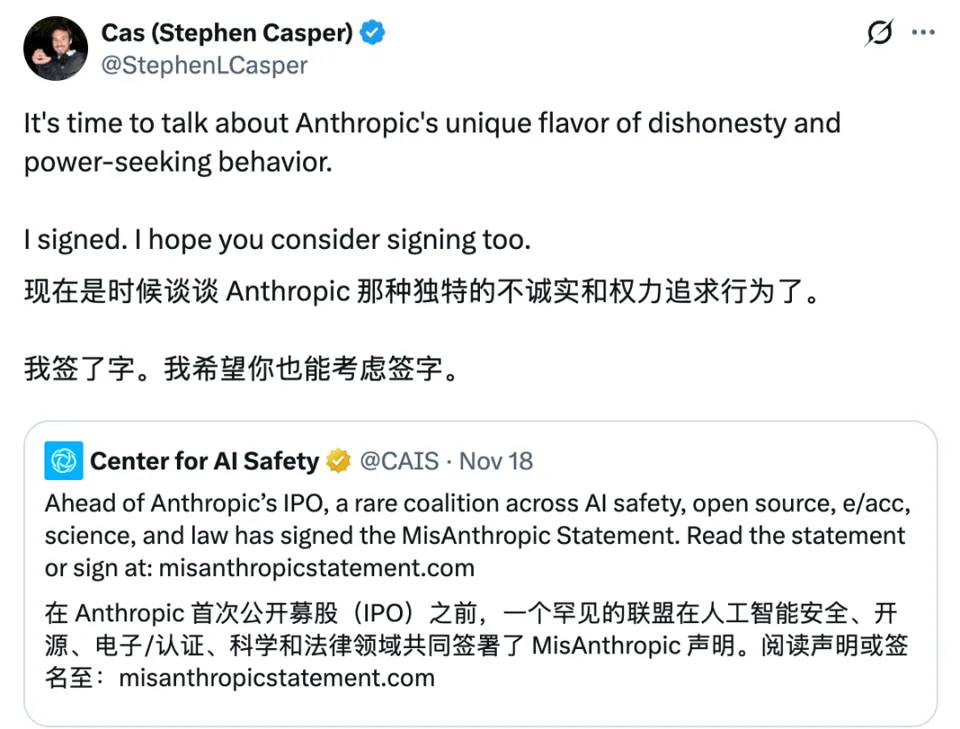
This debate has gone beyond AI safety philosophy itself and extended to corporate governance, commercial interests, and public trust. Amodei firmly believes that he can develop superintelligence responsibly, but management's self-judgment is not enough to replace external oversight. Especially when technological leadership means greater commercial returns and social influence, whether safety principles can truly constrain the company's R&D and business decisions will face stricter scrutiny.
Anthropic's IPO therefore faces two sets of tests. The capital market needs to judge whether it can translate the expectation that AI will replace human labor into sustained revenue and profits; the public needs to judge whether a company whose goal is to be the first to develop superintelligence that may transform human society truly has the ability to constrain this force.