CMU Study Finds Showing Real Options Beats Asking Preferences in AI Agents
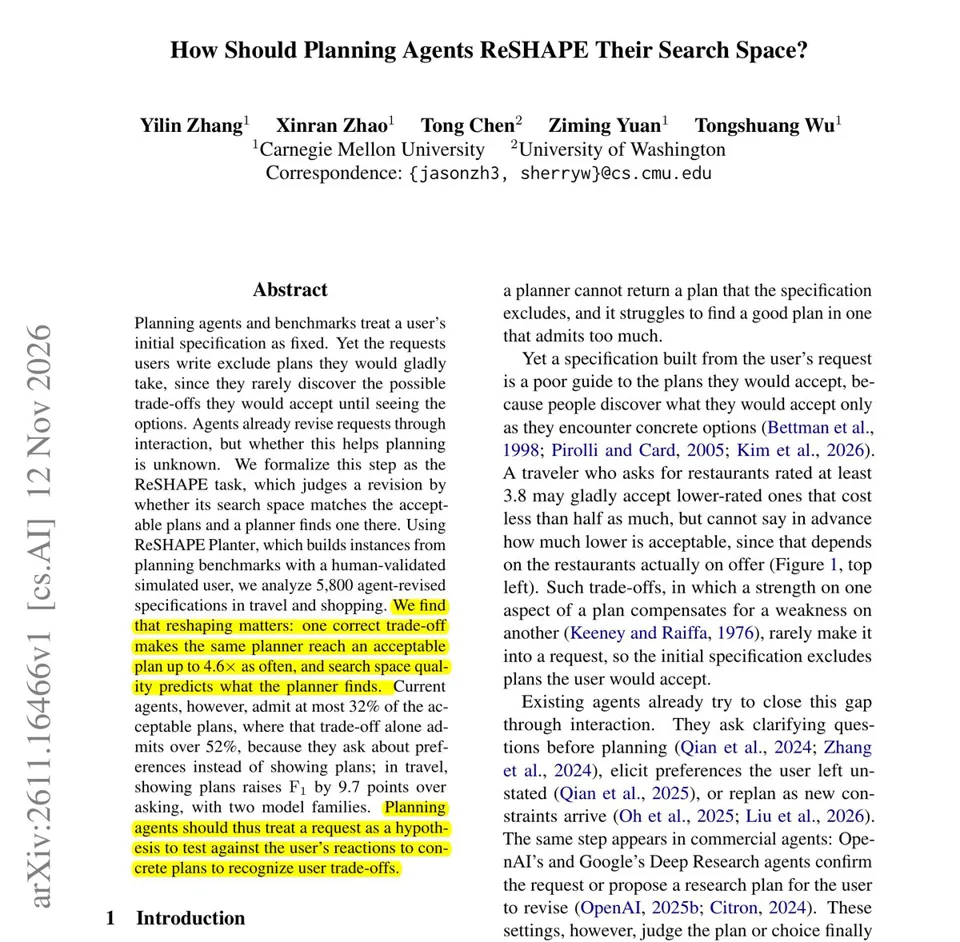
A new Carnegie Mellon paper finds that AI assistants planning trips and shopping win far more acceptance by showing a few real options before locking the spec, lifting acceptance from 12% to 55%. Current agents such as Claude Code and Gemini CLI mostly ask questions and capture at most 32% of acceptable plans.
Full Report
Rohan Paul (@rohanpaul_ai) · 2026-11-16 18
New Carnegie Mellon paper finds that AI assistants that plan trips and shopping find more options people would accept by showing them a few real choices than by asking about their preferences.
A travel request like “restaurants rated 3.8 or higher” throws out a cheaper place rated 3.7 that the user would happily pick. People rarely say they would accept a lower rating to save money, because they only realize it when they see the actual options.
Adding that 1 hidden trade-off to the request raised the share of plans the user accepted from 12% to 55%, with the same planner.
Current agents (Claude Code, Gemini CLI and others) mostly asked questions and rarely showed plans, so they caught at most 32% of plans the user would accept.
Agents that showed plans did clearly better than agents that asked.
When your agent turns a request into a plan, show the user a few options outside their stated limits early, before locking the spec.