Neolabs Pivot to Reselling GPUs as Fallback Strategy
Some AI startups (Neolabs) failing to achieve breakthroughs are pivoting to reselling or leasing their locked-in GPU compute resources to hedge risks and generate revenue. This trend highlights the massive sunk cost of compute in LLM ventures and the arbitrage opportunities created by supply-demand imbalances in the spot market. Although Elon Musk notes that power shortages are the true bottleneck, the 'compute broker' model has become a primary survival path for Neolabs when model training fails.
Full Report
Contents3 sections
From the AGI Sprint to GPU Reselling.
Neolabs that can’t train models are starting to resell GPUs.
Neolabs—emerging AI labs—are currently the hottest venture capital projects. These are AI startups founded by star researchers who secure massive funding upfront before diving into model development.
Born with a halo, they ostensibly pursue cutting-edge technology, but...
Recently, an "absurd" business model has emerged, attracting even Elon Musk’s attention:
Neolabs that secured large amounts of compute capacity in advance using huge funding rounds can make a killing by selling GPUs, even if they fail to train good models.

Regarding this opportunity, the founder of Modal, an AI cloud computing unicorn, stated:
Next year, we may see a wave of Neolabs transforming into Neoclouds (AI compute cloud providers).
Netizens have already mapped out the best-case scenarios for Neolabs: achieving a technological breakthrough to become the next OpenAI; pivoting to vertical enterprise Agents as a survival strategy; or, in the worst case, failing to train their models but still guaranteeing shareholder returns by subleasing GPUs.
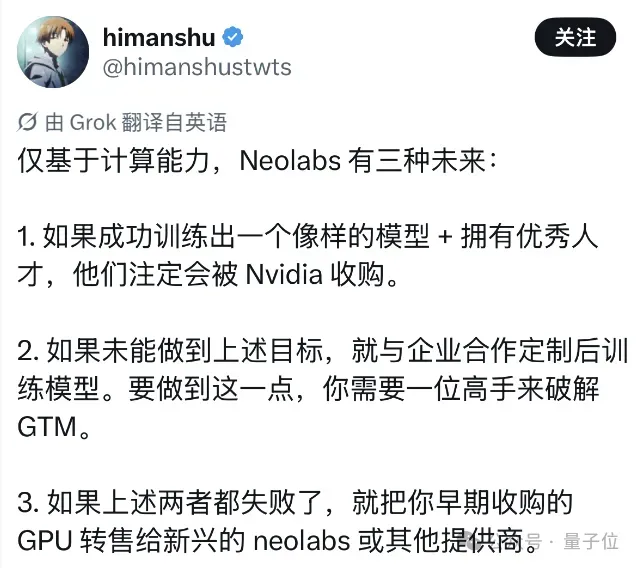
This is truly mastering cycle management and risk hedging.
Compute Scalpers Have Arrived
In large model startups, compute is the largest sunk cost, often accounting for half or even more than 70% of a Neolab’s total expenses.
To prevent sudden supply interruptions during mid-training, most labs sign minimum commitment leases ranging from one to three years with cloud providers or large data centers immediately after completing their seed or Series A rounds.
On the other hand, due to various factors, the spot market for compute remains persistently tight.
H200 rental prices surged by approximately 160%, the new-generation dark horse B200 rose by 120%, and even H100 spot prices maintained a premium of around 35%.
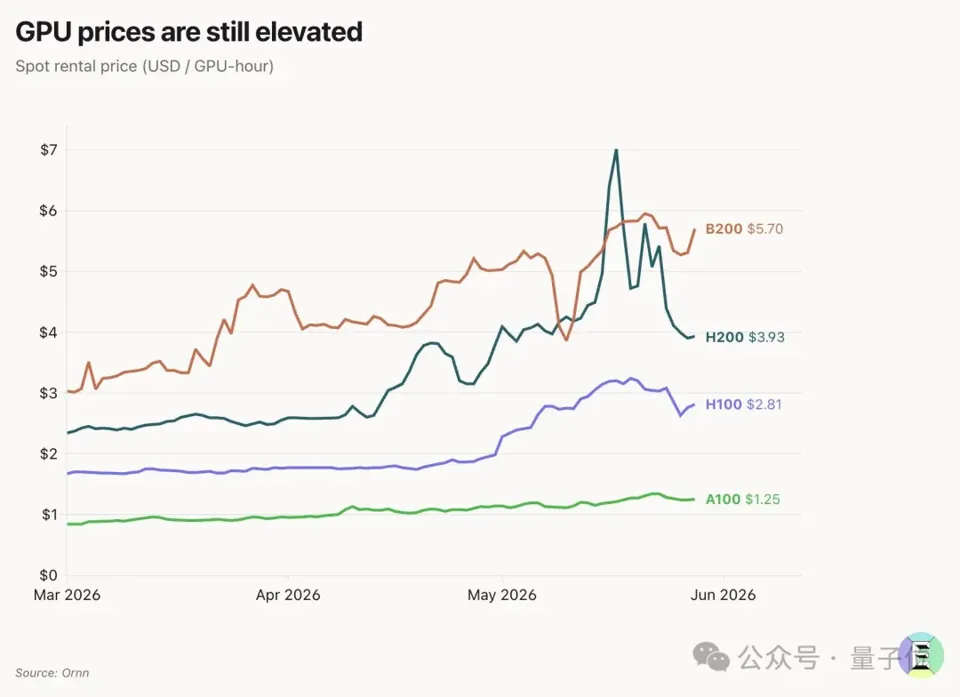
Faced with these massive arbitrage opportunities, many research-stalled labs that failed to produce viable models have started acting as compute scalpers.
Beyond launching advanced models to sell tokens, they found three ways to make money.
First, packaging long-term compute lease premiums and flipping them to brokers to earn risk-free spreads;
Second, listing spot GPU instances for sale, splitting idle nodes, and selling short-term compute on a daily or weekly basis to small teams urgently needing capacity;
Third, wrapping open-source models for inference services. Giving up pre-training entirely, they simply deploy mainstream open-source LLMs on their chips and offer API services billed per token.
In short, they find ways to profit regardless. Done deal.
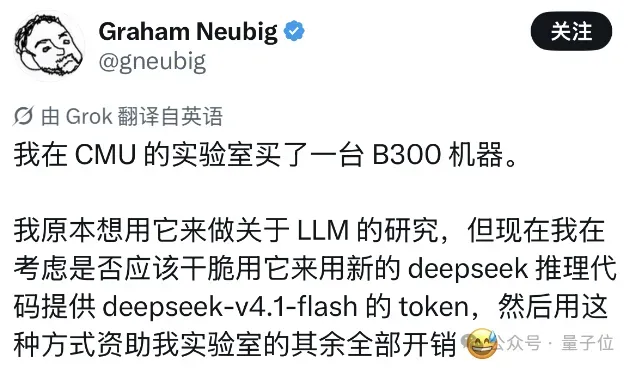
Facing the temptation of monetizing compute, an associate professor from Carnegie Mellon University frankly admitted on X:
AI Genius Startups: Silicon Valley VCs Start Doing the Math
As the most lucrative species in the venture capital world over the past two years, Neolabs follow a uniform playbook.
They are typically founded by star chief scientists from top-tier giants like OpenAI, DeepMind, and Meta. They skip tedious application-layer development, claiming right off the bat that they are tackling AGI. Leveraging extremely high talent density, they mobilize hundreds of millions in funding at the PPT stage alone.
However, according to a recent report by Dealroom, a leading European venture capital data agency, the 29 most typical global AI Neolabs have raised a cumulative total of $23 billion (approx. ¥166 billion RMB). Yet, those that have actually launched commercial products available for external sale account for less than 35%.
In other words, at least 19 labs remain stuck in closed research phases or have only released technical white papers or demos.
A typical example is Safe Superintelligence (SSI), co-founded by Ilya Sutskever, former Chief Scientist at OpenAI.
Bolstered by the unparalleled technical prestige of its founding team, SSI’s valuation was pushed to $32 billion less than a year after its establishment, with a team of fewer than dozens of people. Such speed would have been unimaginable before 2023.
However, from its inception, SSI publicly stated that it would absolutely not develop any consumer- or enterprise-facing commercial products until achieving "Safe Superintelligence."
The sentiment is noble.
But a Silicon Valley VC did the math: today, a single complete training cycle for a base model burns at least $10 million in compute costs.
If this expense were to be recouped solely by slowly selling APIs and tokens later, the company would need to successfully sell 10 trillion effective token calls cumulatively, after deducting electricity, bandwidth, and depreciation costs.
Moreover, given that major players are currently dumping open-source models via subsidies or even free distribution, labs without supporting enterprise workflows or monopolized data find it unrealistic to break even by selling APIs.
According to Business Insider, Matt Murphy, a Silicon Valley veteran who participated in early Google investments and led Menlo Ventures’ investment in Anthropic, believes that Neolabs are among the most severely overhyped investment sectors today.
He argues that Google’s early success was like "throwing a match into a bonfire," whereas some current Neolabs are trying to "use a bonfire to light a match."
In his view, injecting tens of billions of dollars upfront into frontier labs artificially raises the threshold for their commercial success.
One More Thing
Elon Musk also jumped in to comment on this wave of Neolabs reselling compute.

His point: Buying so many cards is useless because the current compute shortage isn't about cards, it's about electricity.
According to Goldman Sachs' latest research, global data center power demand is projected to grow by 170% between 2025 and 2030, but grid construction, approvals, and infrastructure expansion cannot keep pace.
As of October this year, 86 data center projects globally have been canceled or significantly delayed.
Musk predicted yesterday that the Neocloud industry will face a wave of large-scale consolidation and bankruptcies.
The transformation path for Neolabs looks difficult indeed...