量子位 (微信公众号) · 10/20/2026, 12:06:00
Ex-Nvidia Team Launches Dream Labs with $90M Seed and Robot Foundation Model API
Dream Labs, founded by former Nvidia DreamZero team members, announced a $90 million seed round and launched its robot foundation model, Dream-1. The model emphasizes cross-embodiment generalization, claiming to control unseen dual-arm robots without specific training data. It ranked first in the third-party RoboDojo-RC benchmark and is now available via API, aiming to serviceize the 'robot brain'.
SOURCE COVERAGEFull Original Report
Contents3 sections
Turning the Robot Brain into an API
By Henry, from QbitAI
QbitAI | WeChat Official Account: QbitAI
The most important thing about showing up is actually showing up!
Just now, Dream Labs, a robotics startup founded by former members of NVIDIA's DreamZero team, made its public debut. The company announced it has secured $90 million in seed funding and opened the API for its foundational robot model, Dream-1.
According to the company, the model can control previously unseen dual-arm parallel gripper robots to perform new tasks without requiring training data specific to those target robots.
In their cross-robot demonstration on the official website, the team showcased simulation tests on 27 types of unseen robots, along with 21 real-world demos.
Specifically, this includes placing objects into a bowl using a Maker Arm in simulation, as well as closing a drawer with an OpenYAM robot in a real-world environment.
It can be said that the model’s adaptability across different embodiments is already quite strong.
Furthermore, in third-party benchmarking agency Robocurve’s RoboDojo-RC Tier 1 evaluation, Dream-1 achieved an average task score of 59.3%, ranking first among currently published model configurations and outperforming the top three large language models (LLMs).
(Who said embodied AI was beaten by LLMs?!)
Currently, the Dream API is open. Developers upload camera feeds, robot states, and task instructions, and the model returns actions for the robot to execute.
The operational cost for the Dream-1 model is **2 per hour.
The DreamZero Team Launches a Startup
The technical approach behind Dream-1 stems from the team’s research at NVIDIA on World Action Models (WAM).
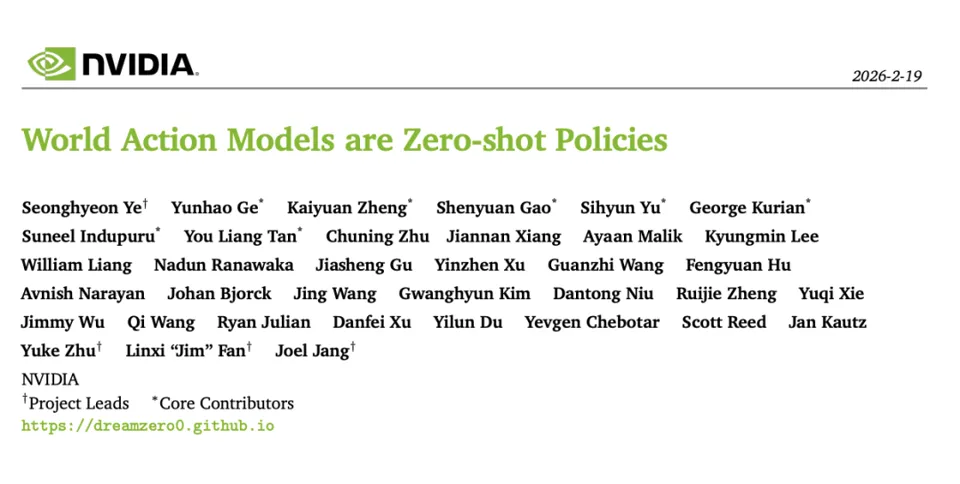
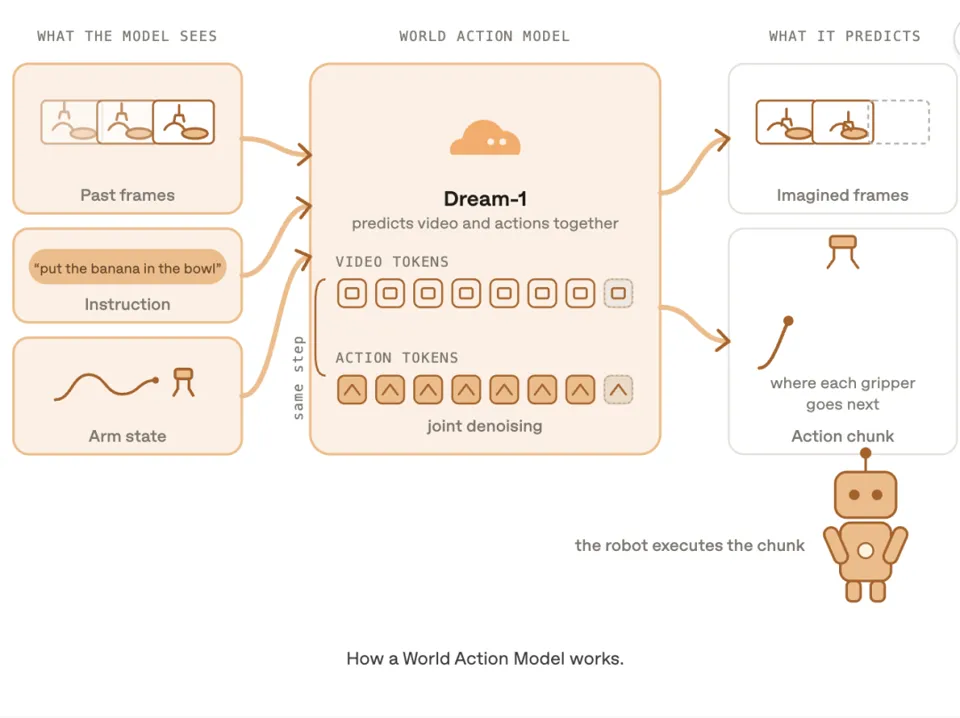
Unlike standard world models, WAM simultaneously learns to predict future visual frames and determine the appropriate actions for the robot.
DreamZero, released earlier this year in February, already demonstrated the potential of this approach: using just 30 minutes of post-training data from a YAM robot, it could attempt unseen tasks on that specific robot.
What Dream-1 aims to further eliminate this time is the additional adaptation required when crossing between different robot embodiments.
According to the team’s demonstrations, for certain dual-arm parallel gripper robots not seen during training, Dream-1 can begin executing tasks directly without collecting demonstration data for those specific robots.
This relies on a key change: the model outputs the target position, orientation, and open/close state for the gripper. Each robot’s own control system then translates these targets into joint movements.
While different robots may have varying arm lengths and joint structures, there is now a common representation for "where to move the gripper."
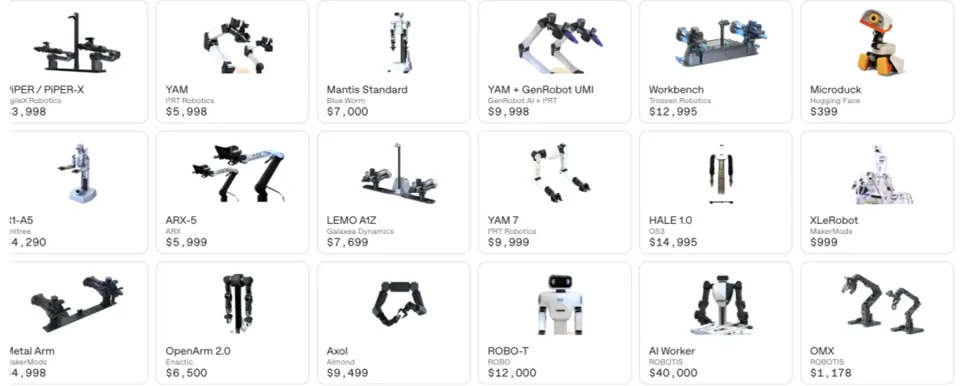
Simultaneously, WAM learns robot and object dynamics through video, attempting to transfer this knowledge to new bodies.
However, Dream-1 currently focuses primarily on dual-arm manipulation tasks with parallel grippers. The model decides where the gripper should go but does not directly control how the entire arm reaches that point. Consequently, it may still generate unexecutable targets when encountering obstacles, joint limits, or robots significantly different from its training experience.
Therefore, performance also depends on the robot’s own inverse kinematics solver—the software responsible for converting gripper targets into joint motions.
Notably, if zero-shot performance is insufficient, the team offers fine-tuning services. Users can upload videos of their own robot operations, and the team will train a custom model based on this data, which can then be accessed via the API.
The Team Behind It
As mentioned at the beginning, the team behind Dream-1 consists largely of former members of NVIDIA’s robotics division.
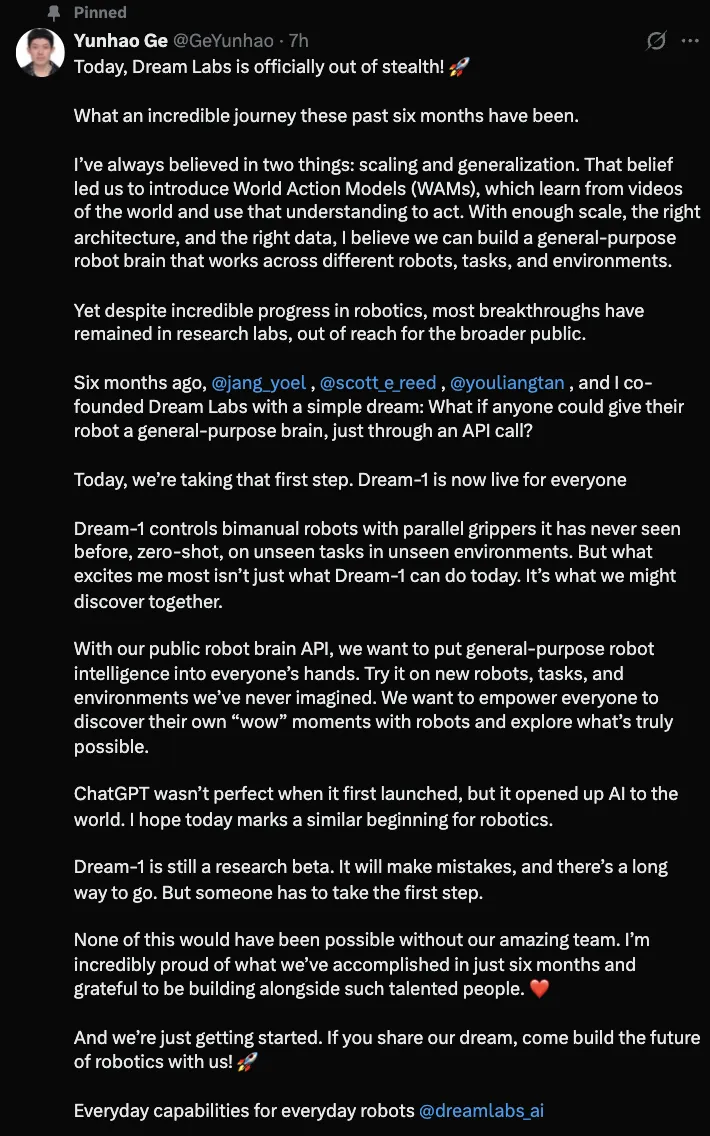
You Liang Tan confirmed in the launch post that he co-founded the company alongside Joel Jang, Scott Reed, and Yunhao Ge. The four serve as CEO, Chief Scientist, CTO, and Chief Robot Officer, respectively.
CEO Joel Jang previously led world model research for NVIDIA’s GR00T.

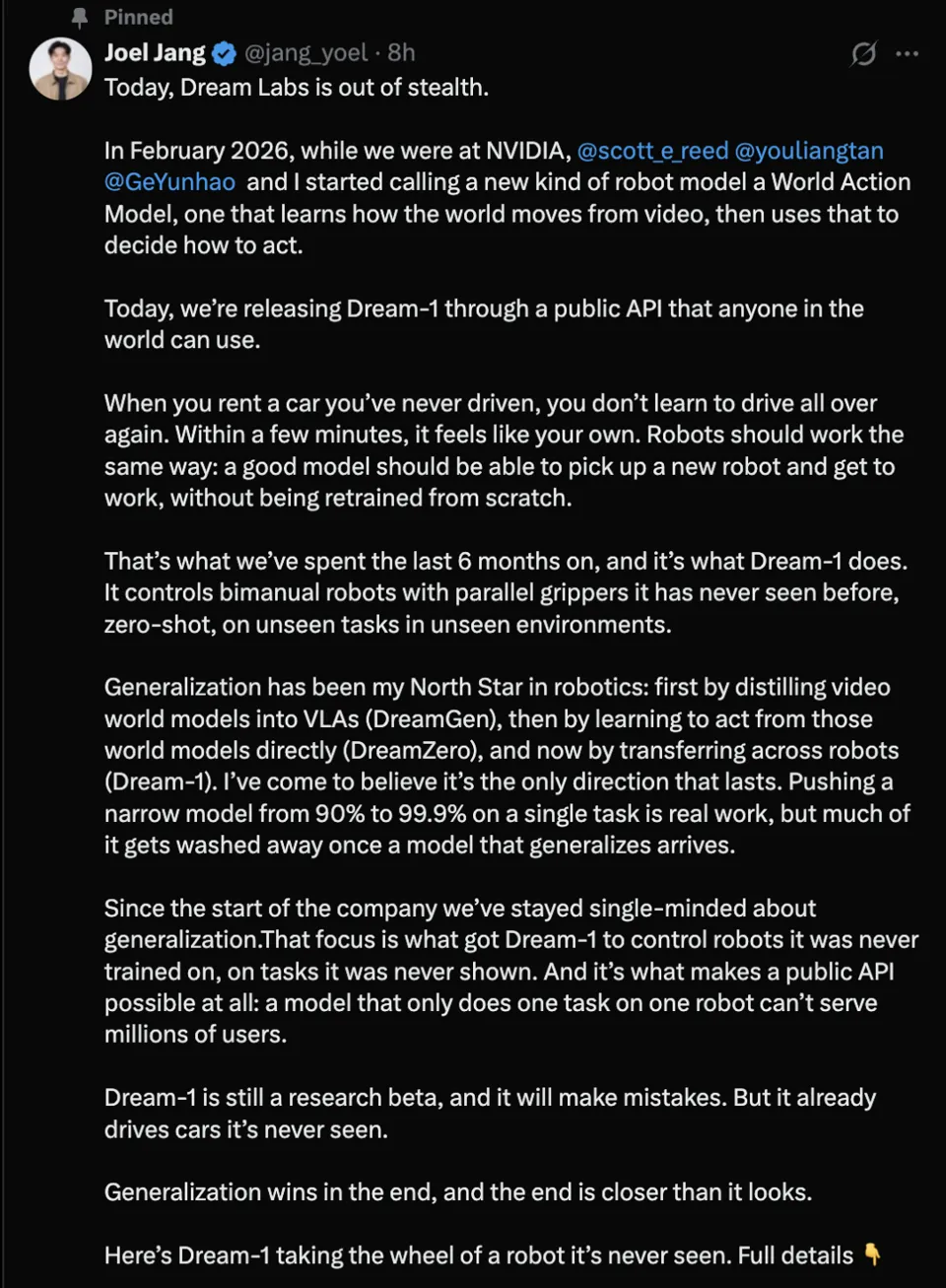
He contributed to projects such as DreamGen and DreamZero. In his announcement, he clearly outlined this research trajectory:
DreamGen extracts robot policies from video world models; DreamZero learns actions directly from world models; and with Dream-1, the focus shifts toward cross-robot transfer.
His primary emphasis is on generalization: ensuring existing capabilities remain effective across new tasks, environments, and robots.
CTO Yunhao Ge has a research background focused on video generation and world models.
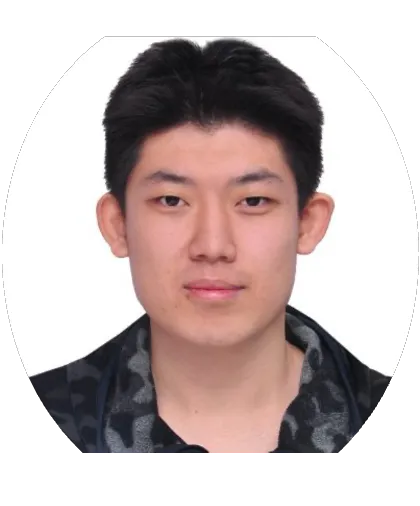
He holds a PhD from the University of Southern California and has visiting research experience at Stanford. He participated in the development of NVIDIA’s Cosmos world foundation model series.
Regarding future steps, he stated that the team will continue to narrow the gap between zero-shot usage and adaptation with small amounts of data. The ultimate goal may be to eliminate the need for even five minutes of adaptation data.
Chief Scientist Scott Reed is the first author of the Gato paper.
Before joining NVIDIA, he worked on generative models and control research at DeepMind. He subsequently became a member of NVIDIA’s GEAR team, contributing to the development of the GR00T robot model.
You Liang Tan is responsible for integrating models with robots.
He previously led the open-source efforts for Isaac GR00T N1.x and was involved earlier in developing foundational robotics software such as ROS 2 and Open-RMF.
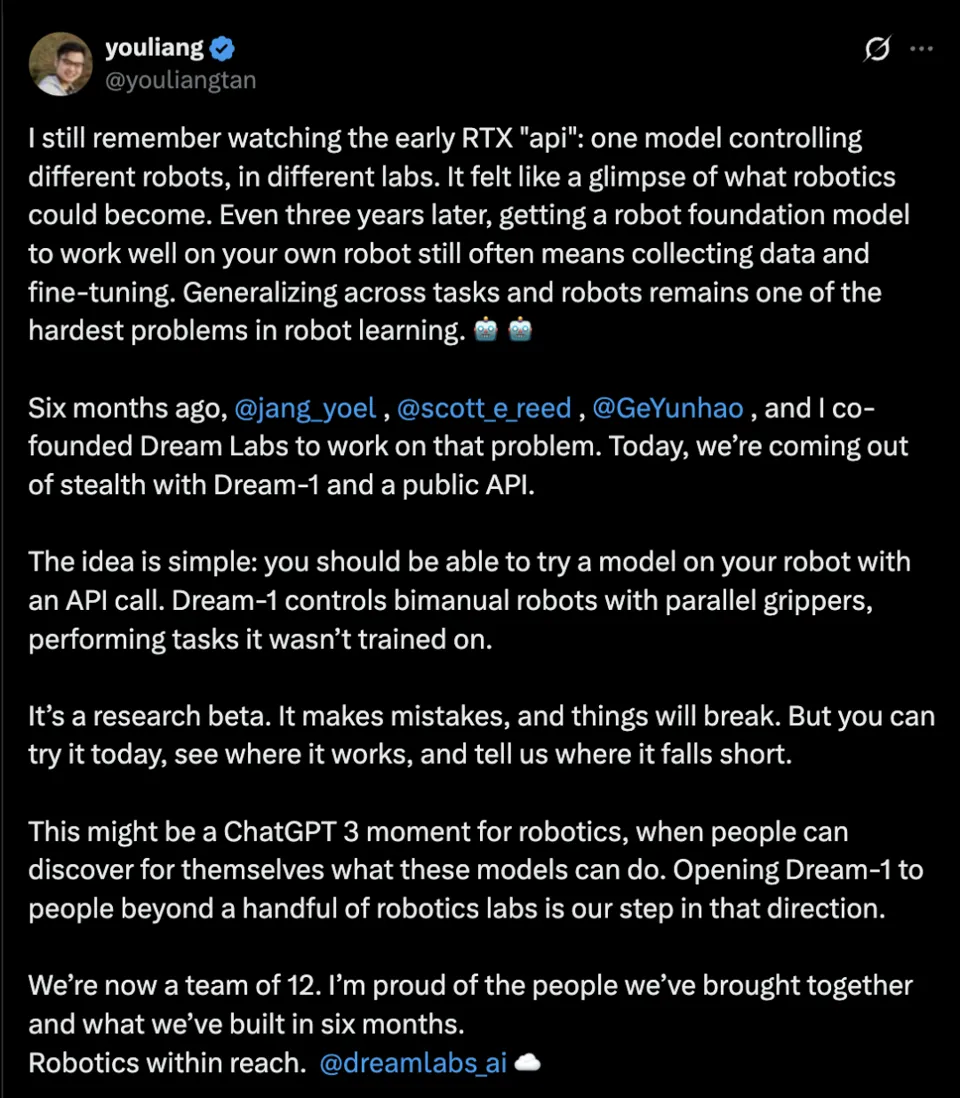
In the launch post, he emphasized that users should be able to test the models on their own robots via API. While Dream-1 makes mistakes, open testing also means people outside the lab can discover what it truly can do and where it still falls short.
The $90 million seed round supporting this team was led by B Capital, with participation from Kindred Ventures, A.Capital, Unusual Ventures, SV Angel, Wing VC, Scribble VC, and Adrian Aoun.
The company stated that the funding will primarily go toward compute resources, enabling Dream-1 to handle more tasks, adapt to more robots, and serve more users. The team also plans to expand into areas like mobile manipulation and dexterous hands, gradually moving beyond the current capability scope dominated by dual-arm parallel grippers.
Previously, Physical Intelligence released its own API but had not yet announced pricing.
As large model companies enter the embodied AI space, new startups focusing on the "brain" of robots must find pathways to connect models with real hardware and reach broader user bases. Dream-1 offers its attempt through an open API.
What remains to be seen is whether these demonstrated cross-robot capabilities can be consistently reproduced across more hardware platforms and real-world scenarios.
References [1]https://dreamlabs.ai/research/dream-1/
Like, Share, and Subscribe!
Leave your thoughts in the comments!
— End —
🌟 Star Us 🌟
Daily updates on cutting-edge tech progress