Alibaba Trains Next-Gen Qwen Models on T-Head Chips
Alibaba CEO Eddie Wu confirmed on the earnings call that the next-generation Qwen model has been trained on the company's in-house T-Head chips, and that the Bailian platform now serves model inference on domestic silicon. The move marks Alibaba's full-stack AI infrastructure shifting from external compute dependence toward deep chip-model co-design for better cost per unit of compute. The T-Head spin-off listing in Hong Kong is also progressing, with Qwen4 launch imminent.
Full Report
IT之家 November 19 news, according to a report by Cailian Press today, on the analyst call for the second quarter of fiscal year 2027 earnings, Alibaba Group CEO Eddie Wu stated that Qwen has already been training its next-generation model on T-Head chips, and Model Studio already provides model inference services based on domestic chips.
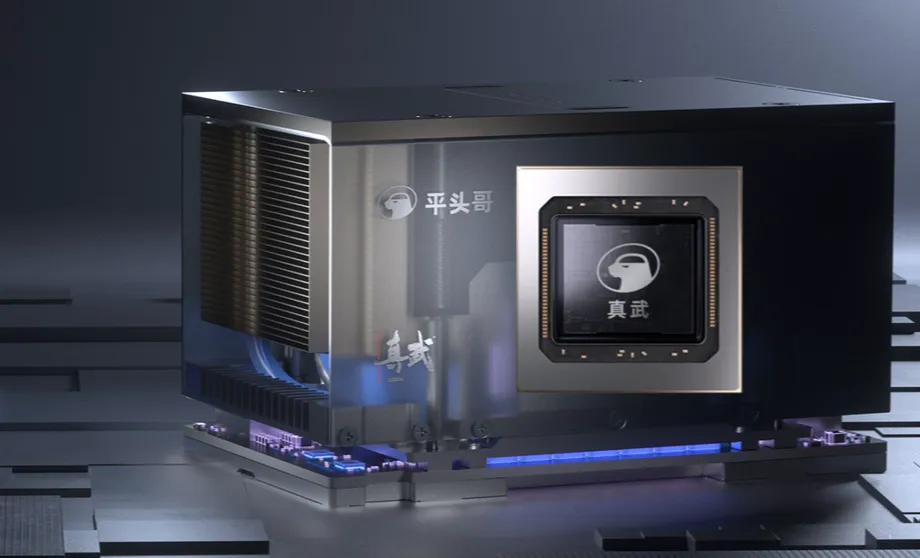
Eddie Wu emphasized that Alibaba's full-stack AI infrastructure will form a clear advantage in the domestic computing power supply chain, and the deep synergy between self-developed chips and self-developed models will continue to translate into better cost per unit of computing power and higher R&D efficiency for AI applications.
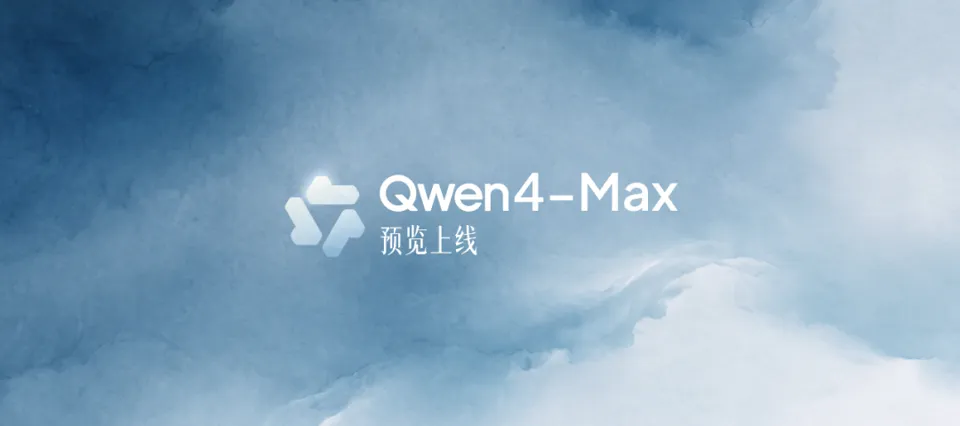
According to an earlier report by IT之家 this month, the all-new generation Qwen large model Qwen4 is about to be released: deeper knowledge understanding, more three-dimensional world perception, and continuously advancing Coding and Agentic capabilities. Now, the Qwen4-Max preview has made its debut on the Alibaba Token Plan, where you can experience the Qwen4 model at a limited-time minimum of 10% of the price.
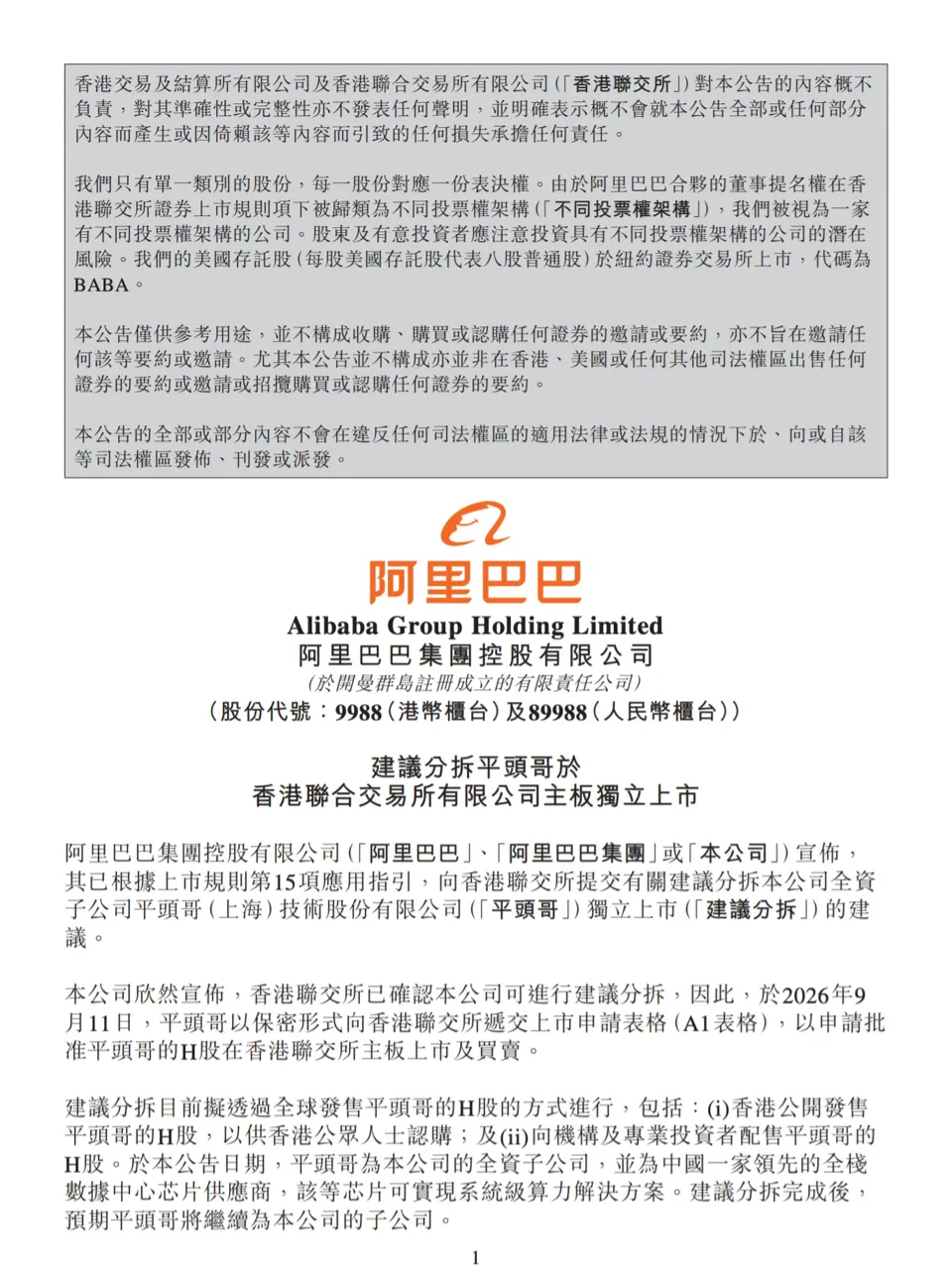
In addition, Alibaba announced on the Hong Kong Stock Exchange that the HKEX has confirmed the company may proceed with the proposed spin-off. On September 11, 2026, T-Head confidentially submitted an application form for listing (Form A1) to the Hong Kong Stock Exchange to apply for approval to list and trade T-Head's H shares on the Main Board of the HKEX.
According to a report by 《科创板日报》(STAR Market Daily), computing power supply remains a real constraint facing current AI businesses. Commenting on the impact of the latest tightening of restrictions, Tencent executives stated that in the long run, the relevant restrictions may push more Chinese companies toward the domestic supply chain and domestic chips, accelerating the construction of the domestic supply chain, and the relevant R&D efforts will further concentrate in this field.
Further Reading
T-Head Semiconductor Co., Ltd. was established in 2018, formed by the merger of the domestic embedded CPU company C-SKY, acquired by Alibaba, and the DAMO Academy chip team. Its product lines mainly include: the XuanTie series RISC-V architecture processor IP, the Yitian 710 server CPU, the Hanguang and Zhenwu series AI accelerator chips, and the Zhenyue 510 hard drive controller chip. Public data shows that cumulative shipments of chips produced under license of its processor IP have exceeded 6 billion units, and cumulative shipments of AI chips have reached 560,000 units. On the evening of November 10, 2026, Alibaba announced the spin-off of its wholly-owned subsidiary T-Head for an independent listing in Hong Kong, with valuation ranges given by different institutions ranging from $20 billion to $62 billion. At the Apsara Conference held in September 2026, T-Head released a new-generation training-and-inference-integrated AI chip, the Zhenwu V900, equipped with 216 GB of memory, 1,200 GB/s inter-chip interconnect bandwidth, native support for FP8 and FP4 precision, and performance improved to three times that of the previous generation Zhenwu M890, with mass production and launch planned for the first quarter of 2027. At the conference, Alibaba also revealed that the next-generation model Qwen 4 is being trained, and published the roadmap for the subsequent Qwen 4.5 and Qwen 5, with parameter scale expected to expand to 5 trillion to 10 trillion. Products such as Qwen Office, Qoder, the Qwen App, and QwenStudio have already integrated the new Qwen4 model at the first opportunity. Among them, the preview period for Qwen4-Max-Preview is from 10 on November 11, 2026 to 24 on November 25 (UTC+8), during which Credits consumption is as low as 20%, and the personal edition enjoys a further 40% discount every night from 22 to 08 the next day; Qwen4-Max was officially launched on November 16, and both the personal edition and the team edition support this model. The Model Studio mentioned in the article is Alibaba Cloud's large model service platform Model Studio, which provides all Alibaba Cloud users with more than 100 foundation models covering multimodal scenarios such as text, images, and audio/video, while also supporting model fine-tuning, exclusive computing power reservation, and secure and trustworthy MaaS services. Alibaba Group CEO Eddie Wu is one of the company's co-founders. He served as technical director when Alibaba was founded in 1999, and has held positions including CTO of Alipay, general manager of Alimama, and CTO of Taobao. He has served as the group's CEO and director since September 2023. According to Alibaba's second-quarter fiscal year 2027 earnings report released on November 19, 2026, the group's revenue for the quarter was 271.519 billion yuan, up 10% year on year, and adjusted EBITA was 32.636 billion yuan, up 260% year on year; among them, Alibaba Cloud's external recurring revenue grew 67% year on year, and AI-related product revenue achieved triple-digit year-on-year growth for thirteen consecutive quarters.