IT之家 · 智能时代 · 2026/10/17 09:19:43

微软推出 StudentSim:用 AI 模拟学生以加速导师迭代

出处作者 / 发布主体:IT之家
68AI 研判分
核心综述

微软发布基于大语言模型的 StudentSim 系统,通过训练个性化“AI 学生模拟器”来替代真实人类进行早期教学反馈测试。该系统利用去标识化学习者记录,模拟学生独立作答及接受指导后的反应变化,旨在解决真人实验耗时昂贵、难以规模化的痛点,为 AI 导师研发提供低成本、可扩展的迭代信号。

报道全文原始报道全文

传统 AI 导师往往只看“答案是否正确”,但教学效果还取决于学生是否理解、能否纠正错误,以及不同学生是否需要不同解答支持。真实学习者研究能回答这些问题,却耗时、昂贵且难以规模化,难以支撑模型的快速迭代。
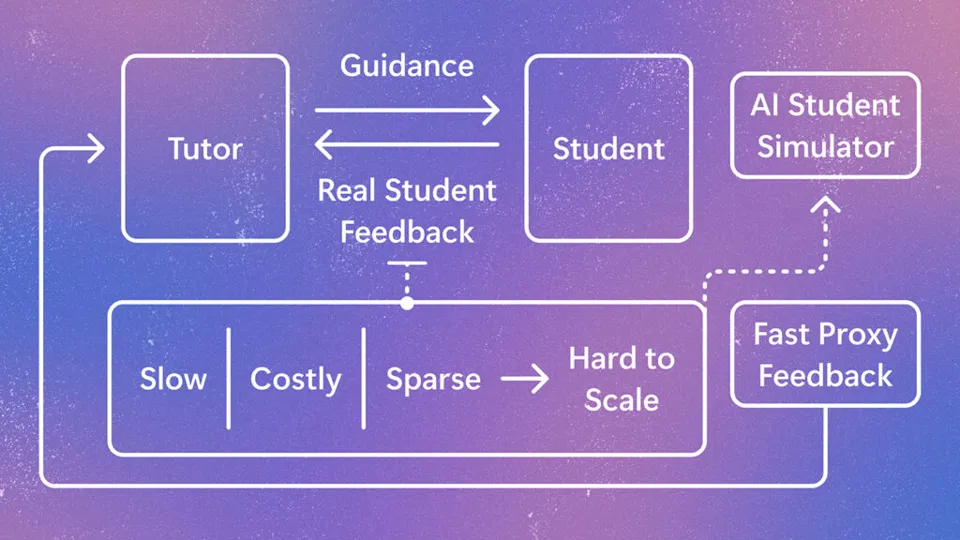
A conceptual diagram of the feedback loop required to improve an AI tutor. The middle part of the figure shows that a human teacher gives guidance to a real student and receives the student’s feedback, but this feedback is slow, costly, sparse, and hard to scale. On the right panel of the figure, an AI student simulator is trained from real student feedback and serves as a fast proxy for the student during tutor development.

微软为此推出 StudentSim 系统,基于公开、去标识化的学习者记录,为每位学生训练一个个性化“AI 学生模拟器”。它不仅模拟学生如何独立作答,还模拟其在收到导师讲解后的反应变化。
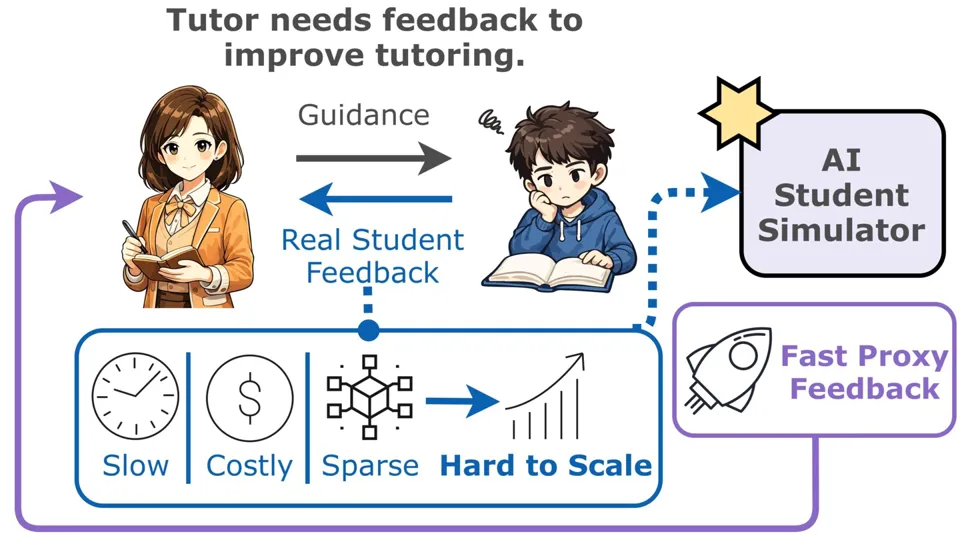
Alt text: A conceptual diagram of the feedback loop required to improve an AI tutor. The middle part of the figure shows that a human teacher gives guidance to a real student and receives the student’s feedback, but this feedback is slow, costly, sparse, and hard to scale. On the right panel of the figure, an AI student simulator is trained from real student feedback and serves as a fast proxy for the student during tutor development.

研究团队以“行为保真度”和“指导响应性”两项指标评估模拟器:前者检验其是否像特定学生那样答题,后者检验其能否在辅导后合理更新答案。
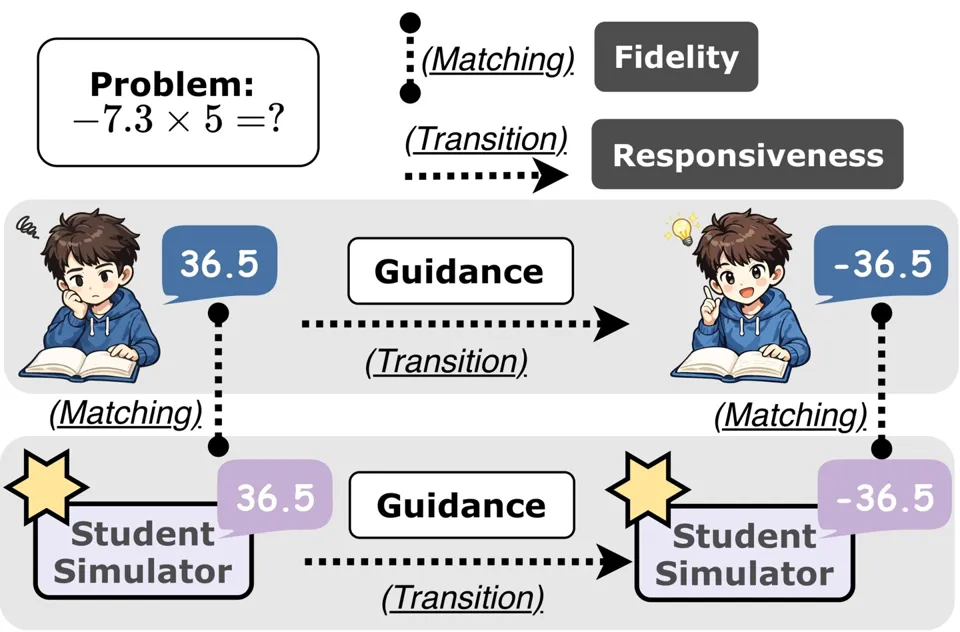
Alt text: Diagram defining the two evaluation criteria used for student simulators. The upper portion shows a problem, “minus 7.3 times 5 equals what.” The lower portion compares a real student and an AI simulator. Both initially answer 36.5, then receive guidance and revise their answer to negative 36.5. Asking whether a simulator’s responses match the recorded student answers is behavioral fidelity. Matching the guidance-induced change is guidance responsiveness.

该系统采用两阶段训练:先从同领域大量学生的匿名数据中学习常见答题方式、错误类型和辅导后的修改模式,再针对单个学生的有限记录进行个性化适配。研究覆盖国际象棋、第二语言英语写作和数学三类任务,并推出 StudentSimEval 评测基准。
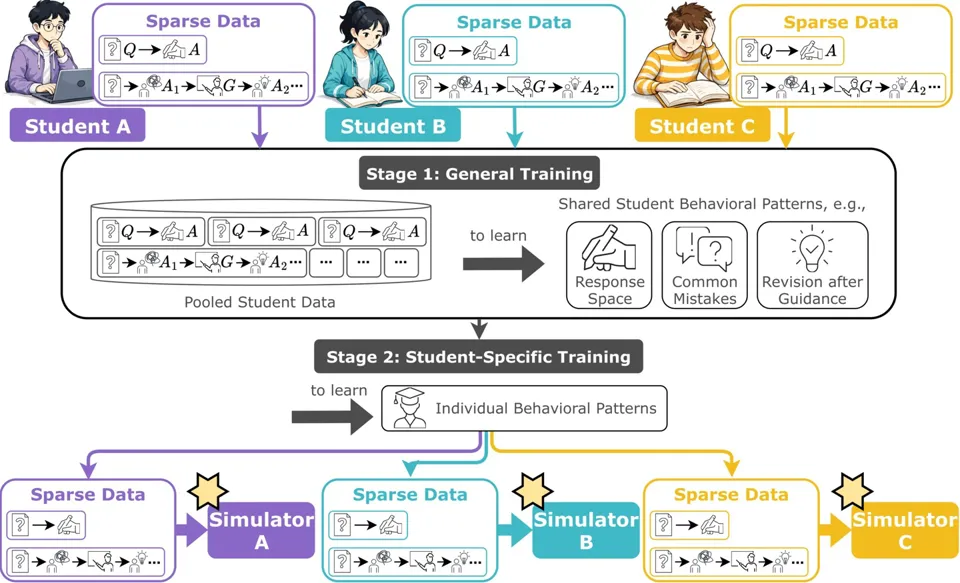
Alt text: A two-stage pipeline for training personalized StudentSim models from sparse student records. At the top, several students each have limited examples of question-answer interactions and answer revisions following tutor guidance. In the middle, stage one training, records from all students are pooled to learn shared behavioral patterns, including the space of possible responses, common mistakes, and typical revisions after guidance. At the bottom, stage two training, the model is adapted separately to each student’s records, producing one personalized simulator per student.

结果显示,StudentSim 在三个领域均优于主要基线。以国际象棋为例,其行为保真度达到 0.5150,指导响应性达到 0.9067,均高于 GPT-5.4 与专用棋类模型 Maia2。
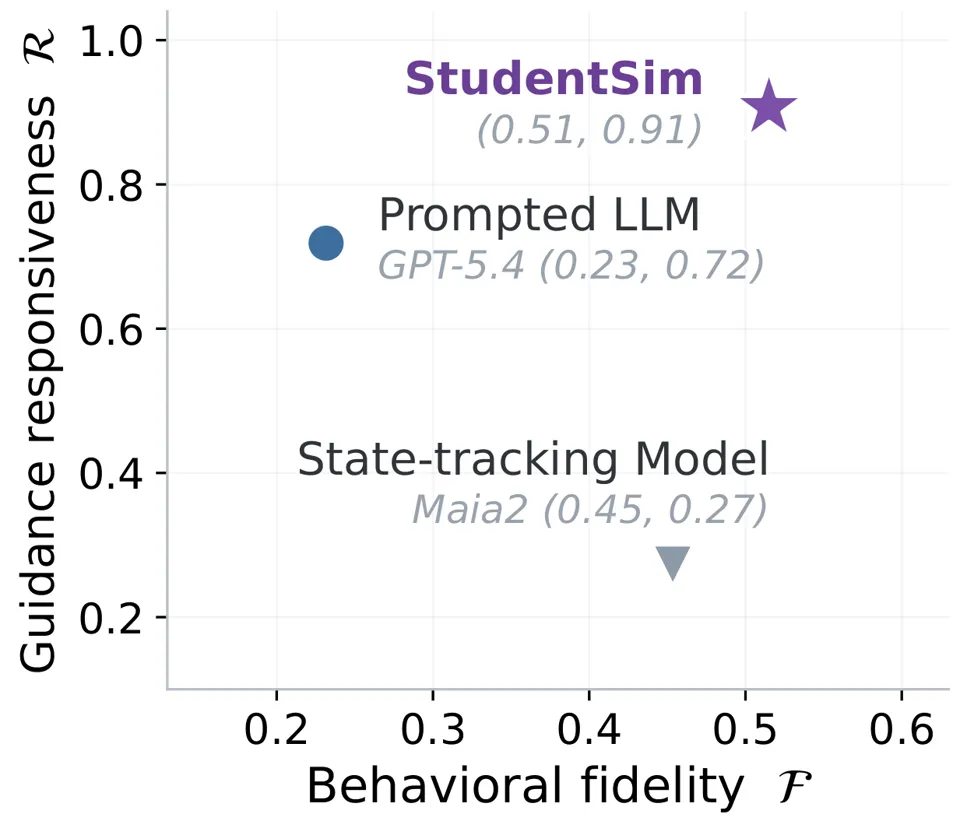
Alt text: Scatter plot comparing three student simulation approaches on behavioral fidelity, shown on the horizontal axis, and guidance responsiveness, shown on the vertical axis. StudentSim is positioned in the upper-right at approximately 0.51 fidelity and 0.91 responsiveness. A prompted GPT-5.4 model has lower fidelity, approximately 0.23, and moderate responsiveness, approximately 0.72. Maia2, a state-tracking model, has moderate fidelity, approximately 0.45, but low responsiveness, approximately 0.27. The plot shows that StudentSim performs strongly on both criteria.

在 AI 象棋导师的强化学习实验中,以 StudentSim 反馈训练的导师准确率达到 90.5%,高于无强化学习基线的 75.7% 和使用 GPT-5.4 模拟反馈的 71.6%。
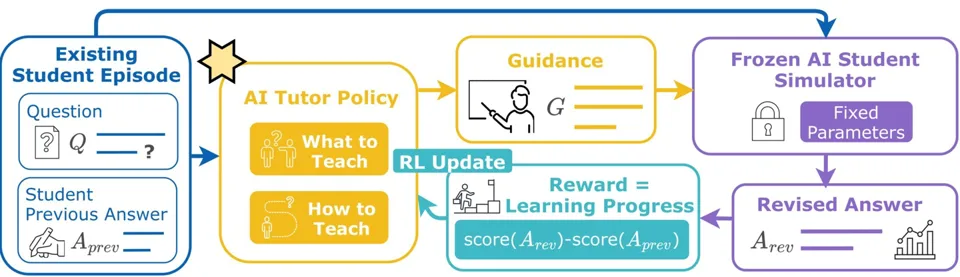
Alt text: Diagram of reinforcement learning for an AI chess tutor using StudentSim as the feedback source. Each episode begins with a real student’s chess position and previous incorrect move. The AI tutor receives this context and generates guidance describing what and how to teach. A frozen, personalized AI student simulator reads the guidance and produces a revised move. The reward equals the improvement in chess evaluation from the student’s original move to the revised move, and this reward updates the AI tutor policy while the simulator remains fixed.

微软强调,StudentSim 不是课堂产品,也不旨在取代教师;它是在真实学生测试前,为研究者提供低成本、可扩展的早期反馈信号。

IT之家附上参考地址