Glucose-Powered Implant Restores Blood Sugar Control in Diabetic Rats
Researchers from the National University of Singapore and Nanjing University of Posts and Telecommunications report in Nature a glucose-powered implant, NeuroAxis, that electrically stimulates the vagus nerve to engage cholinergic anti-inflammatory and neuroimmune regulation for closed-loop glucose control. Type 2 diabetic rats approached healthy glucose levels within two weeks, while type 1 rats regained glycemic control after eight weeks, with evidence of pancreatic beta-cell proliferation. The work is the first to use glucose as both an energy source and a metabolic sensing signal in a battery-free, self-regulating neurostimulation system.
Related Entities
Full Report
Contents3 sections
Using glucose to generate electricity to control blood sugar.
Good news!
Without needing insulin injections, diabetes can be controlled by generating electricity from glucose in the body to stimulate nerves.
According to the latest Nature research, the National University of Singapore and Nanjing University of Posts and Telecommunications have created an implantable device that successfully restored normal blood sugar in diabetic rats.
Based on the experimental results, just two weeks after implantation, the blood sugar of type 2 diabetic rats dropped to a level close to that of healthy rats; while type 1 diabetic rats restored normal blood sugar control after eight weeks of treatment, and the researchers even observed the proliferation and recovery of pancreatic islet β cells.
The basic principle of this device is to use glucose to generate electricity, then through electrical stimulation of the vagus nerve, mobilize the body's existing neuroimmune regulation mechanisms, and at the same time automatically determine when to start and stop stimulation based on changes in blood sugar.
The research team named this system NeuroAxis (artificial neuroimmune axis).
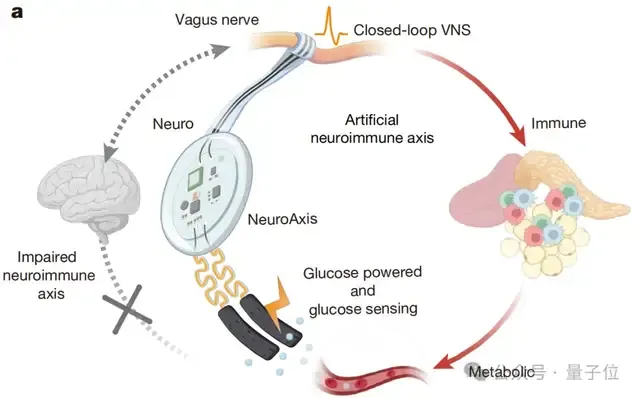
△ Image source: the paper
Why can stimulating the vagus nerve control blood sugar?
As we know, insulin is the key hormone for the human body to regulate blood sugar. It is secreted by the islet β cells in the pancreas and can help cells in the body absorb and utilize glucose, thereby lowering blood sugar.
But in diabetic patients, this regulatory mechanism has gone wrong, and blood sugar needs to be controlled by supplementing insulin, promoting insulin secretion, or improving insulin sensitivity.
Among them, type 1 diabetes is mainly caused by the immune system mistakenly attacking islet β cells, resulting in the body being unable to secrete enough insulin.
Type 2 diabetes mainly involves insulin resistance and the gradual decline of islet β cell function. Even if there is insulin in the body, it cannot fully exert its effect.
But in fact, the human body's regulation of blood sugar is not limited to the pancreas. The brain, liver, gastrointestinal tract, and even the immune system all participate in the process of blood sugar regulation.
And one of the important pathways connecting these organs is the vagus nerve.
The vagus nerve is an important autonomic nerve in the human body. It extends downward from the brainstem and widely connects to internal organs such as the heart and gastrointestinal tract. Among its fibers, afferent nerves are responsible for transmitting the body's physiological state to the brain, while efferent nerves participate in transmitting central regulatory signals to peripheral organs.
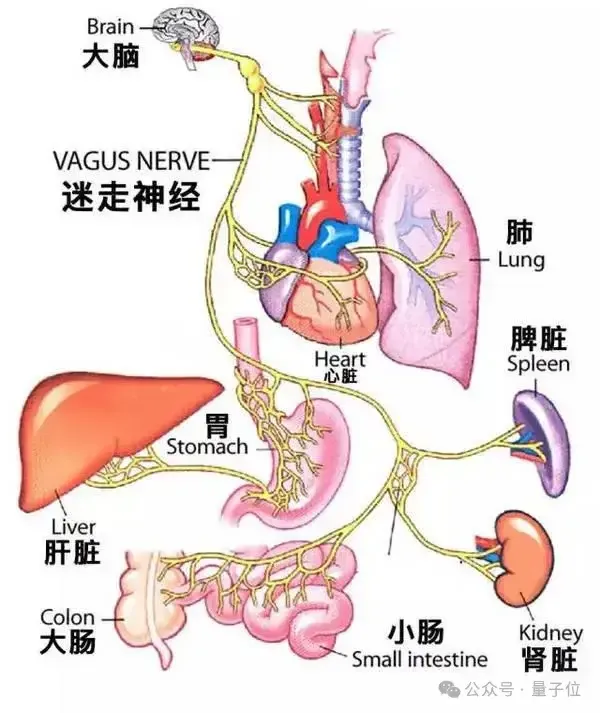
Both of these neural pathways are related to blood sugar regulation. How do they regulate it?
First, let's talk about the neural pathway. When we eat, the gastrointestinal tract produces a series of physiological changes and transmits information to the brain through signaling pathways including the vagus nerve. After receiving these signals, the brain participates in regulating appetite, satiety, and energy intake.
This study also found that stimulating the vagus nerve can activate regions in the brain involved in feeding regulation, thereby affecting the rats' appetite and energy intake, and thus participating in the regulation of body weight and metabolism.
But eating less is not enough to properly regulate blood sugar. This involves another important function of the vagus nerve: regulating the immune system.
The researchers focused on a mechanism called the "cholinergic anti-inflammatory pathway." This mechanism is important for diabetes because type 2 diabetes is often accompanied by long-term low-grade chronic inflammation.
Especially in obesity-related type 2 diabetes, immune cells in adipose tissue may continuously release pro-inflammatory factors such as tumor necrosis factor (TNF) and interleukin-1β (IL-1β). These inflammatory signals interfere with the normal action of insulin, aggravate insulin resistance, and make it increasingly difficult for the body to effectively use glucose.
Stimulating the efferent pathway of the vagus nerve is expected to inhibit the release of pro-inflammatory factors, reduce chronic inflammation, and improve insulin resistance.
So, can diabetes be treated by artificially stimulating the vagus nerve to actively regulate the body's immune and metabolic activities?
This idea has been put into practice before.
But a relatively major problem is that traditional implantable vagus nerve stimulators require battery power and mostly adopt preset stimulation protocols.
But for a disease like diabetes with continuously fluctuating blood sugar, ideally the device should be able to determine on its own when to stimulate and when to stop.
Therefore, this study proposes "letting glucose itself power the device and at the same time determine when to start treatment."
To this end, they designed the device "NeuroAxis." This small device mainly consists of three parts: a glucose fuel cell responsible for sensing and power supply, a flexible control circuit responsible for decision-making, and a deformable neural electrode responsible for stimulation.
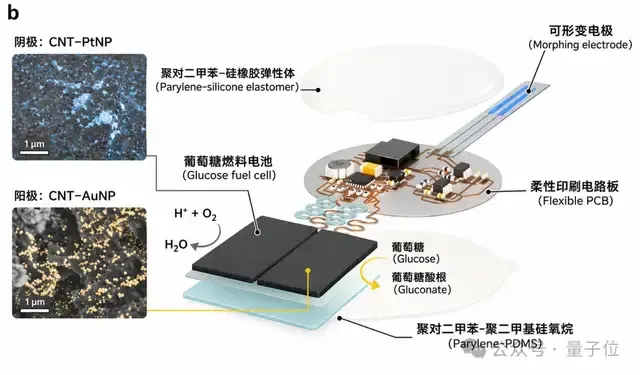
△ Schematic diagram of the structure and composition of the NeuroAxis device | Image source: the paper, translated and redrawn
Among them, the researchers used the principle that glucose fuel cells sense glucose concentration in the body through voltage changes, and designed an automatic control program based on voltage thresholds, responsible for deciding "when to stimulate."
The system collects the output voltage of the fuel cell every 30 minutes. In the rat experiments, the researchers set a glucose concentration of 11.1 mmol/L as the threshold for determining hyperglycemia, corresponding to a voltage of about 0.6 V.
If the voltage exceeds this threshold for five consecutive times, the system will automatically output biphasic electrical pulses to the vagus nerve for 3 minutes.
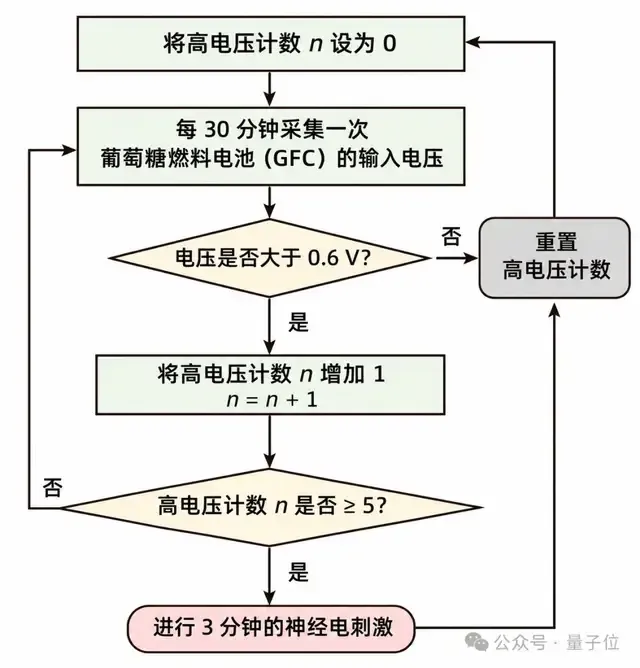
△ Image source: the paper, translated and redrawn
This is also to avoid unnecessary stimulation caused by temporary blood sugar fluctuations after eating.
When blood sugar returns to normal, the device no longer triggers stimulation and returns to monitoring and standby mode.
The final step of transmitting electrical signals to the vagus nerve also involves considerable technical difficulty, because the tissue environment where the vagus nerve is located continuously deforms with breathing, swallowing, and body movement, including the esophagus and surrounding tissues.
To this end, the research team developed a deformable flexible electrode with self-repairing capability. It is composed of conductive polymers and elastic materials and can transform from a flat thin-film form into a ring-shaped structure, fitting the vagus nerve near the rat esophagus.
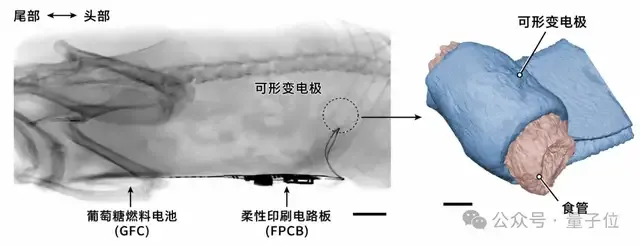
△ How the flexible electrode fits the esophagus | Image source: the paper, translated and redrawn
At this point, the entire NeuroAxis system has formed an autonomous closed loop.
How far is it from truly treating human diabetes?
The researchers first conducted a six-week experiment on type 2 diabetic rats. After only two weeks of treatment, the rats' blood sugar had dropped to a level close to that of healthy rats.
Not only did blood sugar decrease, but these rats' food intake and body weight also continued to decline, and body fat accumulation was significantly reduced.
Moreover, as blood sugar returned to normal, the device no longer triggered nerve stimulation. Even so, the improvement in blood sugar was maintained until the end of the six-week experiment.
In other words, the effect of nerve stimulation may not be temporary. It can bring sustained therapeutic effects by regulating immune and metabolic states.
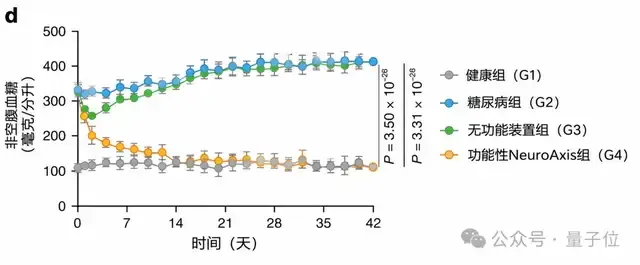
△ Blood glucose changes in type 2 diabetic rats after NeuroAxis treatment | Image source: the paper, translated and redrawn
The researchers then conducted an eight-week experiment on type 1 diabetic model rats, and the results showed that the rats' blood glucose and glycated hemoglobin (HbA1c) levels continued to decline, while blood insulin levels gradually rose.
By the eighth week, these rats had regained normal blood glucose control.
The research team examined the pancreatic tissue of the rats and observed more proliferating pancreatic β cells in the pancreatic sections!
In other words, neurostimulation not only improved the rats' blood glucose levels but may also have helped them restore their own ability to secrete insulin.
However, the biological differences between rats and humans cannot be ignored.
The proliferation capacity of adult human pancreatic β cells differs from that of rats. For patients who have had the disease for many years, there may no longer be enough functional β cells in the body to restore.
Moreover, the core problem of human type 1 diabetes is that the autoimmune system continuously attacks pancreatic β cells.
Even if neurostimulation successfully promotes β cell proliferation, it is hard to say that these cells will not be destroyed again later.
In addition, whether this device can operate safely in the human body over the long term is also a question.
Although the researchers did not observe obvious behavioral abnormalities, local inflammation, or abnormalities in important blood biochemical indicators in the rat implantation experiments.
However, in long-term immersion experiments simulating the physiological environment, after 90 days of fuel cell operation, the power density had dropped to 64.5% of the initial level.
For implantable devices that may need to be used for years or even longer, this is also an engineering problem that must be solved later.
One More Thing
In fact, scientists have been exploring neural glucose control for nearly 20 years.
As early as 2008, a research team at Tohoku University in Japan discovered in Science that neural signals can promote pancreatic β cell proliferation; since then, scientists have successively verified the effects of vagus nerve stimulation on insulin secretion and blood glucose regulation.
But the core innovation this time lies in allowing glucose to serve simultaneously as both an energy source and a metabolic sensing signal, building a battery-free closed-loop neurostimulation system capable of autonomous regulation, and also validating the possibility of restoring blood glucose homeostasis through neuroimmune regulation.
Although there is still a long way to go before it can truly be used in humans, we still hope that one day, diabetic patients will no longer have to bear the pain of insulin injections.