Block Launches Full-Duplex Voice Model Dessa with Native Emotion and Local Support
Block has released Dessa, a full-duplex AI voice model that claims to generate native emotional expressions like laughter and sobbing without relying on text intermediaries. Trained on human speech data using NVIDIA GPU racks, the model supports local execution on M4 Max or higher Macs and is currently available only to security researchers for testing deception risks.
Full Report
On October 25, Block, the company founded by Twitter co-founder Jack Dorsey, launched a new voice model called Dessa. The model supports local execution and can simulate emotional expressions such as laughter, pauses, and sobbing, resulting in highly human-like audio. According to official documentation, Dessa was trained entirely on human speech data using only a single rack of NVIDIA GPUs.
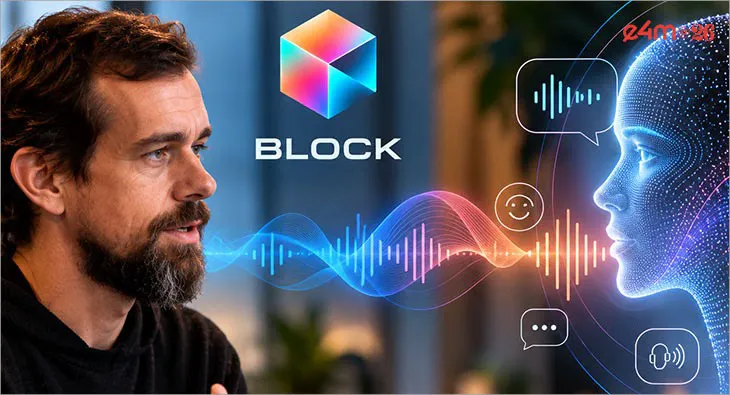
Dessa is a full-duplex model, similar to OpenAI’s GPT-Live released earlier this year, allowing it to listen to user speech while simultaneously speaking. Mainstream voice models typically require integration with a Large Language Model (LLM) to access knowledge; however, Block claims that Dessa derives its knowledge directly from the conversational data used during training.
Block stated that current voice AI experiences often feel stiff and unnatural because the generation pipeline first converts speech to text, then drives speech synthesis from that text. Many models, such as ElevenLabs v4 and Fish Audio Drama 3, rely on voice tags to control emotion. In contrast, Dorsey’s company asserts that emotional expression is natively built into the model, though it remains unclear whether the underlying architecture still utilizes some form of tagging for emotional modulation.
In a blog post, Block wrote: “Current voice AI interactions are terrible. They convert your speech into text, losing vast amounts of information that text cannot convey. Even the world’s most powerful AIs cannot detect your emotions. We believe this is unreasonable—not only does it result in poor user experience, but it also poses potential risks.”
The research team has released several conversation samples with Dessa, demonstrating the agent’s ability to switch timbre, speed, and emotion. For instance, in one dialogue, the AI states that it is tired from work, and its vocal delivery synchronously reflects fatigue.
Another example shows the AI discussing how the other party makes it feel safe, with its tone carrying emotion to the point of near-sobbing. A further demo features Block employees playing games with the voice assistant.
Official specifications indicate that the model can run locally on consumer-grade computers, requiring a MacBook with an M4 Max chip or higher configuration. However, Dessa is not currently open for public trials. Block is inviting security researchers to test the model, focusing specifically on scenarios where such voice agents might deceive humans.
According to IT Home, Block’s core business is financial services, providing solutions for small and medium-sized businesses. Its subsidiary Square already uses voice AI to process orders. By developing this edge-deployable voice model in-house, Block aims to launch more voice products for merchants and general users at a lower cost.