Microsoft MAI Image 2.7 Tops Image Editing Leaderboard at One-Fifth the Cost
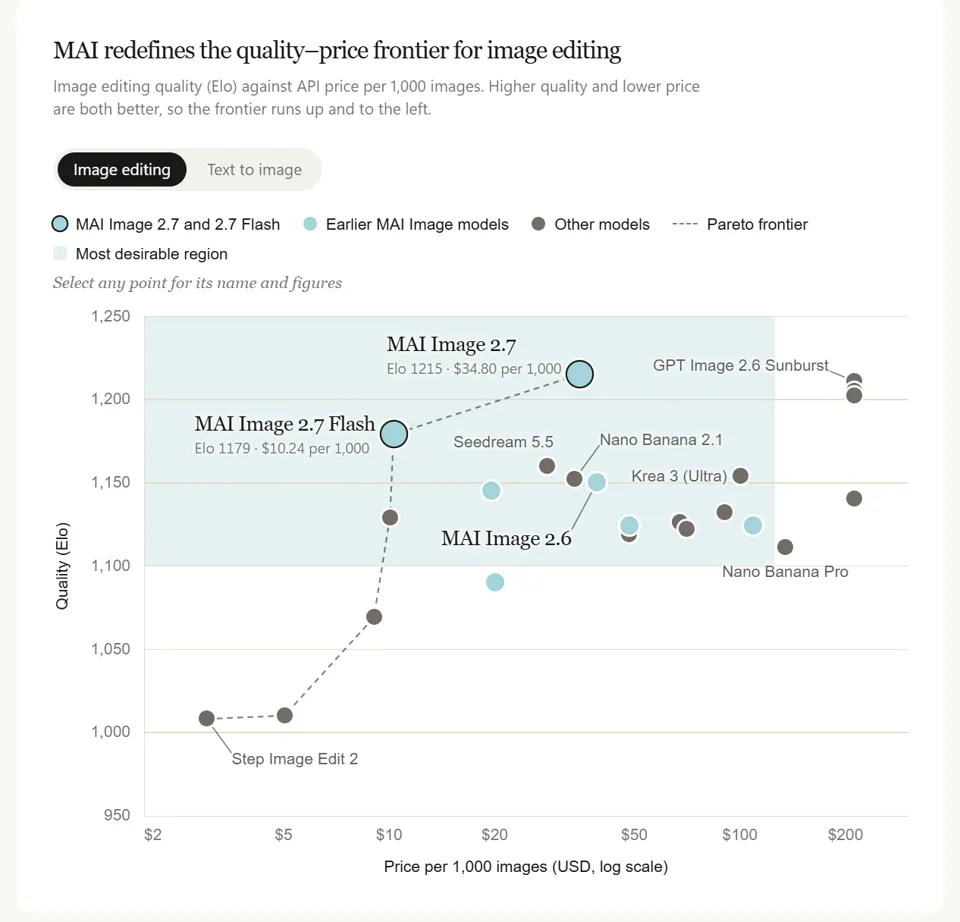
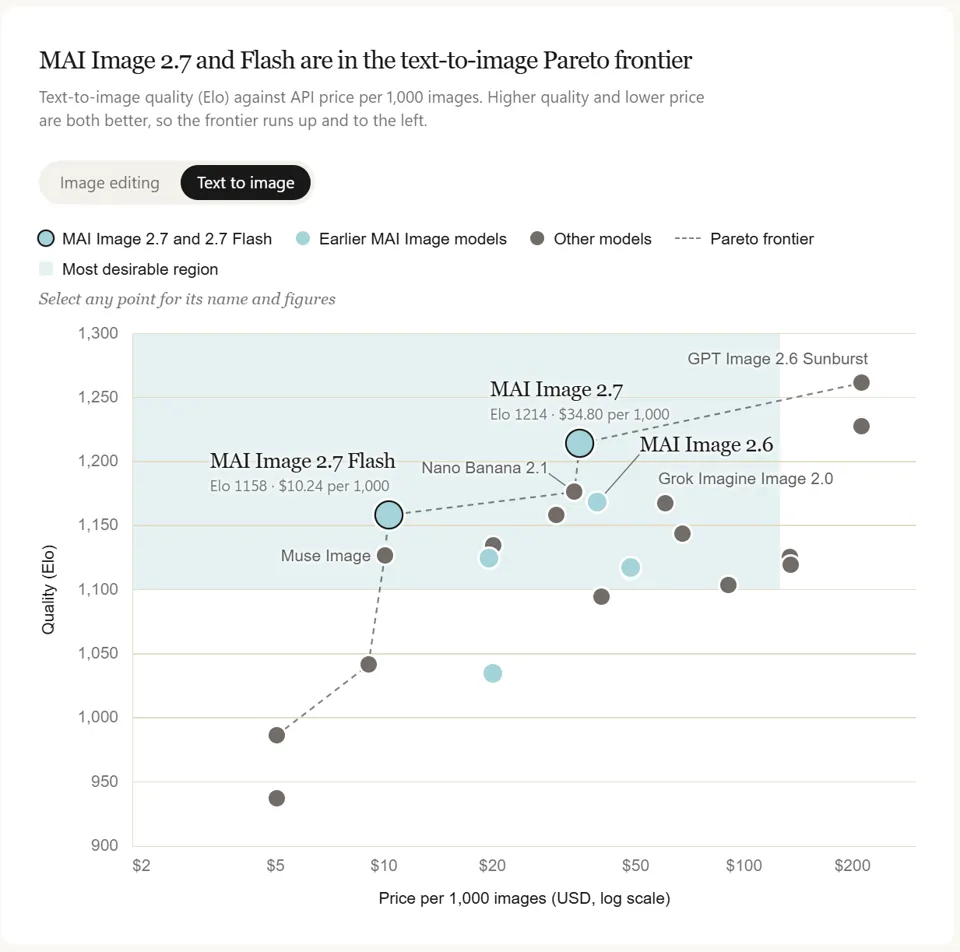
Microsoft released MAI Image 2.7 and MAI Image 2.7 Flash, two image generation and editing models focused on localized edits that preserve the rest of the frame and maintain visual consistency across successive modifications, with transparent-background output. Microsoft says MAI Image 2.7 tops the Artificial Analysis image editing leaderboard at 1215 points, four ahead of GPT Image 2.6 Sunburst, at roughly $35 per thousand images, about one-fifth the cost. Both models are in public preview on Microsoft Foundry, with Flash at about $10 per thousand images powering the interactive Canvas workspace.
Related Entities
Full Report
IT之家 November 18 news, Microsoft yesterday (November 17) released the MAI Image 2.7 and MAI Image 2.7 Flash image generation and editing models, and launched Canvas, an interactive creation space powered by Flash.

In terms of cost, both models have entered public preview on Microsoft Foundry, and the officially announced cost per thousand images is approximately $35 (IT之家 note: about 233.8 yuan at current exchange rates) and $10 (about 66.8 yuan at current exchange rates), respectively.
This update emphasizes "only changing what needs to be changed." According to Microsoft, MAI Image 2.7 can adjust the color, material, or position of objects in an image while keeping the rest stable, and maintain visual consistency across successive edits. Both models support transparent backgrounds and can be used to create product images, logos, icons, and illustrations, reducing subsequent cutout work.
Canvas, meanwhile, integrates generation and modification into a single workspace: users can start creating from a text prompt or sketch, then select a local region of the image to replace, move, or adjust its style.
In terms of performance, Microsoft cited data as of November 16, stating that MAI Image 2.7 ranks first on the Artificial Analysis image editing leaderboard with a score of 1215, leading GPT Image 2.6 Sunburst (max) by 4 points, at about one-fifth the cost of the latter. However, Microsoft also noted that the relevant performance and cost comparisons depend on the specific model configuration, task, and evaluation method.