OpenAI Cuts Chain-of-Thought Extraction Rate to 0.2% with Anti-Distillation Defenses
OpenAI unveiled multi-layered defenses against adversarial distillation, cutting protected chain-of-thought extraction on GPT-6.2 Astra from 54.0% to 0.2% for prior requests and from 22.9% to 0.9% for current ones. The measures combine adversarial training, input/output classifiers and API-level reasoning isolation, backed by weekly enforcement against thousands to tens of thousands of violating accounts.
Related Entities
Full Report
IT之家 November 21 news, on November 20 local time, OpenAI published an announcement introducing defense measures against "Adversarial Distillation."
OpenAI stated that it has strengthened the protection of the internal Chain-of-Thought for GPT-6.2 Astra and GPT-6.2 Sol, in order to reduce the risk of other models acquiring their capabilities by extracting the reasoning process.
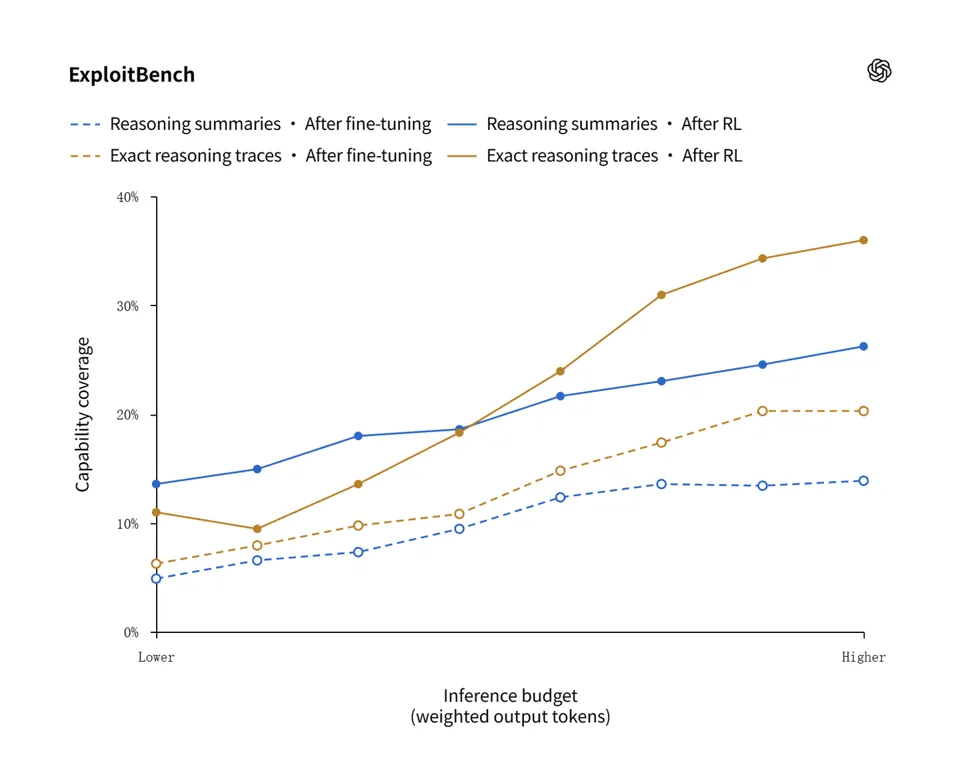
OpenAI stated that adversarial distillation refers to the unauthorized use of the outputs of frontier AI models to train other models, enabling the latter to acquire similar capabilities without the corresponding safety protections of the original model. This behavior may lead to high-risk capabilities in areas such as cybersecurity and biology being transferred to models with weaker safety restrictions.
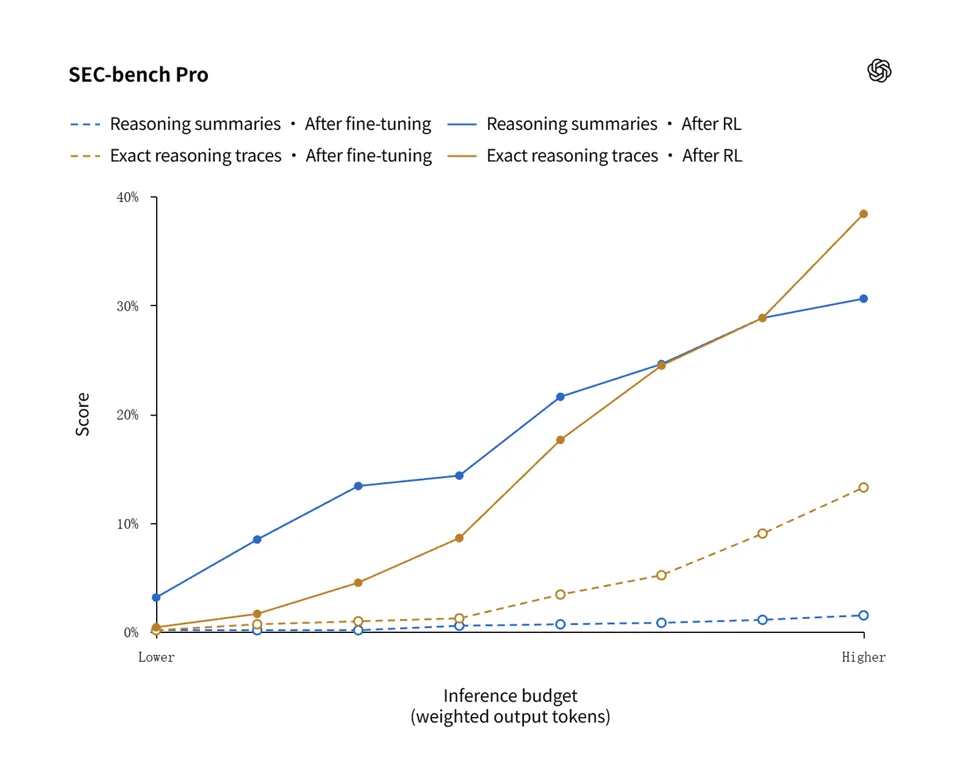
In internal adaptive black-box red-team testing, OpenAI tested the success rate of attackers extracting protected reasoning content from the model's previous requests and current requests.
The results showed that the extraction success rate for reasoning content from previous requests dropped from 54.0% under GPT-6 Astra's original safety mechanisms to 0.2% after the updated safety mechanisms of GPT-6.2 Astra; the extraction success rate for reasoning content from current requests dropped from 22.9% to 0.9%. The test results summarized data from 6 attack models.
To achieve the above protections, OpenAI adopted multiple layers of measures, including adversarial training to enable the model to recognize and refuse reasoning-chain extraction requests, using input and output classifiers to detect related attacks and reasoning content leakage, and restricting the reuse of reasoning content across different sessions, models, and organizations through the API. IT之家 attached image is as follows:
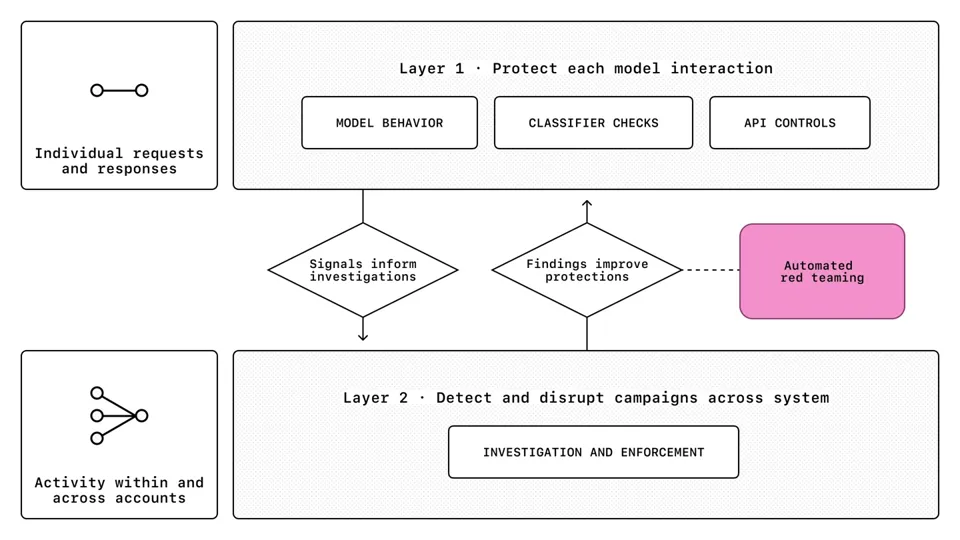
Among these, GPT-6.2 Astra and GPT-6.2 Sol associate protected reasoning content with the conversation history that generated it. If previous messages are modified, the API will discard subsequent reasoning content generated based on that message. In addition, older models with weaker safety protections cannot read the protected reasoning content of these two new models.
In terms of enforcement against related behavior, OpenAI stated that since the beginning of this year, the company has taken measures every week against accounts involved in unauthorized distillation activities, ranging from thousands to tens of thousands in scale, and the scale of related enforcement has increased significantly since this summer. The company will also investigate networks of accounts coordinating large-scale extraction and share attack indicators with other model providers to help identify related abuse.
OpenAI also introduced its research on the safety risks of distillation. Internal testing found that compared with student models trained only on the model's final answers, reasoning summaries, and tool interaction records, student models supervised fine-tuned on the teacher model's complete reasoning trajectories generally achieve better transfer of cybersecurity capabilities.