MiniMax Open-Sources H3-Image Model with Native 4K Output
Following its open-source video model H3, MiniMax released H3-Image, an open-source image generation model supporting native 4K output at roughly RMB 0.2 per image. It shows strong performance on structural decomposition, game assets, e-commerce visuals and fine-grained portrait details, marking a notable open-source push into multimodal generation.
Related Entities
Full Report
Contents3 sections
Jay reporting from Aofei Temple, Quantum位 | WeChat Official Account QbitAI
Oh no, MiniMax has really figured out multimodal 😭.
After the open-source video flagship H3 received widespread acclaim, the latest image model—H3-Image—has once again taken the internet by storm.
The hottest trend is "CAD disassembly." Drop in a reference image, and H3-Image will crack open your little figurine for you...

There's also someone who CAD-ed a Unitree robot dog.

In short, anything can be disassembled, and it even labels the parts for you.
I tested it myself too, and I have to say, it's actually got something...

Beyond that, overseas netizens found that it can also handle other types of complex image generation tasks, such as—games.
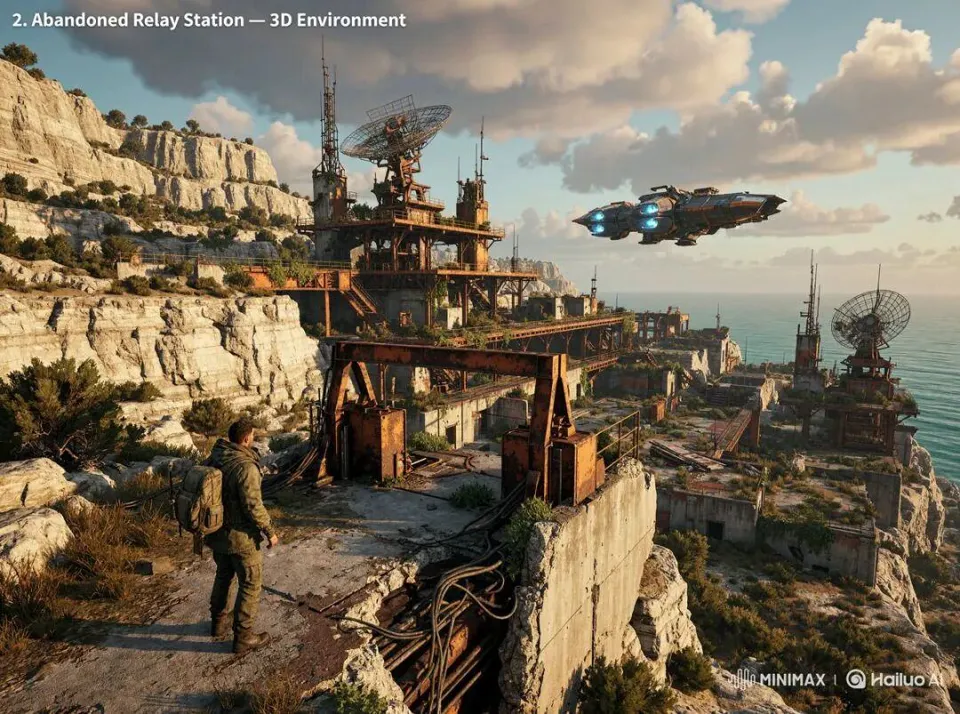
This this this—if you hadn't told me, I'd have thought it was made with GPT coding 😭.
If it's just simple assets for e-commerce, it's even easier.

But what I didn't expect was that this thing is actually good at both arts and sciences??
While guaranteeing intelligence, H3-Image's aesthetics also have something going for them.

Oh right, one more thing.
An image generation model of this quality—and you're telling me it's open source???
Well, what else is there to say.
I hereby declare MiniMax the "God of Open Source" (bushi) in the multimodal field.
Saying Goodbye to Plastic "Aesthetic Sense"
In the past, when we mentioned AI image generation, the first thing that came to mind was: greasy and shiny, skin as smooth as a peeled egg, dull eyes, and a heavy uncanny-valley feel.
In short, a thick "AI flavor."
GPT Image 2 made huge progress in this regard, but after using it a lot, the uncanny valley effect still creeps up on you.
With H3-Image this time, I feel it has basically solved this problem.
After generating, I was stunned—bro, who could tell this was AI??
The most important thing is the face: pores, freckles, even peach fuzz are all drawn for you.
In addition, details like the moisture and dust on the mirror, and the halo formed by the flash hitting the lens, are handled incredibly well—it really looks like something you'd scroll past on Xiaohongshu's homepage.

Even from a low angle, plenty of facial details are visible. For example, in this fashion magazine cover styled as a table-as-Instagram-photo, if you look closely at the subject's gaze and the subtle facial muscle tension, they fit real-world social logic perfectly.

This was also my biggest takeaway when testing H3-Image: many prompts I had previously given to older models, H3-Image can offer a completely new interpretation of.
It really does have fairly rich world knowledge.
As for subjects other than faces, it's even more of a sure thing.
For example, turning Rio de Janeiro's city landmarks into a pop-up paper-art style travel journal.
The miniature landscape, the depth of light and shadow—hmm, it somehow has a whiff of a Fable 5 promo.
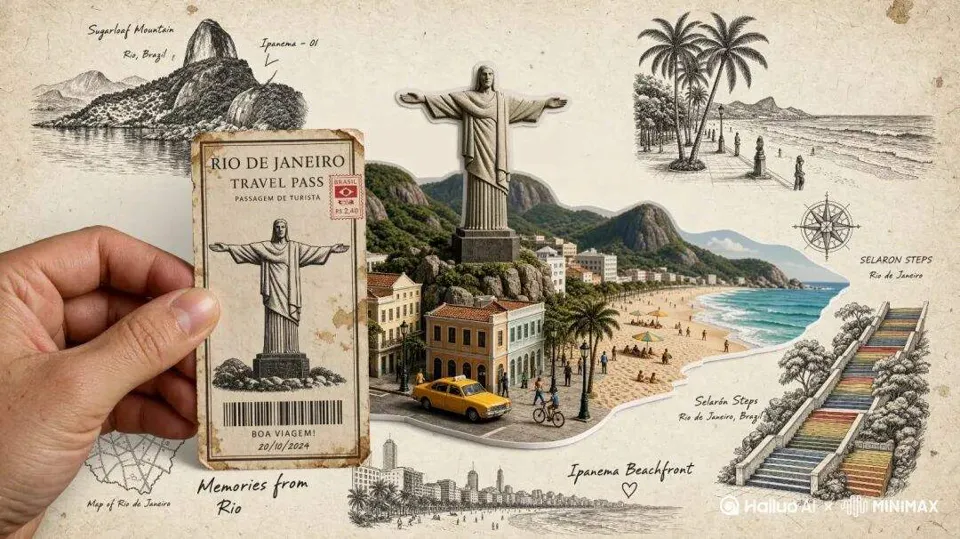
And sure enough, it revealed its little tell again!
Look at the hand in the lower left corner—see it? It added a few moles near the thumb joint!!
Zoom in and it doesn't give itself away at all. The skin texture on the fingers, the knuckle wrinkles, even the natural sheen and texture around the nail edges are reproduced with complete clarity.

Interesting.
I think the reason H3-Image has so little AI flavor may largely come down to these deliberate "flaws."
Any work subjectively created by humans is inevitably full of randomness; an excessive pursuit of perfection actually goes against how the human brain is wired to receive information.
But this also makes me a little uneasy.
I've always stubbornly believed that aesthetics is not something machines can learn.
Now it seems that as long as you can figure out the tricks involved, many qualities humans take pride in may really not be that mysterious...
Let me show you another demo—I used H3-Image to whip up a French travel poster.
How should I put it... I really don't feel qualified to judge it. My humble artistic literacy can no longer make heads or tails of it.
Sigh.

SOTA-Level Intelligence
Let me get back to tasks I can actually understand.
When it comes to multimodal models, I've always had two criteria—aesthetic sense and intelligence.
Aesthetic sense is what I tested above; it's rather mystical, so I can only talk about subjective impressions.
But intelligence is something we can discuss.
For example, H3-Image has a very special skill point—world understanding capability.
You can use it to generate CAD drawings.
Yes, you give it an exterior image of a product, and it can automatically derive standard orthographic three-view drawings—
front view, side view, top view, not one missing.
Folks, I'm weak in the knees 😭😭.


And that's not all.
Besides CAD, you can also make this model "explode" things apart.
Have H3-Image draw an exploded mechanical disassembly diagram, and it can precisely follow the mechanical assembly logic, layering the parts out clearly for you, and even label the component callout lines.
Behind this, there is undoubtedly a need for a deep understanding of 3D geometry and spatial relationships.
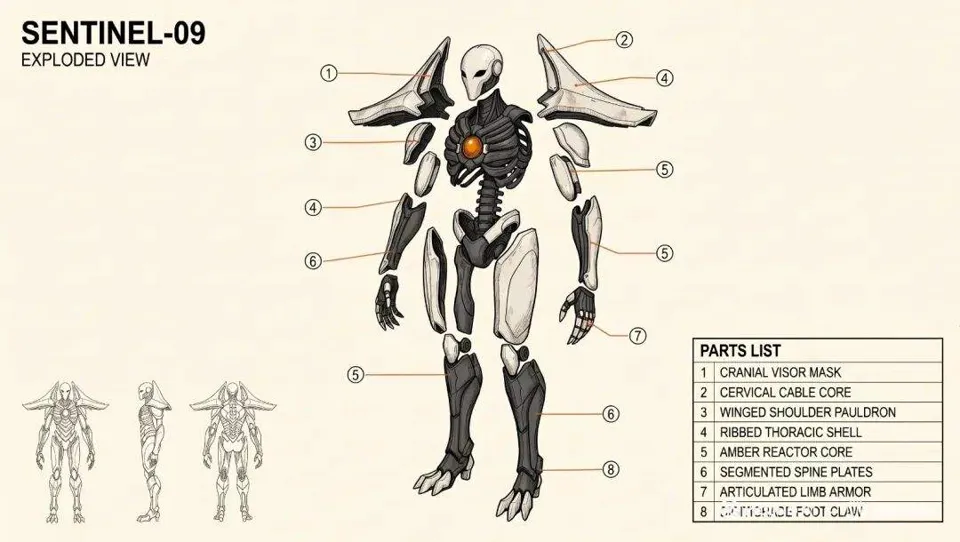
Of course, for images with such obvious functional attributes, instruction-following ability is also very important. The "drawing" itself is actually not that difficult; what it mainly tests is the model's planning and reasoning ability.
Otherwise, it simply wouldn't be able to figure out what the user's pile of prompts is talking about.

Of course, if you really want to target serious productivity scenarios, the standard has to be set very high, and commercial use must accurately convey information.
So in addition to spatial understanding, the dimension of text layout is also very important.
So, I did another thing—
generated a final exam paper for advanced mathematics.
It was generated in just over ten seconds.
Limit symbols, complex integral expressions... With such high-density academic typesetting, not a single character was garbled.

Presumably it was too easy, so I came up with another genius prompt:
Complete this exam paper.
When I opened it, I felt as if my chair exploded—
What do you mean an image generation model's calculus level is better than mine???
Relying on my barely-passing advanced mathematics knowledge, I took a rough look and found that the answers were actually correct, and there were even solution steps!??

For a moment I was speechless.
Of course, in its home turf, asset generation is also indispensable.
Isn't it popular now to say Coding eats everything, Astra reduces dimensions to 3D, and Opus 5.5 reduces dimensions to video.
But I have always felt that a lot of this is marketing rhetoric. For these tasks that have nothing to do with text, why would I use a text model?
I can only say that the pure-text field indeed has more resources and has developed relatively quickly.
Starting from first principles, I still believe more in the vertical model path: train each field separately, and the ceiling will be higher, with more realistic costs.
Moreover, vertical models like H3-Image are naturally born specialists, so there is no contradiction at all. They are very suitable for plugging into a Harness and letting an Agent directly Tool Call them.
This is also a trend that has started appearing recently. It is not necessarily that a single model has to reduce everything to a lower dimension; using general models to connect various vertical models yields a higher total utility.
If it is just generating assets for display, such as the dinosaur toy below, a vertical image model is obviously the better solution, and there is no need to spend ages on Computer Use.
After all, with today's image models, basic physical common sense such as lighting and geometry is no longer a problem.

Snacks and the like are no problem either. Just watch how I take Chinese latiao global.

It can even generate 3D game scenes—this is truly turning the tables 😭.
Give it a long tactical instruction—cover, suppressive fire, flanking, and so on—and it can immediately build a 3D combat scene with a real sense of depth and reasonable occlusion relationships.
It strictly follows game terminology and can almost be used directly in concept design.

Why would I still bother with Astra Ultra, since we are all just looking at demos anyway—wouldn't generating a few images be enough?
(Just kidding)
Multimodal "Source God"
That's basically it. In addition, as a flagship image model, H3-Image has also released some small perks.
Most importantly, H3-Image directly pushed the resolution to 16MP (4096×4096 pixels), that is, native 4K.
I'm tearing up, folks. I finally don't have to generate an image with GPT and then throw it to Nano Banana for ages of optimization 🥹.
And 4K generation is also extremely fast. For such a large image, my experience on the web end was only 10-20 seconds.
Still, who wouldn't want to enjoy a nice game of Snake while waiting for GPT to dawdle (just kidding).

I'm digressing.
Besides these, H3 also has a rather special parameter—
it supports input of up to 16 reference images.
That means it can hold a huge amount, a gospel for perfectionists, giving creators unprecedented freedom in character consistency and continuity of complex storyboards.
4K daily creation has truly become widespread.
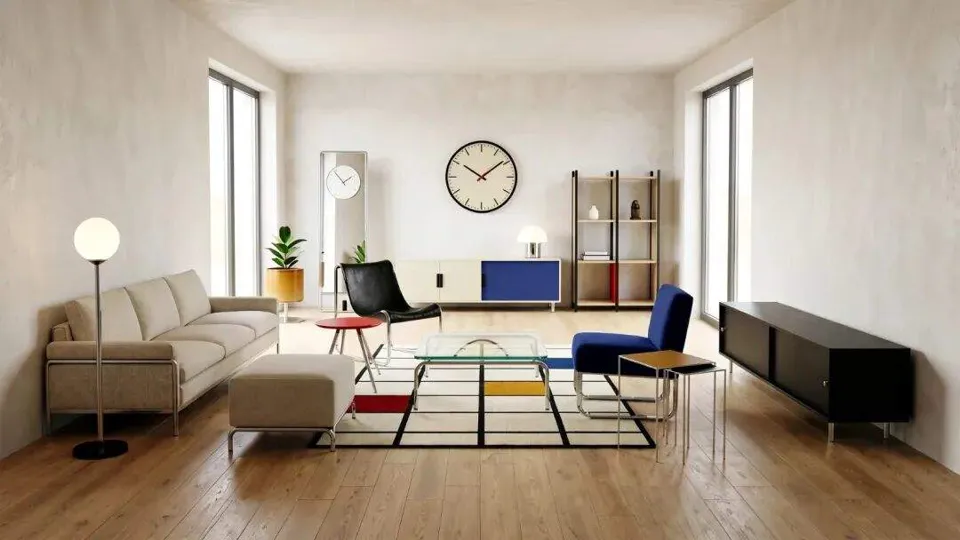
The result is that you can casually throw in a few reference images, take a sip of water...

and get a renovation rendering of this quality.
Who needs Blender at this point 😭.

But what I never expected was that
H3-Image is actually open source???
Following the previous open-source SOTA-level video model H3, MiniMax has acted again, giving developers around the world another freely customizable SOTA foundation.
Multimodal Source God, no need to say more.
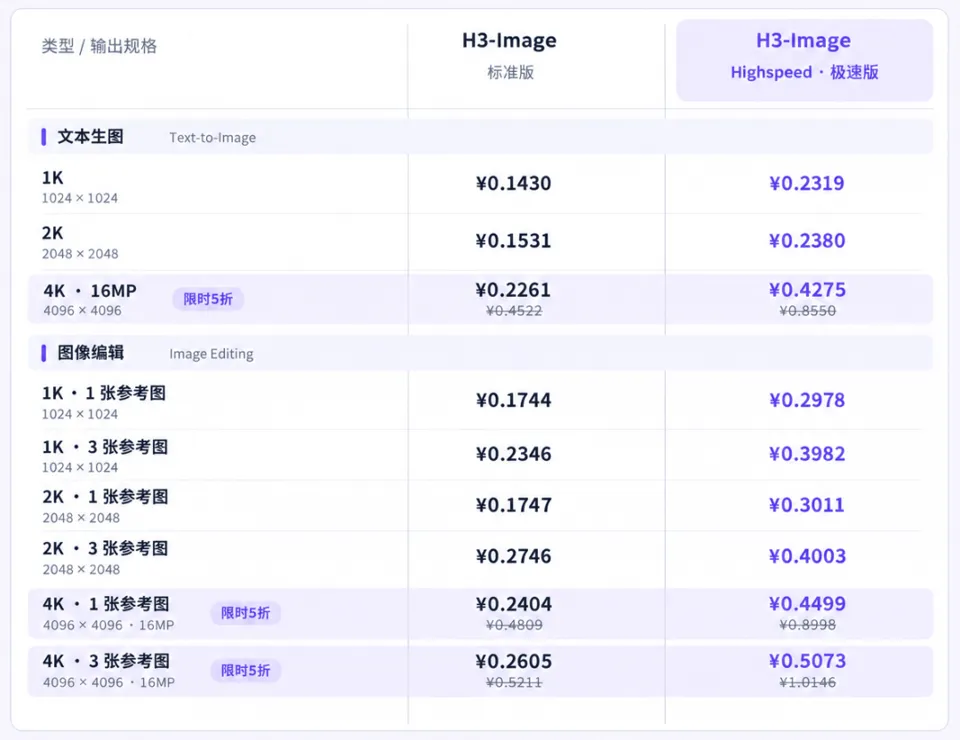
Of course, even if you don't feel like dealing with deployment, API calls are also dirt cheap.
Only 50% to 70% of mainstream competitors, and 16MP requests get another 50% off in the first week (go all out, brothers!!).
At this point in testing, I suddenly had a premonition—
Multimodal generation may be ushering in its own Coding moment.
In the past, AI image generation often "became a toy" on the commercial side, mainly because the details couldn't withstand scrutiny and the plastic feel was too severe—no client would be happy seeing that.
But now, H3-Image has achieved three things—
Removing the AI flavor, generalizable aesthetics, and logic.
When these conditions are met, the multimodal application market will be absolutely no less impressive than programming.
From high-precision industrial packaging design and commercial illustration to multilingual cross-border marketing materials, the emergence of image models can significantly compress the cycles of traditional workflows.
Add on the buffs just mentioned: speed + open source + low price...
What kind of future this will be is hard to imagine.
But in the end, let's bring our attention back to today's AI circle.
When the eyes of global AI companies are almost entirely focused on pure text, MiniMax is still devoting a large part of its energy to the multimodal world.
This has also been a longstanding characteristic of this company—betting on multimodality from the very beginning, and now finally seeing emergence.
People say multimodality is not important for AGI, and only Coding has a business model...
But I have always felt that if the definition of AI can only accommodate text, this future would be far too boring.
From H3, which rewrote the landscape of video generation, to H3-Image, which now makes comprehensive breakthroughs in logic, structure, and aesthetics.
This wildfire of domestic open source has thoroughly begun to spread into the multimodal field—
Spreading.