Claude Deciphers 1,009 Pages of Gödel Manuscripts, Unearths 663 Theorems
Logician Jan von Plato of the University of Helsinki fed Claude a 1,009-page transcript of Gödel's 1940s working notebooks written in obsolete German shorthand; within days the model produced roughly 650 pages of analysis, surfacing 663 theorems, 14 previously unexplored logic topics, and a nearly finished proof of the independence of the axiom of choice. The case demonstrates frontier LLMs' practical capacity for decoding dead shorthand and reconstructing cross-page mathematical structure, drawing 430+ upvotes on Hacker News after Guardian coverage.
Related Entities
Full Report
Contents9 sections
663 Theorems Unearthed from the "Book of Heaven"
Kelsey, reporting from Aofei Temple
QuantumBit | WeChat Official Account QbitAI
A Gödel manuscript that would take human experts seven days to get through a single page—Claude read all one thousand-plus pages in just a few days?!
And in one go, it unearthed hundreds of previously unknown theorems?!
In September of this year, University of Helsinki logician Jan von Plato fed Claude a 1,009-page transcript of Gödel's manuscripts.
A few days later, staring at the 650 pages of analysis that spilled out onto the screen, the 75-year-old professor was stunned on the spot.
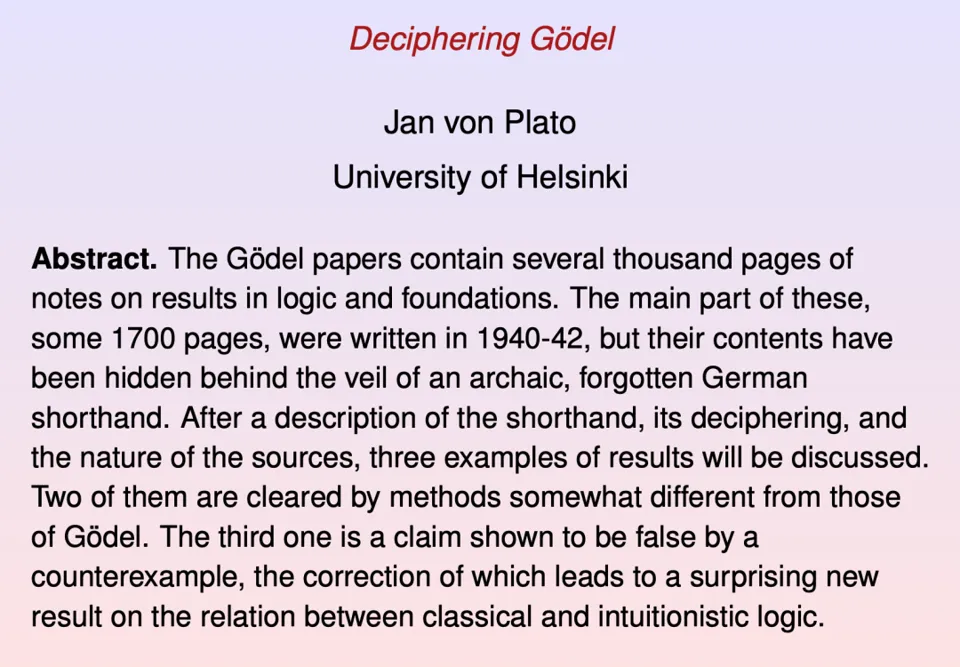
These notes, written in the early 1940s, were in an old German shorthand that had long since fallen out of use. He and his small team had been grinding through them since 2017, advancing at most 50 pages a year.
The margins of the film pages even still bore the "falsch!" (wrong!) and "schlecht!" (bad!) that Gödel himself had scribbled when rereading them back in the day.
So it seems even the master who formulated the "incompleteness theorems," when flipping back through his own draft notebook a few years later, couldn't resist cursing himself in the margins a couple of times.
In the end, Claude not only strung this pile of thousand-page formulas into a coherent whole, but also followed the thread to uncover 14 new topics in logic that no one had ever touched, as well as the proof of the "independence of the axiom of choice" that Gödel had very nearly completed back then.
That proof was just one step short. Had Gödel pushed a few steps further and published it at the time, the 1966 Fields Medal would have been his.
After this news was reported by the UK's The Guardian, it racked up over 430 upvotes on Hacker News.
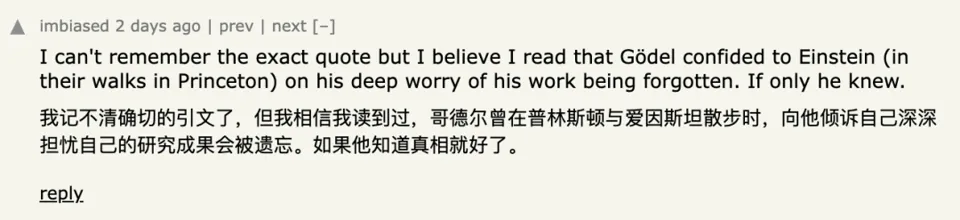
One netizen remarked that Gödel had always worried his research would be forgotten—if he knew about this scene today, he'd probably breathe a sigh of relief.
Others borrowed Gödel's own theorem for a joke, saying that AI hadn't evaluated whether this notebook was "consistent" or "complete," and another netizen immediately chimed in, "Right, but unprovable."
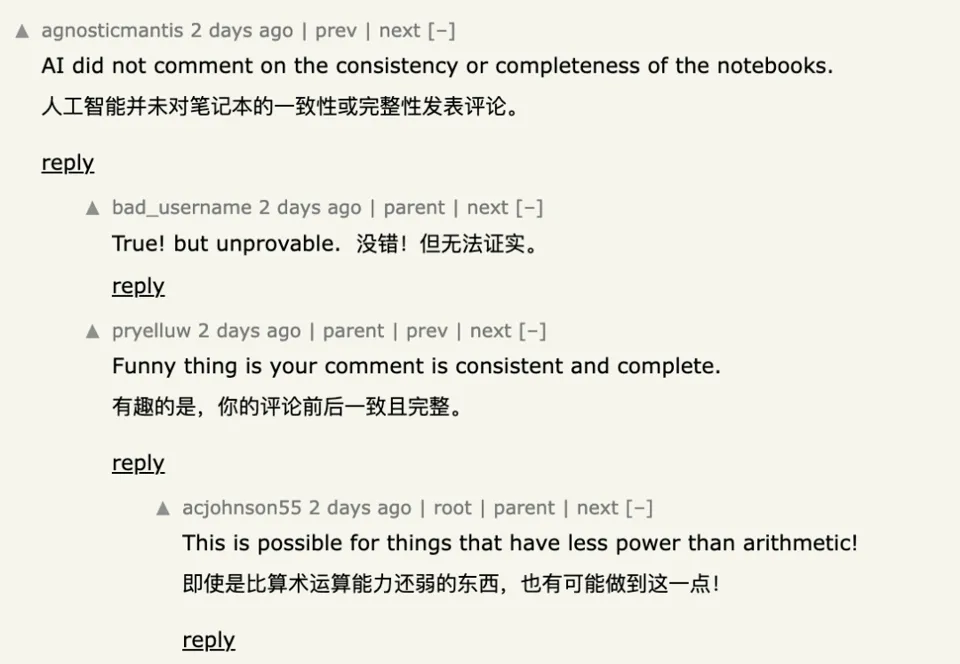
Note: This is a jab at the "incompleteness theorems" Gödel discovered back then—namely, that in any self-consistent complex mathematical system, there exist true propositions that cannot be proven within the system itself.
663 Theorems Unearthed from the "Book of Heaven"
In September of this year, von Plato handed Claude the transcripts of 16 working notebooks Gödel left behind in the early 1940s.
**△**Gödel
Faced with a full 1,009 pages of densely packed drafts, von Plato went straight for a "precision strike," checking the notes to see whether there really was a proof of the "independence of the axiom of choice."
For over half a century, the entire mathematical logic community has been fixated on Gödel's pile of unpublished manuscripts, and the number-one mystery everyone most wanted to clear up was exactly this one.
Seems even the big shots care about gossip...
So what's the story here?
In 1966, American mathematician Paul Cohen won the Fields Medal at the International Congress of Mathematicians in Moscow, for inventing the "forcing" method.
**△**Paul Cohen
He proved that the "continuum hypothesis" and the "axiom of choice" are independent of the standard axiomatic system of set theory—that is, under the existing axioms they can neither be proven true nor disproven.
This discovery resolved a major problem that had plagued mathematicians for decades.
Modern mathematics runs on a set of the most basic "rules of the game," but mathematicians had long been unsure whether two famous conjectures could be derived from these rules.
One is called the "continuum hypothesis," the first of Hilbert's 23 problems, which asks whether there is any intermediate level between infinities; the other is called the "axiom of choice," which says that when faced with infinitely many piles of things, we can pick one from each pile to form a new set.
The "forcing" method invented by Cohen put a direct end to this debate.
**△**AI-generated
He proved that relying solely on the existing basic rules, one can neither prove these two conjectures true nor prove them false.
What does that mean? Proving that something can't be proven?
Yes, that's exactly what it means.
By analogy, when you normally hit a problem you can't solve, you first suspect your approach is wrong or your skills aren't up to it—maybe in a hundred years someone smarter will solve it.
To make mathematicians around the world give up completely and stop wasting effort down this road, it's no use just saying "I tried for years and never succeeded"—you have to produce rigorous evidence that completely blocks off the path of "someone will prove it someday."
For example, the ancient Greeks puzzled over "trisecting an arbitrary angle with straightedge and compass" for more than two thousand years. People used to assume it was simply a matter of not being clever enough with their drawing methods, until mathematicians later rigorously proved algebraically that "it can never be done using only an unmarked straightedge and compass"—only then did the academic community truly give up.
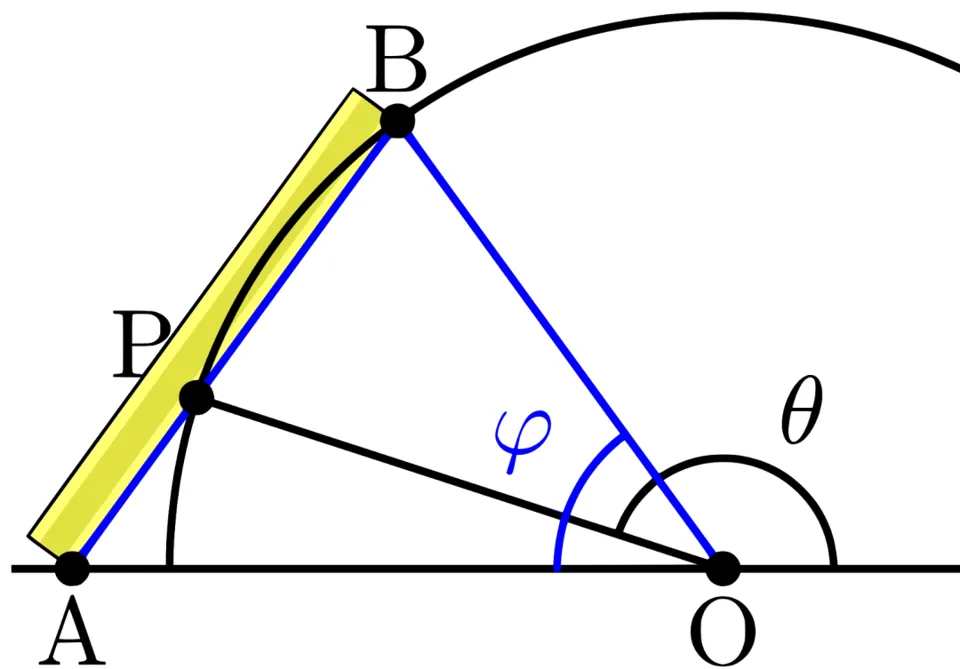
In fact, as early as 1940, Gödel had already proven that these two propositions are not contradictory to standard set theory, which was equivalent to completing half of the entire edifice—except that the independence proof for the other half was never publicly produced.
That latter half, at least in the eyes of the Fields Medal selection committee, was what Cohen solved with forcing.
After Cohen won the Fields Medal, various versions of rumors circulated in mathematical circles, with some even saying that Gödel had already grasped most of Cohen's results around 1940.
On June 30, 1967, in a reply letter to the German scholar W. Rautenberg, Gödel personally poured cold water on these rumors.
In the letter, he cited the logician Alonzo Church's remarks in his speech at the International Congress of Mathematicians the previous year, and admitted that the external rumors were inaccurate—what he had left in his working notes in the summer of 1942 were in fact only "partial results."
According to Gödel's own account, at the time he had only proved the independence of the "axiom of constructibility" and the "axiom of choice" within the early logical system of "type theory," and because the drafts from those years were too fragmentary, by the 1960s even he himself could easily reconstruct only the former proof;
as for proving the independence of the "continuum hypothesis" from standard set theory, he explicitly stated that he had not proved it back then, and doubted whether his approach could even work.
Cohen later mentioned in a memoir that he had once asked Gödel face to face about his ideas at the time, and Gödel only acknowledged that he had once had an approach, but never produced the specific derivation.
And in an interview with The Guardian, von Plato offered a different judgment on this episode.
In his view, when Cohen won the Fields Medal in 1966, Gödel deep down still felt somewhat that he had "seemingly missed something."
Plato believes that the derivations Gödel left in his notebooks in the 1940s were in fact closer to the finish line than what he later downplayed in his letters.
It was just that over the past decades, with human scholars progressing at a page a week, there was simply no way to connect the threads across more than a thousand pages of drafts, so this unresolved case remained open until September of this year.
As it turned out, Claude ran this first exam question and threw back an answer that was dramatically satisfying—it almost got there.
Gödel did indeed construct a complete proof skeleton in his notes, and Plato even described the architecture of this proof as astonishingly beautiful, capable of gathering this series of results in set theory into a single tidy framework.
The only problem was that at the very last step, Gödel used one key definition incorrectly.
Interestingly, when Claude rewound through the context of over a thousand pages, it found that in an even earlier notebook, Gödel had already written down that completely correct definition.
Plato remarked with emotion that Gödel never conducted research by "grabbing formulas and blindly trying his luck, hoping to stumble onto a result." He was accustomed to first establishing an extremely clear intuitive conception in his mind, then step by step filling in the details—except this time he was a few months short of the finish line and stopped halfway.
However, AI stitching and an old professor's emotion alone are not enough to convince people—mathematics demands hard, rigorous logic.
Plato fed Claude's completed and reconstructed proof directly into the formal theorem-proving assistant software "Coq" (renamed ROCQ in 2025).
"Coq" is known in mathematics and computer science circles for being utterly impartial, specifically used to verify the validity of mathematical proofs line by line. Even if half a premise is missing from the entire logical chain, or a symbolic concept is swapped, the program will immediately report an error and halt.
As it turned out, this reconstructed proof passed through with all green lights and successfully passed the "Coq" verification.
Having cracked a sixty-year-old mystery on the first try, Plato's appetite was thoroughly whetted.
He immediately had Claude plow through all 16 working notebooks from beginning to end, pulling out every theorem for which Gödel had written a complete proof, drawn a proof sketch, or even just jotted down a proof idea on paper.
This time, Claude produced 663 theorems in one go.
After running all 663 results through the sieve of "Coq," the proportions that emerged were very realistic, precisely restoring the most primitive working state of a top-tier mind in private draft notebooks.
Of these, about 400 theorems could pass verification directly according to the original wording in Gödel's notes, and about 200 needed the theorem statements to be tightened somewhat, or required supplementing a premise assumption that he had taken for granted but never wrote on paper—after patching, they also held up.
Of course, about 50 remained that were simply wrong.
As for these 50 incorrect ones, von Plato was not surprised at all, because when Gödel himself went back to reread his notes years later and discovered which step had gone wrong, he would likewise annotate the margin mercilessly with "falsch!" (wrong) or "schlecht!" (bad).
Moreover, Gödel's manuscripts also contain forward-looking ideas buried by war and time.
Claude's sorting revealed that these working notebooks written during World War II not only anticipated dozens of results that the mathematical community would not formally discover until the 1970s and 1980s, but also concealed 14 new topics in logic that no one had touched in the past eighty-plus years.
How a Thousand-Page Shorthand Manuscript Was Connected by AI
Why would so many clues capable of overturning the history of mathematics sit in the Princeton archives for over eighty years?
Setting aside the mathematical reasoning part, simply reading the text was already an extremely high barrier.
In 1940, Gödel fled Nazi-ruled Austria and eventually settled in Princeton, New Jersey, where he became close friends with Albert Einstein, who walked with him every day at the Institute for Advanced Study.
In his later years, his paranoia grew increasingly severe—he would only eat food prepared by his wife—and he ultimately died in 1978 from self-starvation.
And these 16 working notebooks, totaling 1,009 pages, were written in the early 1940s when he had just arrived at Princeton and his mind was at its most active.
In his notebooks, he used neither English nor ordinary German—he used an old German shorthand called "Gabelsberger shorthand."
This shorthand system was created in 1817 and at its peak was used by about 4 million people in the German-Austrian region. Contemporary philosophers and physicists such as Husserl and Schrödinger also liked to use it to record inspiration, but it had already been eliminated by German unified shorthand as early as 1924.
△ Goethe's "Wanderer's Nightsong" (without the "r") written in this shorthand
Gödel happened to learn this system during his school years from 1919 to 1921, using it to draft manuscripts and save both paper and effort—yet leaving researchers eighty years later a labyrinth to navigate.
In "Gabelsberger shorthand," consonant symbols are simplified from features of Latin cursive letters, while independent vowel symbols are mainly used at the beginning or end of words.
As for vowels in the middle of words, this shorthand expresses them symbolically, primarily by changing the vertical position and stroke weight of the consonant symbol that immediately follows.
In addition, a large number of German grammatical endings and common affixes are compressed into a small circle or a single curved hook, and even high-frequency words like "person" and "point" are represented by just a single-letter symbol.
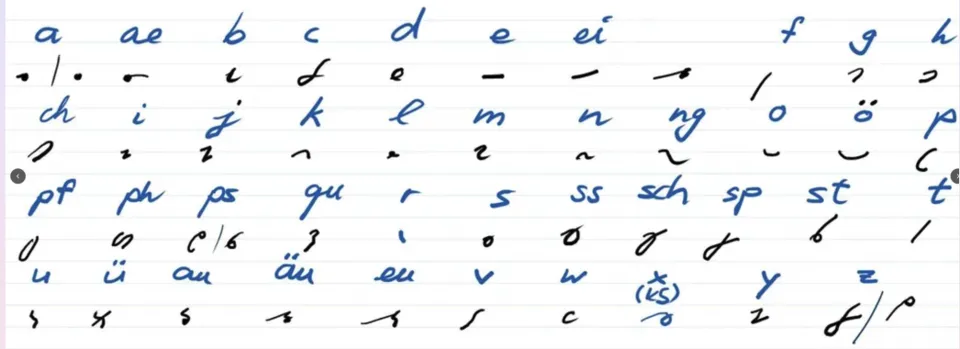
The research team at the University of Helsinki admitted on the project homepage that even though Gödel's own handwriting was actually fairly neat and elegant, later transcription still felt like solving a criminal case.
Merely recognizing the strokes was far from enough—one had to simultaneously master German grammar, Gödel's mathematical logic thinking at the time, and add a considerable amount of guesswork to piece together complete sentences.
To an ordinary person, it might look like a swarm of ants crawling across the paper.
According to Plato, the number of people worldwide who can simultaneously read this shorthand and Gödel's logical derivations totals roughly six.
Even after conversion into modern language, the human brain's own memory capacity still cannot handle manuscripts of such length.
Let us first dispel a common misconception: Claude did not directly look at images to recognize Gödel's winding handwritten strokes.
Starting in 2017, Plato led a small team—including Tim Lethen, an expert specializing in "archaeological" shorthand transcription—and at a grueling pace of about one page per week and at most 50 pages per year, painstakingly restored these shorthand notes into ordinary text word by word.
But even with the text right in front of them, human scholars were still overwhelmed by its length.
A person can only stare at one page at a time on paper; by the time they reach page 500, some obscure definition that appeared on page 50 or some lemma buried on page 120 has long since fallen apart in their mind.
The real turning point came in August of this year.
Plato went to France to attend an academic conference on AI and theorem proving, where several computer scientists, after hearing him complain about being bogged down by a thousand-page manuscript, suggested he go back and try feeding the material to Claude.
After returning to Helsinki in September, Plato dumped into Claude the transcription text his team had painstakingly produced over nearly nine years, the six Gödel research monographs he had previously written, and relevant secondary scientific literature all at once, then sat in front of the screen checking page by page.
In just a few days, a complete 650-page analysis of the entire set of notes was produced.
Plato later remarked with emotion that reading over a thousand pages of scattered manuscripts as a single integrated puzzle is simply impossible for humans, because people forget the earlier parts by the time they reach the later ones.
Large models, by contrast, can hold a thousand pages of context in their hands at once, allowing formulas and early definitions separated by hundreds of pages to instantly connect.
A 75-Year-Old Professor Personally Dismantles the "Iron Rice Bowl"
Plato, who personally fed nine years of transcription work into AI, actually took on this project back then with a bit of a self-interested motive to protect his job.
In 2017, von Plato—who had been teaching at the University of Helsinki his entire career—was facing mandatory retirement.
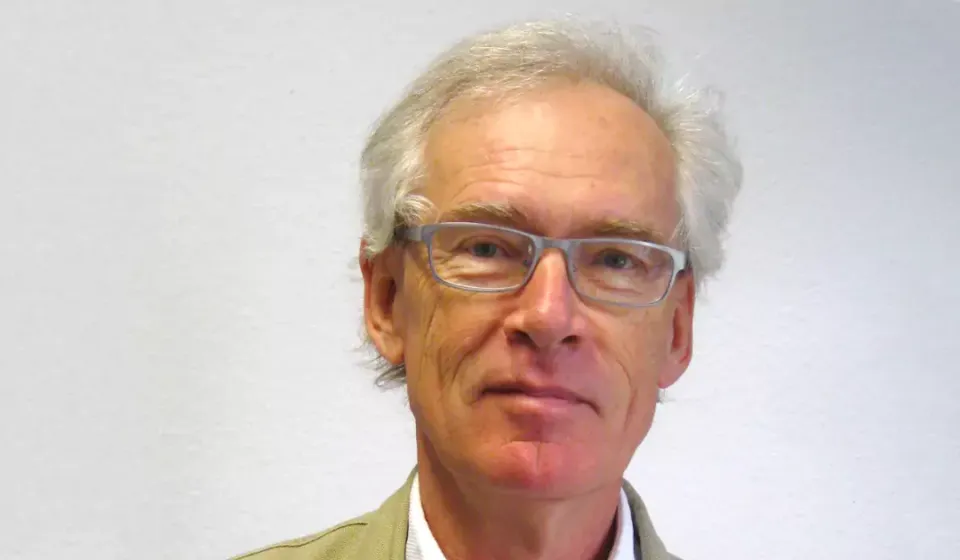
Approaching the end of his post, he half-jokingly asked himself, "What should I do to make myself irreplaceable? That's it—I'll go read Gödel's mysterious shorthand manuscripts."
With this obscure hard nut to crack, he successfully obtained €2.5 million in funding from the European Research Council (approximately 20 million RMB at the exchange rate when the grant officially launched), and then painstakingly mastered that out-of-print shorthand system.
Including himself, the research team had four members; the other three were Annika Kanckos, a postdoc specializing in formal proof theory; Maria Hämeen-Anttila, a doctoral student studying Gödel's early intuitionistic work; and Tim Lethen, an expert specifically responsible for "archaeological" shorthand transcription.
△ From left: Annika Kanckos, Maria Hämeen-Anttila, Tim Lethen
At the original pace of one page per week, this research funding would have been enough for them to grind away steadily for another ten years.
But by September of this year, von Plato dumped the team's nine years of transcription drafts, the six Gödel monographs he had written, and secondary literature all at once into Claude, and within days it spread out 1,009 pages of notes into a 650-page panoramic view.
The scarcity barrier that had been upheld by "only about six people worldwide can read this" was almost overnight flattened out on the table.
On Hacker News, some commenters joked that this might be a typical case of a scholar using AI to personally "put himself out of a job." In the past, academia had to rely on a handful of experts to translate those pile of shorthand that looked like gibberish. Now that the manuscripts have been clearly organized by AI, his scarce value as a "gatekeeper" has been dismantled along with it.
However, another wave of voices quickly spoke up for him in the comments section.
In the eyes of many researchers, this 75-year-old man this year cannot be considered eliminated by AI. Instead, he has used AI to greatly extend the remaining time he has for scientific research.
If it were not for the reliable transcription drafts he painstakingly extracted page by page over the previous nine years, and without the foundation of the six Gödel monographs he himself had written, large models would not even be able to get close to the door of Gödel's notes.
What's more, at the age of 75, he no longer needs to compete for the next grant to make a living. What he cares about more is releasing knowledge from the drawer while he can still read it, which is far better than guarding an isolated island as a gatekeeper.
At present, Prato has not yet publicly published the relevant paper, the 650-page original analysis text, or the "Coq" verification code. The specific Claude model version and computing cost used this time have also not been disclosed, and external logicians are temporarily unable to independently reproduce these results.
But this 75-year-old professor clearly has no intention of stopping yet.
Once the logic project at hand comes to an end, he has already set his sights on another even larger and almost untouched blank area in the Gödel archives: those unpublished notes on physics and cosmology that have likewise been sealed away for more than half a century.
Reference link: https://www.theguardian.com/science/2026/nov/13/kurt-godel-notebooks-ai-helps-unlock-hidden-discoveries-man-who-transformed-maths
One-click triple combo**"Like" "Share" "Little Heart"**
Welcome to leave your thoughts in the comments section!
— End —
🔹****AI has gone from "being able to talk" to "being able to do"—what lies in between?
December 9 · Beijing Jinmao Renaissance Hotel**,**MEET2027 Intelligent Future Conference will break it down for you.
**16 guests have currently been confirmed!**Baidu's Wang Ying, Molecular Heart's Xu Jinbo, Kunlun Wanwei's Fang Han, Jiyuan Ludong's Wang Yunhe, Zidong Taichu's Wang Jinqiao, Ant's Gu Jinjie, SenseTime's Xuan Shanming, Kuwa's Liao Wenlong, and Xianggan Technology's Jin Yirong are all here🔍Learn more
We invite you to join us, no longer merely discussing what AI can do, but seeing how it can**finish the work, do it steadily, and do it with the confidence to deliver.**👉Click to attend
🌟 Light up the star 🌟
Daily updates on the latest advances in technology