PrismML Releases Ternary Bonsai 2.5 27B Model at One-Ninth the Size
PrismML has released Ternary Bonsai 2.5 27B, built on the Qwen3.8 27B base, using ternary quantization with weights restricted to -1, 0 and 1. In its most compact form it needs only 5.9GB of memory, roughly one-ninth of the 53.8GB full-precision version, while retaining about 93.7% of agentic coding capability (SWE-bench Verified 75.6 vs 80.6). Versus the September release, SWE-bench Verified rose from 60.8 to 75.6 and AppWorld tool use jumped from 51.2 to 90.5, with improved tool-feedback use and failure recovery to curb error accumulation on long tasks. The model is free under Apache 2.0 and runs locally via llama.cpp and MLX on GPUs, Mac, iPhone and iPad.
Full Report
IT之家 November 25 news, US AI company PrismML yesterday (November 24) released the Ternary Bonsai 2.5 27B model, based on the Qwen3.8 27B foundation, compared to the Bonsai 2 27B launched in September this year, with a focus on improving agentic coding, multi-turn tool calling, and long-task execution capabilities.
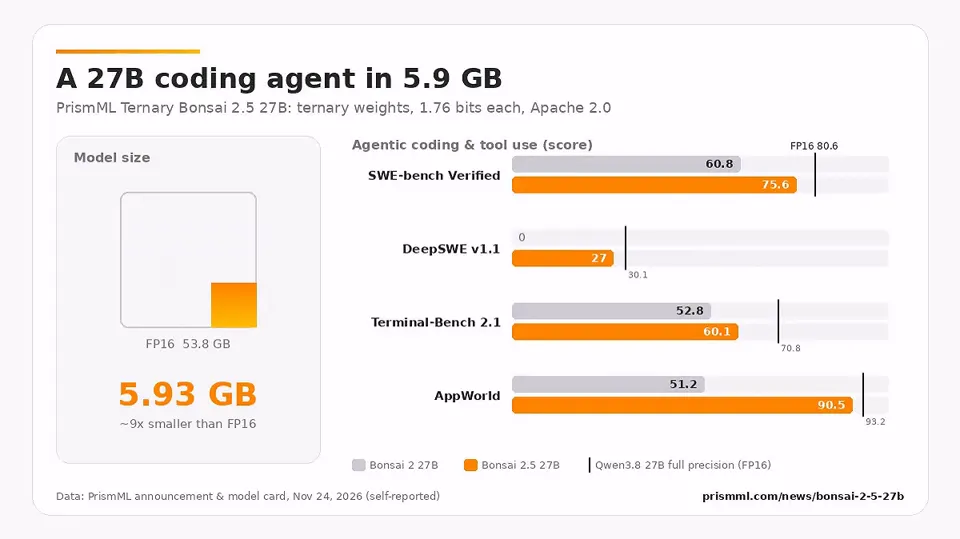
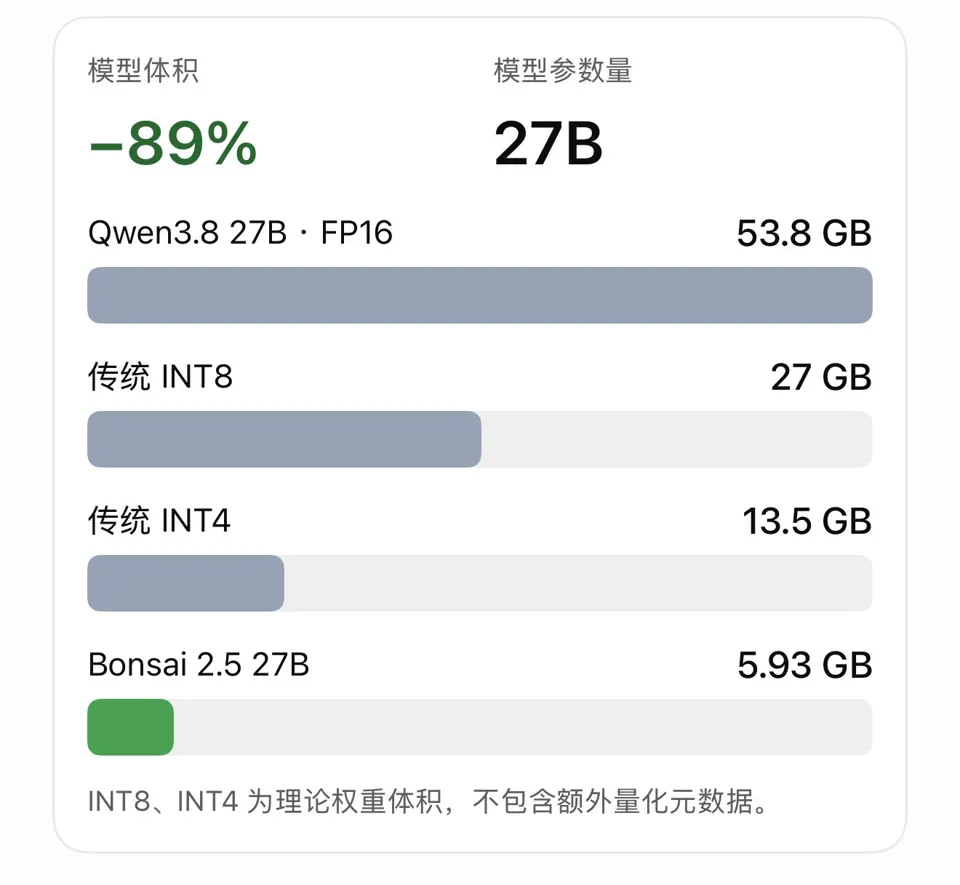
The Ternary Bonsai 2.5 27B model uses "ternary" quantization, with weights taking only three values: -1, 0, and 1. In its most compact format, the model still occupies only 5.9GB of memory, about one-ninth the size of the full-precision version (about 53.8GB), and after compression it still retains about 93.7% of the original model's Agent coding benchmark score (SWE-bench Verified score 75.6, full-precision score 80.6).
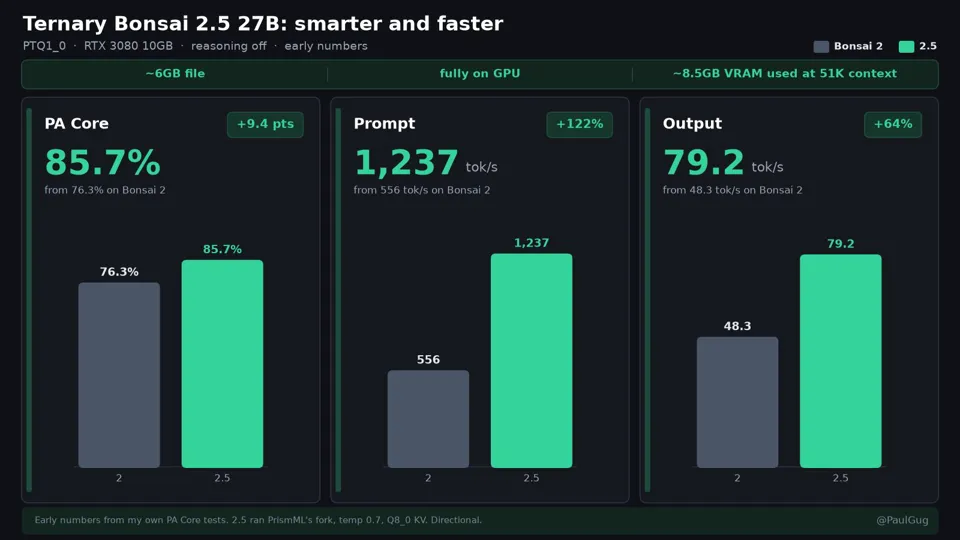
In terms of performance, according to data published by PrismML, the coding capability test SWE-bench Verified score rose from 60.8 to 75.6. The tool-use test AppWorld score jumped from 51.2 to 90.5; LiveCodeBench v6 slightly dropped from 83.8 to 83.0. IT之家 attaches the relevant data below:
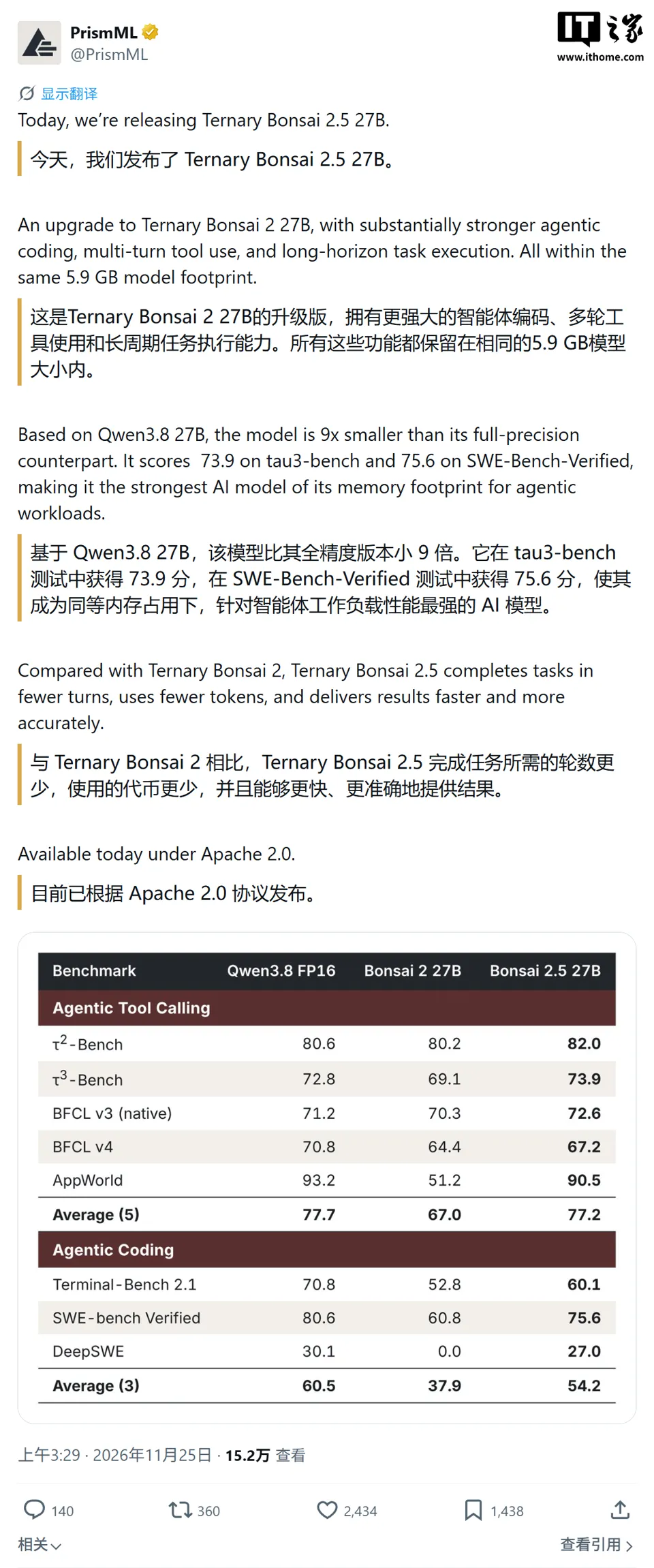
PrismML states that compressed models are prone to error accumulation in long tasks, causing agents to deviate from goals or repeat failed operations. The new version improves the use of tool feedback and recovery after failures, and reduces unnecessary reasoning, to narrow the gap with full-precision models on multi-step tasks.
In terms of applications, a coding assistant can locally inspect private codebases, modify code, and run tests. A knowledge work assistant can organize documents and check inconsistent records. Reasoning and sensitive data stay on the user's device.
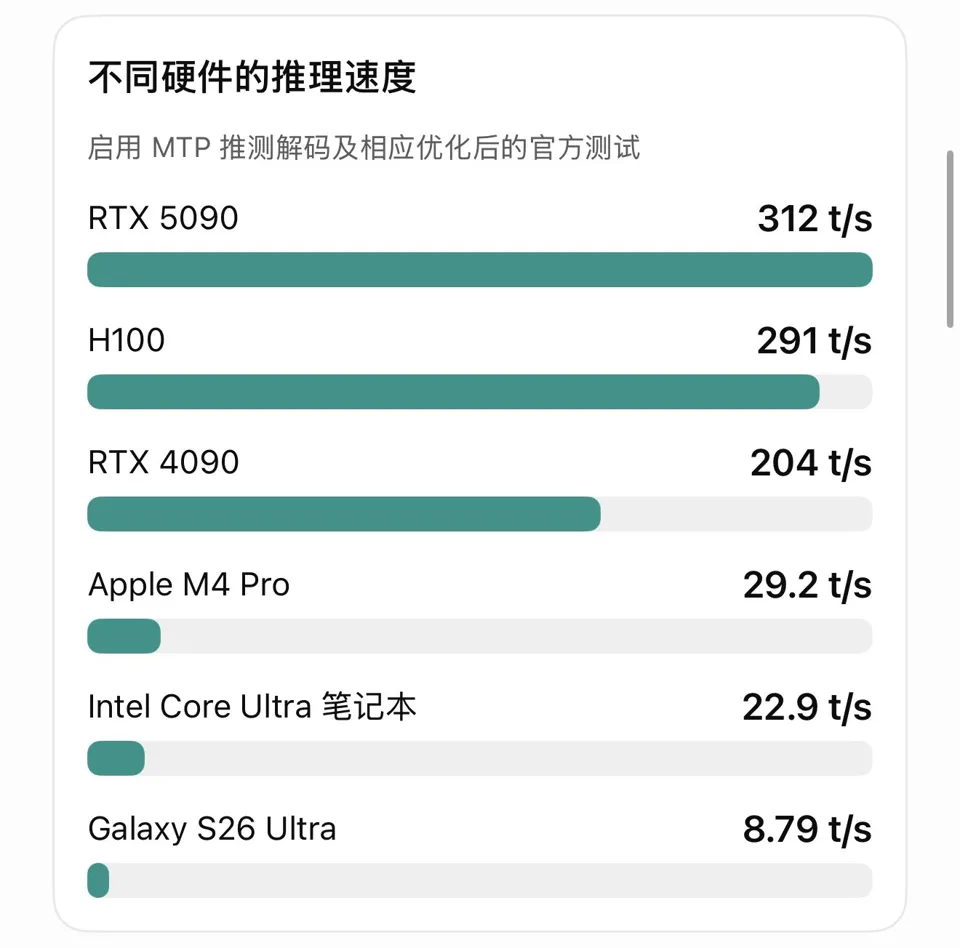
The model can run on NVIDIA and Intel GPUs via llama.cpp, and on Mac, iPhone, and iPad via MLX. The model is available for free download under the Apache 2.0 license starting today.