OpenAI Claims AI Proofs for Millennium Prize and ETH
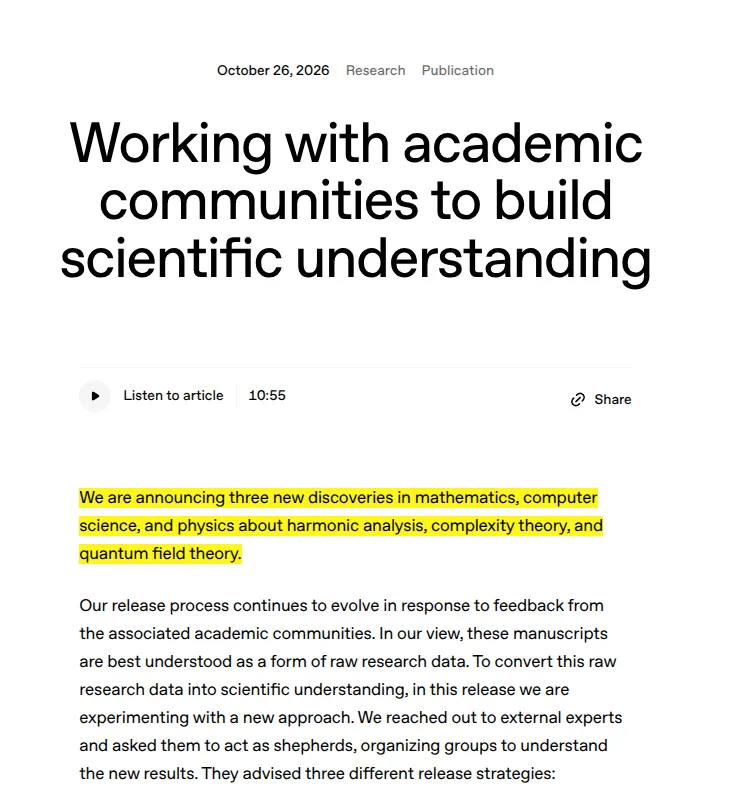
OpenAI claims its AI system has solved major mathematical and computational challenges, including half of the Yang-Mills Millennium Prize problem, the Kakeya conjecture, and disproving the Exponential Time Hypothesis. These results provide rigorous proofs for quantum chromodynamics foundations and overturn assumptions underpinning hundreds of research papers, marking a breakthrough in formal reasoning.
Full Report
Rohan Paul (@rohanpaul_ai) · 2026-10-26 23
OpenAI claims new AI proofs covering half a Millennium Prize problem, the Kakeya conjecture and a core complexity hypothesis.
These problems are in math, computer science and physics, problems top experts had worked on for decades.
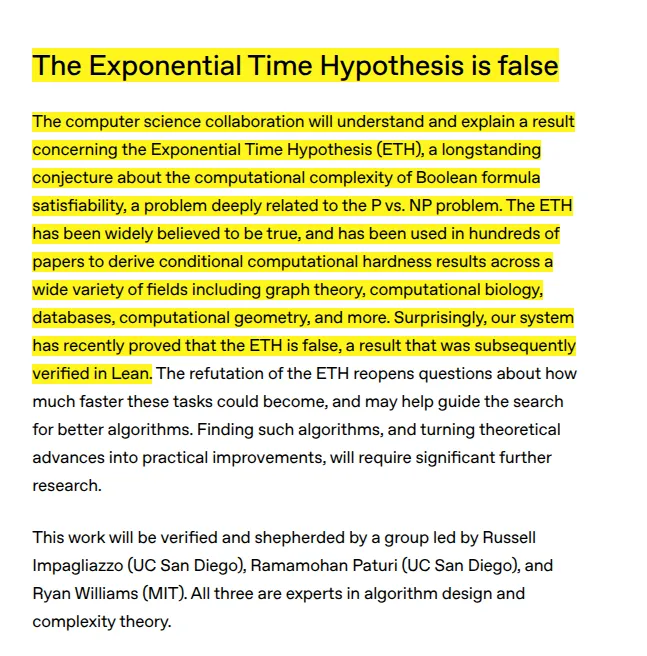
The biggest: for about 25 years, the Exponential Time Hypothesis held that certain logic puzzles take time that explodes as they grow. OpenAI’s AI says it proved the hypothesis false, and hundreds of research papers rest on it.
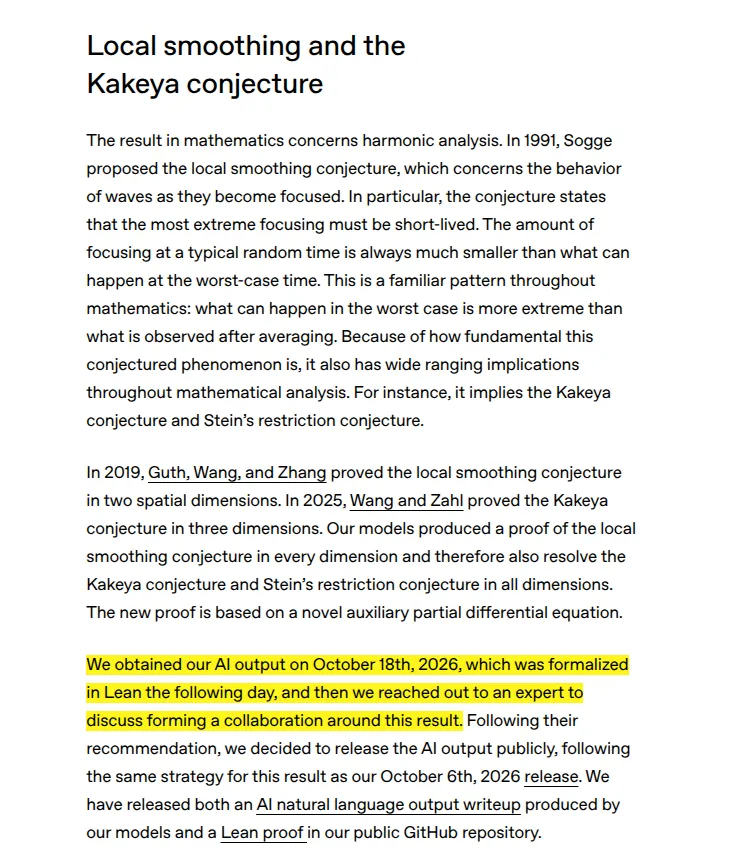
In math, the AI claims to have cracked the local smoothing conjecture, a 35-year-old puzzle about how waves focus, which also settles the famous Kakeya conjecture. Humans had only solved smaller versions.
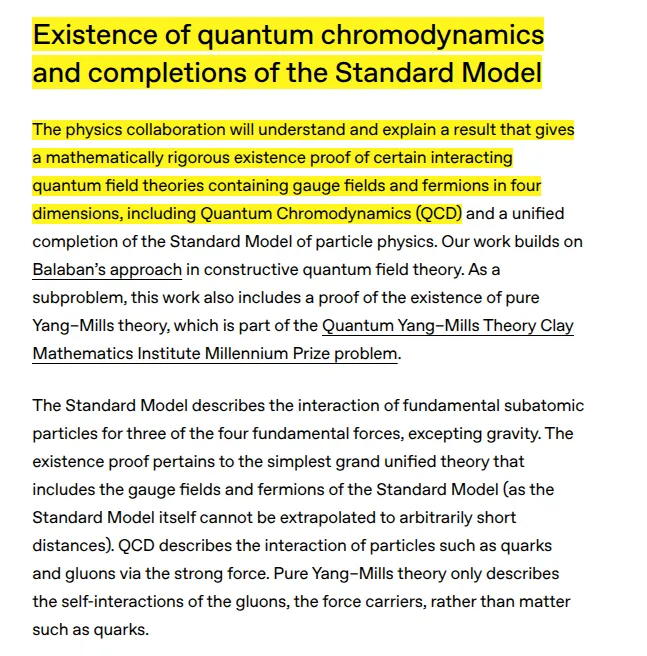
In physics, the AI claims it proved, with full mathematical rigor, that quantum chromodynamics, the theory of the force holding atoms’ cores together, stands on solid math. Its Yang-Mills proof covers half of the $1M “Yang-Mills Existence and Mass Gap” Millennium Prize problem.