斯坦福研究揭示多智能体团队多数增益可由同成本投票复现
斯坦福研究对比了多智能体团队与同等 token 预算下的独立智能体投票,发现在 6 个共享问题基准上,辩论等三种多智能体方法均未超过同成本多数投票。但在信息分散任务中,4 个 Qwen3.8-27B 智能体互相转发原始事实达到 0.959 准确率,高于全信息单智能体的 0.942。研究建议构建多智能体系统时以同成本投票为基线,并让智能体共享原始事实而非结论。
报道正文
Rohan Paul (@rohanpaul_ai) · 2026-11-27 21
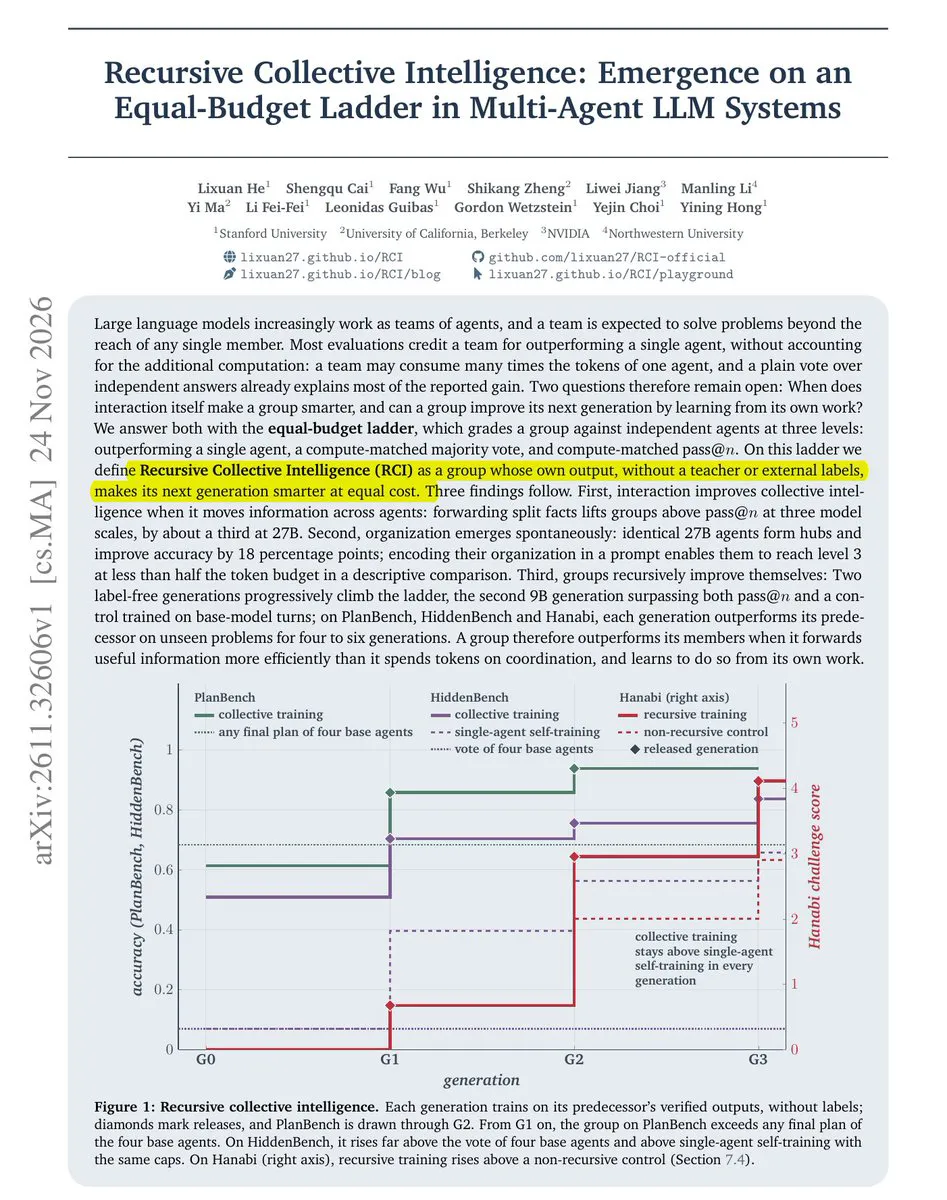
A new paper from Stanford researchers shows that when every agent sees the full question, agent teams spend more tokens without beating independent agents that just vote.
So anyone building multi-agent systems should compare against a majority vote of independent agents at the same token cost, not against 1 agent.
Agent teams usually get compared with 1 agent, but a team burns many times the tokens. A plain majority vote over independent answers already explains most reported gains.
The researchers graded teams against independent agents with the same token budget: 1 agent, a majority vote, and pass@n, where any agent being right counts. They tested Qwen models on shared-question tasks and on tasks where each agent holds only some facts.
On 6 shared-question benchmarks, debate and 2 other multi-agent methods never beat the same-cost vote. With split facts, 4 Qwen3.8-27B agents forwarding their facts scored 0.959 accuracy, above a full-information agent at 0.942 with the same budget.
Before adding agents, check whether a same-cost vote does as well, and have agents share raw facts rather than conclusions.