OpenAI 发布 GPT-5.2:知识工作基准大幅领先
OpenAI 正式推出 GPT-5.2,定位为面向专业知识工作的最强模型系列。该版本在 GDPval、SWE-Bench Pro 及 AIME 等多项核心基准测试中刷新 SOTA,尤其在复杂多步任务与长上下文理解上显著优于前代 GPT-5.1。
报道正文
本文目录18 个章节
我们正式推出 GPT‑5.2,这是迄今为止面向专业知识工作最强大的模型系列。
目前,ChatGPT Enterprise 的平均用户 表示 AI 每天能为他们节省 40–60 分钟,重度用户则表示每周可节省超过 10 小时。我们设计 GPT‑5.2 旨在为用户释放更大的经济价值;它在创建电子表格、制作演示文稿、编写代码、图像感知、理解长上下文、使用工具以及处理复杂的多步骤项目方面表现更佳。
GPT‑5.2 在许多 benchmark 上确立了新的 state of the art(行业最高水平),包括在 GDPval 中,它在涵盖 44 种职业、定义明确的知识工作任务上超越了行业专业人士。
GPT‑5.2 Thinking****GPT‑5.1 Thinking GDPval (wins or ties)知识工作任务 70.9%38.8% (GPT‑5) SWE-Bench Pro (public)软件工程 55.6%50.8% SWE-bench Verified软件工程 80.0%76.3% GPQA Diamond (no tools)科学问题 92.4%88.1% CharXiv Reasoning (w/ Python)科学图表问题 88.7%80.3% AIME 2025 (no tools)竞赛数学 100.0%94.0% FrontierMath (Tier 1–3)高等数学 40.3%31.0% FrontierMath (Tier 4)高等数学 14.6%12.5% ARC-AGI-1 (Verified)抽象推理 86.2%72.8% ARC-AGI-2 (Verified)抽象推理 52.9%17.6%
在 ChatGPT 中,GPT‑5.2 Instant、Thinking 和 Pro 版本将于今天开始逐步推出,首先面向付费计划用户开放。在 API 方面,所有开发者现在均可调用这些模型。
总体而言,GPT‑5.2 在通用智能、长上下文理解、agentic tool-calling(智能体工具调用)以及视觉能力方面带来了显著提升——使其在执行复杂的现实世界端到端任务时,比以往任何模型都更加出色。
模型性能
具有经济价值的任务
GPT‑5.2 Thinking 是目前为止在现实世界专业应用场景中表现最佳的模型。在 GDPval(一项涵盖 44 种职业、评估明确定义的知识工作任务的基准测试)上,GPT‑5.2 Thinking 创造了新的最先进(SOTA)成绩,成为我们首个达到或超越人类专家水平的模型。具体而言,根据人类专家评审的判断,在 GDPval 知识工作任务中,GPT‑5.2 Thinking 在 70.9% 的对比中击败或持平了行业顶尖专业人士。这些任务包括制作演示文稿、电子表格及其他交付物。GPT‑5.2 Thinking 生成 GDPval 任务输出的速度是专家专业人士的 11 倍以上,成本不足其 1%,这表明在配合人工监督的情况下,GPT‑5.2 能够协助完成专业工作。速度和成本估算基于历史指标;ChatGPT 中的实际速度可能会有所不同。
在 GDPval 中,模型尝试完成涵盖对美国 GDP 贡献最大的前 9 个行业中 44 种职业的明确定义知识工作任务。这些任务要求产出真实的工作成果,例如销售演示文稿、会计电子表格、急诊排班表、制造示意图或短视频。在 ChatGPT 中,GPT‑5.2 Thinking 拥有 GPT‑5 Thinking 不具备的新工具。
在审阅一份特别出色的输出时,一位 GDPval 评审员评论道:“这是输出质量上一次令人兴奋且显著的飞跃……[它] 看起来像是由一家拥有员工的专业公司完成的,两份交付物的布局设计和建议都出人意料地完善,尽管其中一份仍有一些小错误需要修正。”
此外,在我们内部针对初级投资银行分析师电子表格建模任务的基准测试中——例如为财富 500 强公司构建带有规范格式和引用的三张报表模型,或为私有化交易构建杠杆收购模型——GPT‑5.2 Thinking 的平均单任务得分比 GPT‑5.1 高出 9.3%,从 59.1% 提升至 68.4%。
并排对比显示,GPT‑5.2 Thinking 生成的电子表格和幻灯片在复杂度和格式规范性方面均有提升:
要在 ChatGPT 中使用新的电子表格和演示文稿功能,您必须订阅 Plus、Pro、Business 或 Enterprise 计划,并选择 GPT‑5.2 Thinking 或 Pro。复杂的生成过程可能需要数分钟才能完成。
编程
GPT‑5.2 Thinking 在 SWE-Bench Pro 上确立了新的最先进(SOTA)水平,得分达到 55.6%。SWE-Bench Pro 是一项针对真实世界软件工程任务的严格评估基准。与仅测试 Python 的 SWE-bench Verified 不同,SWE-Bench Pro 涵盖四种编程语言,旨在提供更具抗数据污染能力、更高挑战性、更多样化且更贴近工业实际应用的评测体验。
在 SWE-bench Verified 上(图中未展示),GPT‑5.2 Thinking 取得了我们迄今最高的 80% 分数。
对于日常专业应用而言,这意味着该模型能够更可靠地调试生产代码、实现功能需求、重构大型代码库,并以更少的人工干预端到端地交付修复方案。
GPT‑5.2 Thinking 在前端软件工程方面的表现也优于 GPT‑5.1 Thinking。早期测试者发现,它在前端开发以及复杂或非传统 UI 工作——尤其是涉及 3D 元素的任务——方面显著更强,使其成为全栈工程师强大的日常合作伙伴。以下是其通过单个提示词生成的一些示例:
早期测试者分享了他们对 GPT‑5.2 编码能力的反馈:
事实性
GPT‑5.2 Thinking 的幻觉率低于 GPT‑5.1 Thinking。在一组来自 ChatGPT 的去标识化查询中,包含错误的回复减少了 30%。对于专业人士而言,这意味着在使用模型进行研究、写作、分析和决策支持时错误更少,使模型在日常知识工作中更加可靠。
推理努力程度设置为最大可用值,并启用了搜索工具。错误由其他模型检测,这些模型本身也可能产生错误。声明级错误率远低于响应级错误率,因为大多数响应包含许多声明。
与所有模型一样,GPT‑5.2 Thinking 并非完美无缺。对于任何关键任务,请务必复核其答案。
长上下文
GPT‑5.2 Thinking 在长上下文推理方面确立了新的最先进(SOTA)水平,在 OpenAI MRCRv2 评估中取得了领先性能。MRCRv2 是一项测试模型整合分散在长文档中的信息能力的评估基准。在需要跨数十万 token 关联信息的现实世界任务(如深度文档分析)中,GPT‑5.2 Thinking 的准确性显著高于 GPT‑5.1 Thinking。特别是,这是我们看到的第一个在 4-needle MRCR 变体(扩展至 256k tokens)上达到接近 100% 准确率的模型。
在实际应用中,这使得专业人士能够利用 GPT‑5.2 处理长文档——例如报告、合同、研究论文、转录文本以及多文件项目——同时在数十万 token 的范围内保持连贯性和准确性。这使 GPT‑5.2 特别适合进行深度分析、综合归纳以及复杂的多源工作流。
在 OpenAI-MRCR(opens in a new window)v2(多轮指代消解)中,多个相同的“针”用户请求被插入到由类似请求和响应组成的长“草堆”中,模型需要复现第 n 个“针”的响应。该评估的第 2 版修复了约 5% 具有错误标准答案值的任务。平均匹配率衡量的是模型响应与正确答案之间的平均字符串匹配比例。256k 最大输入 token 处的数据点代表 128k–256k 输入 token 的平均值,以此类推。此处,256k 表示 256 * 1,024 = 262,144 个 token。推理努力程度设置为最大值。
对于需要超越最大上下文窗口进行思考的任务,GPT‑5.2 Thinking 兼容我们新的 Responses /compact 端点,该端点可扩展模型的有效上下文窗口。这使得 GPT‑5.2 Thinking 能够应对更多依赖工具且运行时间较长的工作流,否则这些工作流会受到上下文长度的限制。详情请参阅我们的 API 文档(opens in a new window)。
视觉能力
GPT‑5.2 Thinking 是我们迄今最强大的视觉模型,在图表推理和软件界面理解方面的错误率大约降低了一半。
对于日常专业使用而言,这意味着模型可以更准确地解读仪表板、产品截图、技术图表和可视化报告——支持金融、运营、工程、设计和客户支持等领域的工作流,在这些领域中,视觉信息至关重要。
在 ScreenSpot-Pro(opens in a new window) 中,模型必须对来自各种专业场景的高分辨率图形用户界面截图进行推理。启用了 Python 工具并将推理努力程度设置为最大值。如果不启用 Python 工具,分数会低得多。我们建议在此类视觉任务中启用 Python 工具。
[注:本文篇幅超长,以上为核心前篇精译,后续内容保留原文呈现]
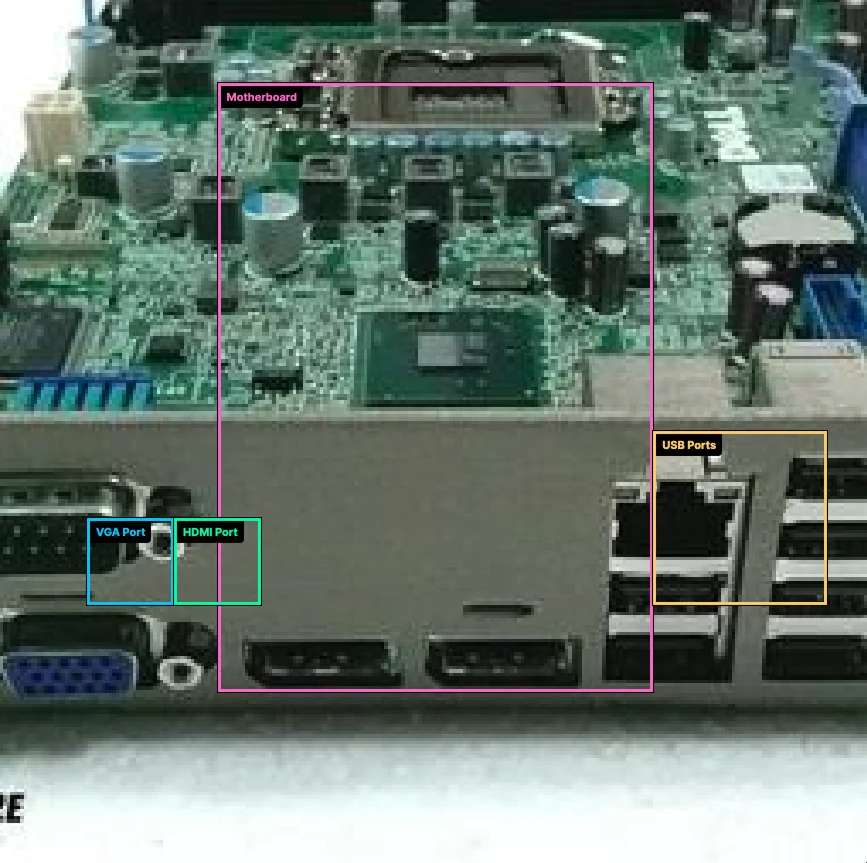
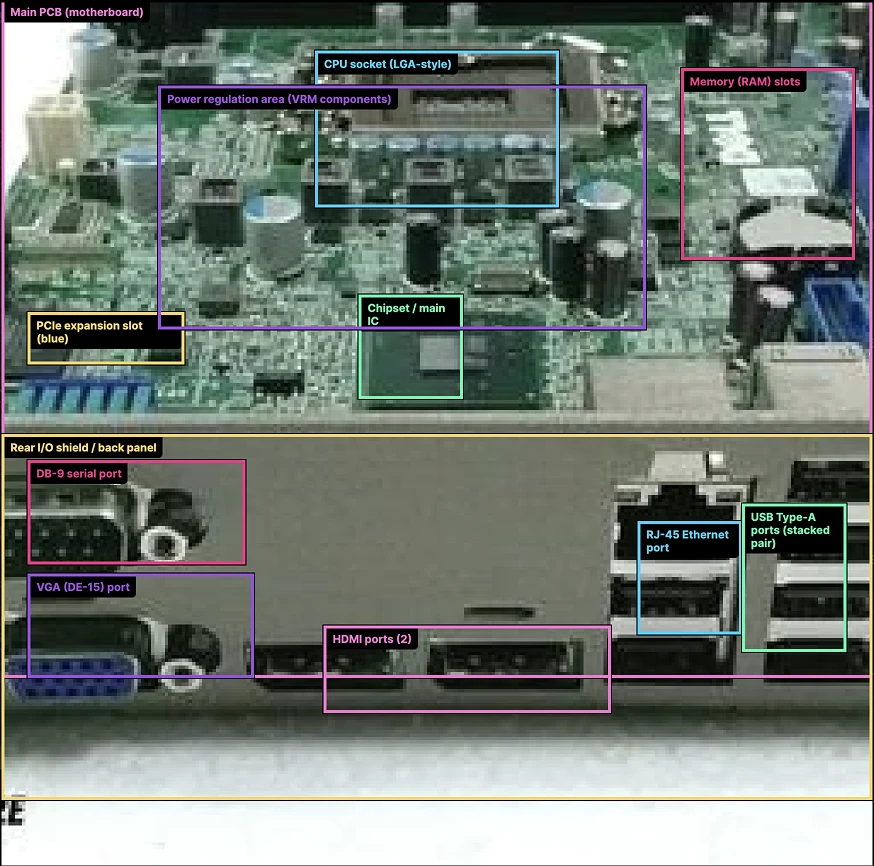
Compared to previous models, GPT‑5.2 Thinking has a stronger grasp of how elements are positioned within an image, which helps on tasks where relative layout plays a key role in solving the problem. In the example below, we ask the model to identify the components in an image input (in this case, a motherboard) and return labels with approximate bounding boxes. Even on a low-quality image, GPT‑5.2 identifies the main regions and places boxes that sometimes match the true locations of each component, while GPT‑5.1 only labels a few parts and shows a much weaker understanding of their spatial arrangement. Both models make clear mistakes, but GPT‑5.2 shows better comprehension of the image.
GPT‑5.1
GPT‑5.2
Tool calling
GPT‑5.2 Thinking achieves a new state of the art of 98.7% on Tau2-bench Telecom, demonstrating its ability to reliably use tools across long, multi-turn tasks.
For latency-sensitive use cases, GPT‑5.2 Thinking also performs much better at reasoning.effort='none', substantially outperforming GPT‑5.1 and GPT‑4.1.
In τ2-bench(opens in a new window), models use tools to complete customer support tasks in a multi-turn interaction with a simulated user. For the Telecom domain, we included a brief, generally helpful instruction in the system prompt to boost performance. We exclude the Airline subset because of lower-quality ground truth grading.
For professionals, this translates into stronger end-to-end workflows—such as resolving customer support cases, pulling data from multiple systems, running analyses, and generating final outputs with fewer breakdowns between steps.
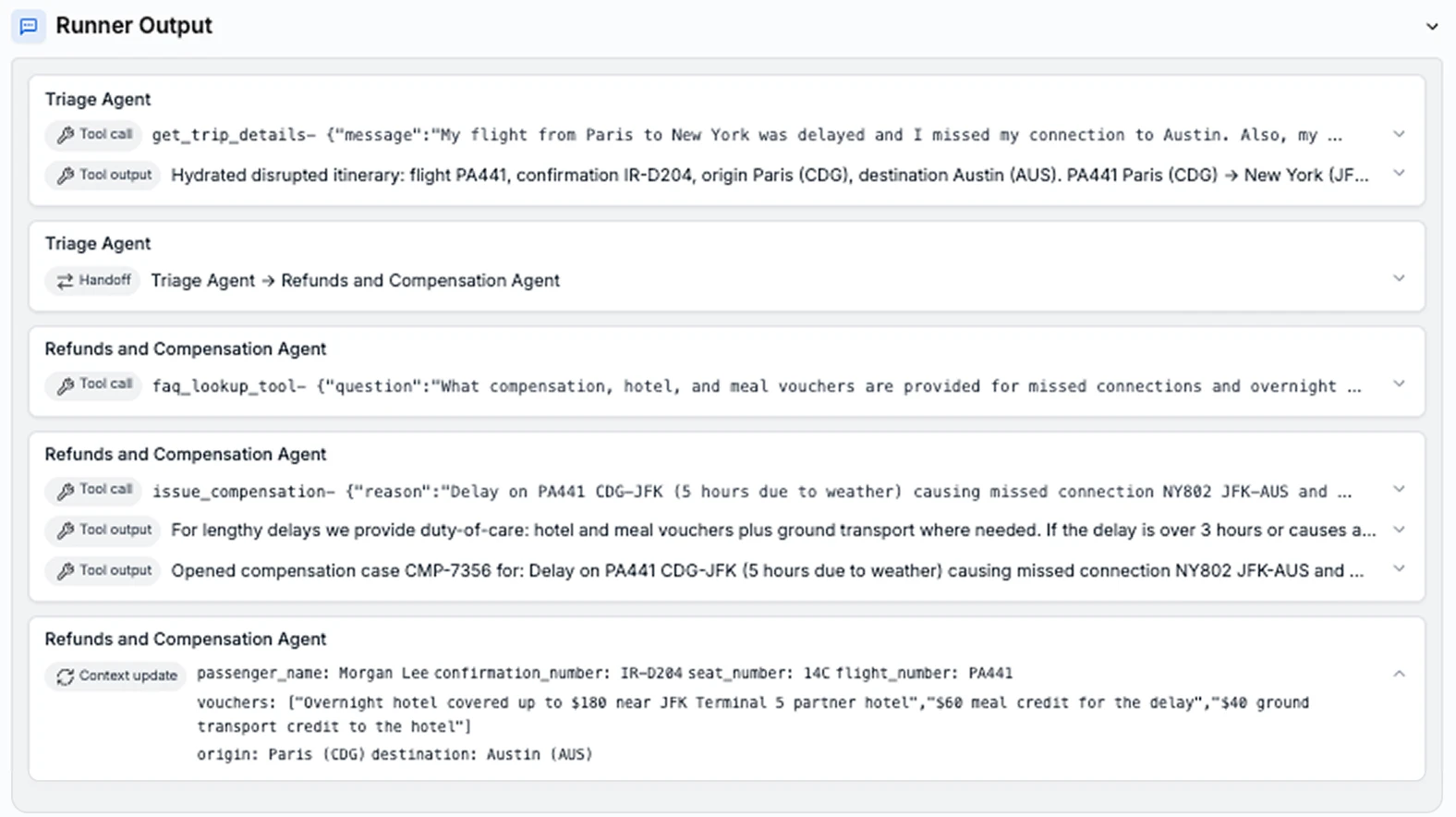
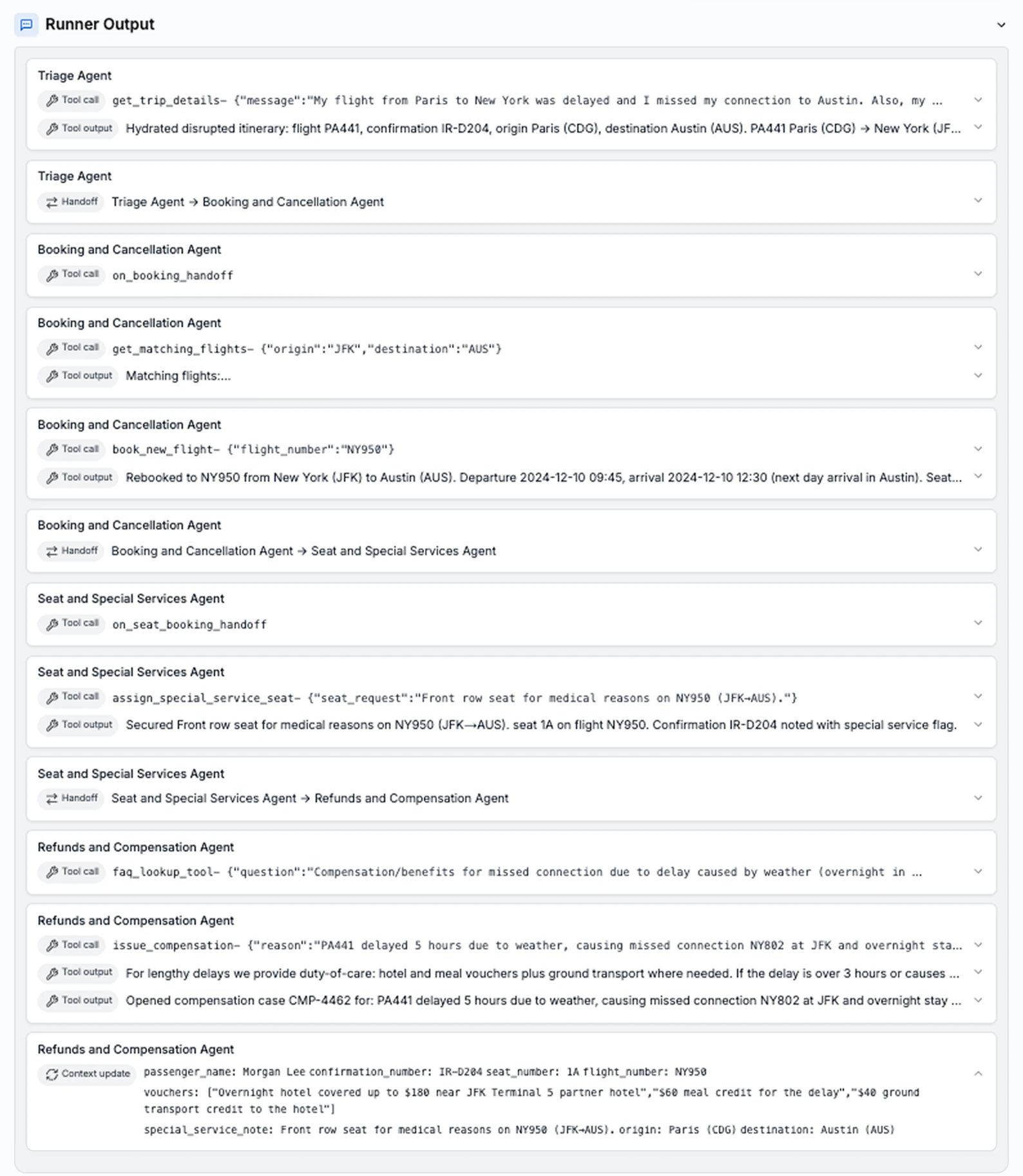
For example, when asking a complex customer service question that requires multi-step resolution, the model can more effectively coordinate a full workflow across multiple agents. In the case below, a traveler reports a delayed flight, a missed connection, an overnight stay in New York, and a medical seating requirement. GPT‑5.2 manages the entire chain of tasks—rebooking, special-assistance seating, and compensation—delivering a more complete outcome than GPT‑5.1.
GPT‑5.1
GPT‑5.2
Science & math
One of our hopes for AI is that it will accelerate scientific research for the benefit of everyone. Toward this, we’ve been working with and listening to scientists to see how AI can speed up their work, and last month we shared some early collaborative experiments here.
We believe GPT‑5.2 Pro and GPT‑5.2 Thinking are the world’s best models for assisting and accelerating scientists. On GPQA Diamond, a graduate-level Google-proof Q&A benchmark, GPT‑5.2 Pro achieves 93.2%, followed closely by GPT‑5.2 Thinking at 92.4%.
In GPQA Diamond(opens in a new window), models answer multiple choice questions about physics, chemistry, and biology. No tools were enabled and reasoning effort was set to maximum.
On FrontierMath (Tier 1–3), an evaluation of expert-level mathematics, GPT‑5.2 Thinking set a new state of the art, solving 40.3% of problems.
We're beginning to see AI models meaningfully accelerate progress in math and science in tangible ways. For example, in recent work with GPT‑5.2 Pro, researchers explored an open question in statistical learning theory. In a narrow, well-specified setting, the model proposed a proof that was subsequently verified by the authors and reviewed with external experts, illustrating how frontier models can assist mathematical research under close human oversight.
ARC-AGI 2
On ARC-AGI-1 (Verified), a benchmark designed to measure general reasoning ability, GPT‑5.2 Pro is the first model to cross the 90% threshold, improving from 87%(opens in a new window) by o3‑preview last year while reducing the cost of achieving that performance by roughly 390×.
On ARC-AGI-2 (Verified), which raises the difficulty and better isolates fluid reasoning, GPT‑5.2 Thinking achieves a new state of the art for chain-of-thought models, scoring 52.9%. GPT‑5.2 Pro performs even higher, reaching 54.2%, further extending the model’s ability to reason through novel, abstract problems.
Improvements across these evaluations reflect GPT‑5.2’s stronger multi-step reasoning, greater quantitative accuracy, and more reliable problem solving on complex technical tasks.
Here’s what our early testers say about GPT‑5.2:
GPT‑5.2 in ChatGPT
In ChatGPT, users should notice GPT‑5.2 feels better to use day to day—more structured, more reliable, and still enjoyable to talk to.
GPT‑5.2 Instant is a fast, capable workhorse for everyday work and learning, with clear improvements in info-seeking questions, how-tos and walk-throughs, technical writing, and translation, building on the warmer conversational tone introduced in GPT‑5.1 Instant. Early testers particularly noted clearer explanations that surface key information upfront.
GPT‑5.2 Thinkingis designed for deeper work, helping users tackle more complex tasks with greater polish—especially for coding, summarizing long documents, answering questions about uploaded files, working through math and logic step by step, and supporting planning and decisions with clearer structure and more useful detail.
GPT‑5.2 Pro is our smartest and most trustworthy option for difficult questions where a higher-quality answer is worth the wait, with early testing showing fewer major errors and stronger performance in complex domains like programming.
Safety
GPT‑5.2 builds on the safe completion research we introduced with GPT‑5, which teaches the model to give the most helpful answer while still staying within safety boundaries.
With this release, we continued our work to strengthen our models’ responses in sensitive conversations, with meaningful improvements in how they respond to prompts indicating signs of suicide or self harm, mental health distress, or emotional reliance on the model. These targeted interventions have resulted in fewer undesirable responses in both GPT‑5.2 Instant and GPT‑5.2 Thinking as compared to GPT‑5.1 and GPT‑5 Instant and Thinking models. Further details can be found in the system card.
We’re in the early stages of rolling out our age prediction model so that we can automatically apply content protections for users who are under 18, in order to limit access to sensitive content. This builds on our existing approach to users we know are under 18 and our parental controls.
GPT‑5.2 is one step in an ongoing series of improvements, and we’re far from done. While this release delivers meaningful gains in intelligence and productivity, we know there are areas where people want more. In ChatGPT, we’re working on known issues like over-refusals, while continuing to raise the bar on safety and reliability overall. These changes are complex, and we’re focused on getting them right.
Mental health evaluations
GPT‑5.2 InstantGPT‑5.1 InstantGPT‑5.2 Thinking****GPT‑5.1 Thinking Mental health 0.995 0.883 0.915 0.684 Emotional reliance 0.938 0.945 0.955 0.785 Self-harm 0.938 0.925 0.963 0.937
Availability & pricing
In ChatGPT, we’ll begin rolling out GPT‑5.2 (Instant, Thinking, and Pro) today, starting with paid plans (Plus, Pro, Go, Business, Enterprise). We deploy GPT‑5.2 gradually to keep ChatGPT as smooth and reliable as we can; if you don’t see it at first, please try again later. In ChatGPT, GPT‑5.1 will still be available to paid users for three months under legacy models, after which we will sunset GPT‑5.1.
Model naming across ChatGPT & API
In our API Platform, GPT‑5.2 Thinking is available today in the Responses API and Chat Completions API as gpt-5.2, and GPT‑5.2 Instant as gpt-5.2-chat-latest. GPT‑5.2 Pro is available in the Responses API as gpt-5.2-pro. Developers can now set the reasoning parameter in GPT‑5.2 Pro, and both GPT‑5.2 Pro and GPT‑5.2 Thinking now support the new fifth reasoning effort of xhigh, for tasks where quality is most important.
GPT‑5.2 is priced at 14/1M output tokens, with a 90% discount on cached inputs. On multiple agentic evals, we found that despite GPT‑5.2’s greater cost per token, the cost of attaining a given level of quality ended up less expensive due to GPT‑5.2’s greater token efficiency.
While ChatGPT subscription pricing remains the same, in the API GPT‑5.2 is priced higher per token than GPT‑5.1 because it is a more capable model. It’s still priced below other frontier models, so people can continue to use it deeply in their daily work and core applications.
Price per million tokens
ModelInputCached input****Output gpt-5.2 / gpt-5.2-chat-latest$1.75$0.175$14 gpt-5.2-pro$21-$168 gpt-5.1 / gpt-5.1-chat-latest$1.25$0.125$10 gpt-5-pro$15-$120
We have no current plans to deprecate GPT‑5.1, GPT‑5, or GPT‑4.1 in the API and will communicate any deprecation plans with ample advance notice for developers. While GPT‑5.2 will work well out of the box in Codex, we expect to release a version of GPT‑5.2 optimized for Codex in the coming weeks.
Our partners
GPT‑5.2 was built in collaboration with our long-standing partners NVIDIA and Microsoft. Azure data centers and NVIDIA GPUs, including H100, H200, and GB200-NVL72, underpin OpenAI’s at-scale training infrastructure, driving significant gains in model intelligence. Together, this collaboration allows us to scale compute with confidence and bring new models to market more quickly.
Appendix
Detailed benchmarks
Below, we report comprehensive benchmark scores for GPT‑5.2 Thinking, along with a subset for GPT‑5.2 Pro.
Professional
| GPT-5.2 Thinking | GPT-5.2 Pro | GPT-5.1 Thinking | |
|---|---|---|---|
| GDPval (ties allowed, wins or ties) | 70.9% | 74.1% | 38.8% (GPT-5) |
| GDPval (ties allowed, clear wins) | 49.8% | 60.0% | 35.5% (GPT-5) |
| GDPval (no ties) | 61.0% | 67.6% | 37.1% (GPT-5) |
| Investment banking spreadsheet tasks (internal) | 68.4% | 71.7% | 59.1% |
Coding
| GPT-5.2 Thinking | GPT-5.2 Pro | GPT-5.1 Thinking | |
|---|---|---|---|
| SWE-Bench Pro, Public | 55.6% | - | 50.8% |
| SWE-bench Verified | 80.0% | - | 76.3% |
| SWE-Lancer, IC Diamond* | 74.6% | - | 69.7% |
Factuality
| GPT-5.2 Thinking | GPT-5.2 Pro | GPT-5.1 Thinking | |
|---|---|---|---|
| ChatGPT answers without errors (w/ search) | 93.9% | - | 91.2% |
| ChatGPT answers without errors (no search) | 88.0% | - | 87.3% |
Long context
| GPT-5.2 Thinking | GPT-5.2 Pro | GPT-5.1 Thinking | |
|---|---|---|---|
| OpenAI MRCRv2, 8 needles, 4k–8k | 98.2% | - | 65.3% |
| OpenAI MRCRv2, 8 needles, 8k–16k | 89.3% | - | 47.8% |
| OpenAI MRCRv2, 8 needles, 16k–32k | 95.3% | - | 44.0% |
| OpenAI MRCRv2, 8 needles, 32k–64k | 92.0% | - | 37.8% |
| OpenAI MRCRv2, 8 needles, 64k–128k | 85.6% | - | 36.0% |
| OpenAI MRCRv2, 8 needles, 128k–256k | 77.0% | - | 29.6% |
| BrowseComp Long Context 128k | 92.0% | - | 90.0% |
| BrowseComp Long Context 256k | 89.8% | - | 89.5% |
| GraphWalks bfs <128k | 94.0% | - | 76.8% |
| Graphwalks parents <128k | 89.0% | - | 71.5% |
Vision
| GPT-5.2 Thinking | GPT-5.2 Pro | GPT-5.1 Thinking | |
|---|---|---|---|
| CharXiv reasoning (no tools) | 82.1% | - | 67.0% |
| CharXiv reasoning (w/ Python) | 88.7% | - | 80.3% |
| MMMU Pro (no tools) | 79.5% | - | - |
| MMMU Pro (w/ Python) | 80.4% | - | 79.0% |
| Video MMMU (no tools) | 85.9% | - | 82.9% |
| Screenspot Pro (w/ Python) | 86.3% | - | 64.2% |
Tool usage
| GPT-5.2 Thinking | GPT-5.2 Pro | GPT-5.1 Thinking | |
|---|---|---|---|
| Tau2-bench Telecom | 98.7% | - | 95.6% |
| Tau2-bench Retail | 82.0% | - | 77.9% |
| BrowseComp | 65.8% | 77.9% | 50.8% |
| Scale MCP-Atlas | 60.6% | - | 44.5% |
| Toolathlon | 46.3% | - | 36.1% |
Academic
| GPT-5.2 Thinking | GPT-5.2 Pro | GPT-5.1 Thinking | |
|---|---|---|---|
| GPQA Diamond (no tools) | 92.4% | 93.2% | 88.1% |
| HLE (no tools) | 34.5% | 36.6% | 25.7% |
| HLE (w/ search, Python) | 45.5% | 50.0% | 42.7% |
| MMMLU | 89.6% | - | 89.5% |
| HMMT, Feb 2025 (no tools) | 99.4% | 100.0% | 96.3% |
| AIME 2025 (no tools) | 100.0% | 100.0% | 94.0% |
| FrontierMath Tier 1–3 (w/ Python) | 40.3% | - | 31.0% |
| FrontierMath Tier 4 (w/ Python) | 14.6% | - | 12.5% |
Abstract reasoning
| GPT-5.2 Thinking | GPT-5.2 Pro | GPT-5.1 Thinking | |
|---|---|---|---|
| ARC-AGI-1 (Verified) | 86.2% | 90.5% | 72.8% |
| ARC-AGI-2 (Verified) | 52.9% | 54.2% (high) | 17.6% |
Models were run with maximum available reasoning effort in our API (xhigh for GPT‑5.2 Thinking & Pro, and high for GPT‑5.1 Thinking), except for the professional evals, where GPT‑5.2 Thinking was run with reasoning effort heavy, the maximum available in ChatGPT Pro. Benchmarks were conducted in a research environment, which may provide slightly different output from production ChatGPT in some cases.
* For SWE-Lancer, we omit 40/237 problems that did not run on our infrastructure.