The Decoder · 2026/10/11 17:49:59
AI 市场现杰文斯悖论:Token 降价反推算力需求激增,英伟达成最大受益者
数据显示 AI 市场正呈现典型的“杰文斯悖论”:尽管单位 Token 价格持续下降,但 H100 GPU 租赁价格却保持高位甚至上涨。这是因为更低的推理成本解锁了智能体(Agent)和自动化应用,导致总使用量增速远超单价降幅,从而维持了对底层算力的强劲需求。这一趋势不仅验证了英伟达的商业逻辑,也暗示当前算力需求可能因智能体的高消耗特性而被部分人为放大。
报道全文原始报道全文

Oct 11, 2026
Jevons' paradox is Jensen's best friend. Data from Ornn, Silicon Data, and Bloomberg (as of August 2026) shows what a16z calls a textbook Jevons paradox in the AI market. Token prices keep dropping, but H100 GPU rental prices hold steady or climb. Cheaper tokens unlock AI agents, automation, and new applications, so volume grows faster than per-unit costs fall. How much demand comes from humans versus the systems themselves isn't clear, since agentic AI burns through tokens at a staggering rate. Compute demand could be artificially inflated, and even modest human usage growth could trigger outsized hardware needs.
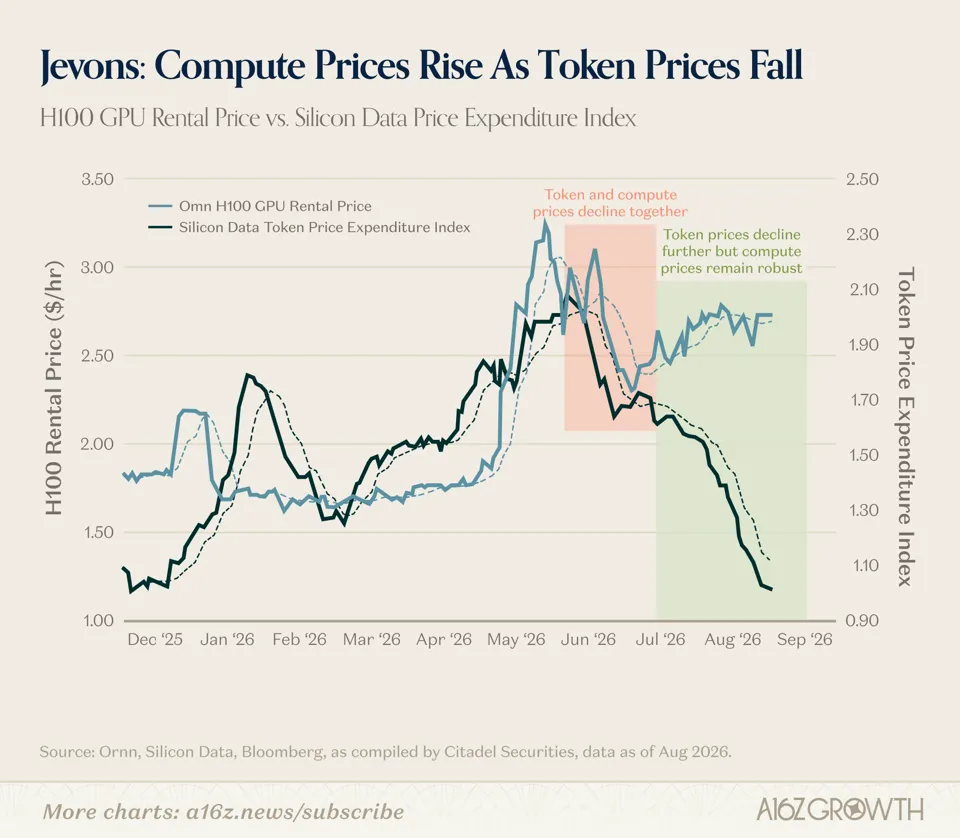
The whole system rests on one assumption: AI usage has to grow fast enough to offset falling token prices. As long as it does, hardware stays scarce and expensive. If demand flattens, the chain from chip makers and memory suppliers to energy providers and cloud companies takes a hit. Markets could spiral from there, and how sensitive they already are became clear when US stocks dropped on reports that OpenAI's annualized revenue might be lower than previously reported.