Anthropic 替代工程师愿景遇挫 客户流失与定价困境分析
文章批判了 AI 实验室通过“替代软件工程师”获利的商业叙事,指出 Anthropic 等公司因缺乏垂直整合或算力护城河,正面临产品价值归零与客户反噬的风险。核心观点认为,单纯依赖模型能力而非基础设施优势(如 Nvidia)或生态绑定(如 Meta),导致其在 B2B 市场陷入低价竞争陷阱。
报道正文
本文目录6 个章节
AI labs built a gun to shoot SWEs, and the bullet went straight through their own customers.
For three years the pitch from the big AI model labs has been beautifully simple. Software engineers are the most expensive employees on Earth. Companies spend staggering sums on them. So build an AI software engineer, sell it to those companies, and collect the salaries they no longer have to pay. Fire the human, rent the robot. The labs pocket the difference.
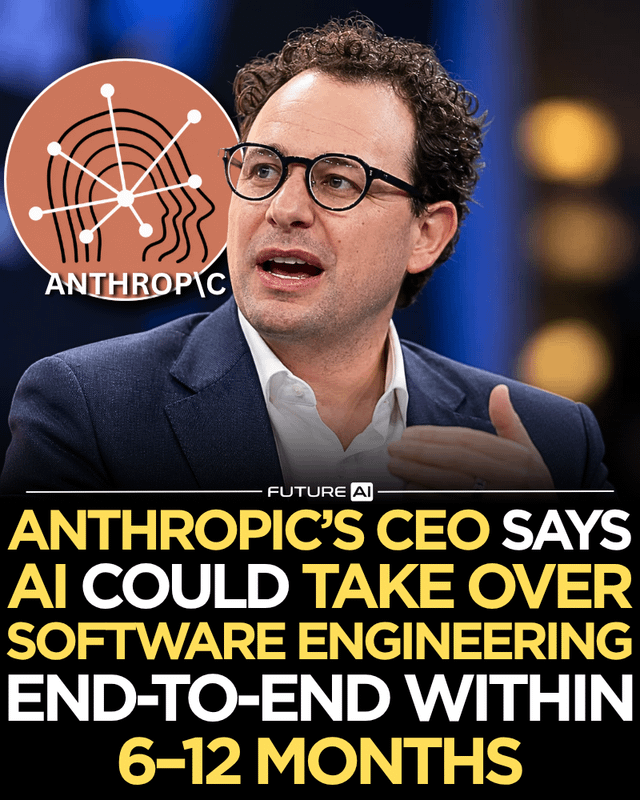
It’s a lovely story. It’s the story that justified every funding round, every data center, every breathless investor letter about “replacing knowledge work.” And it has a hole in it so big you could fly a fleet of GPUs through it.
The toll booth
Here is what the software business actually was: a toll booth. Not a factory, a toll booth.
Adobe didn’t get rich because Photoshop was made of magic. It got rich because building something as good as Photoshop was hard. It took hundreds of expensive people, years of work and piles of capital, and almost nobody could afford to try. So Adobe sat at the booth and collected a monthly fee from every designer on the planet, forever. That recurring revenue paid the engineers, paid the shareholders, and, in the AI labs’ grand plan, was supposed to pay them.

That’s the whole chain. Users pay the toll booth. The toll booth pays software engineers. The AI labs convince the toll booth to fire the engineers and pay the labs instead. Every dollar in the AI business plan flows through that booth.
They bombed the booth
The problem is the AI labs didn’t sell their robot engineer only to Adobe. They sold it to everyone, for twenty bucks a month!
So what happened? Exactly what you’d expect if you thought about it for longer than one earnings call. A hobbyist built a Photoshop alternative over a weekend. AI is reverse-engineering massive projects and releasing them as open source. Basically killing the business models of the people who wanted to replace all their workers with AI. The thing that made software valuable, the fact that it was difficult, has been dissolved in an acid bath of cheap tokens.
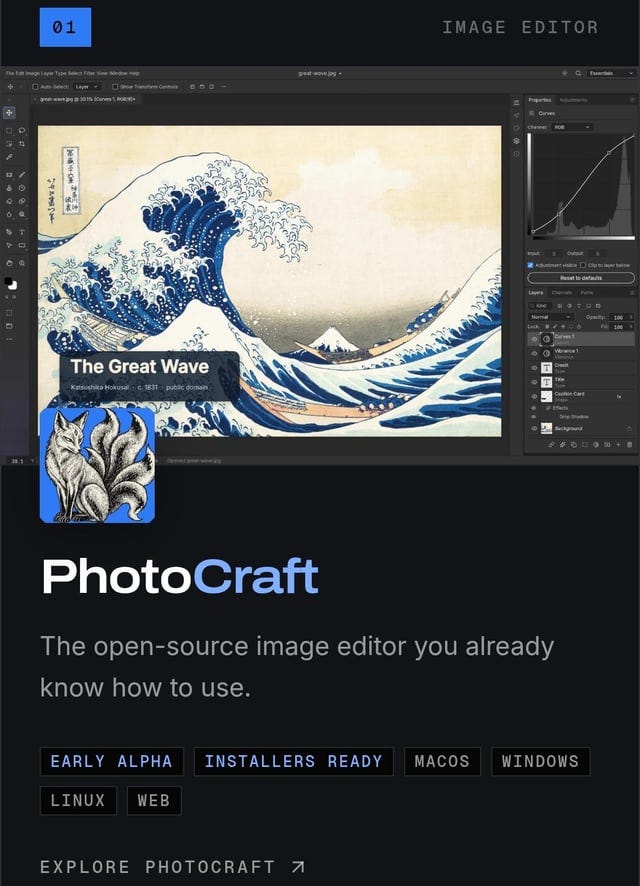
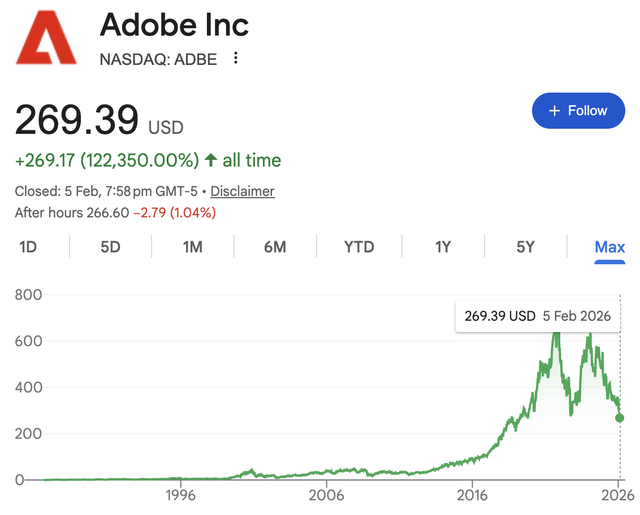
And just in case you didn’t know a free clone doesn’t pay anyone. When a designer swaps a $60 Adobe subscription for a weekend project on GitHub, that money doesn’t migrate to the AI lab. It evaporates. The toll booth loses its toll, and the hobbyist who killed it makes exactly zero dollars, because he gave it away. I find it funny that the big companies never realized that their greatest advantage was their overhead needed to compete with them. They literally made it easy for one person to compete with them.
The labs weren’t replacing engineers inside the toll booth. They were handing out dynamite to everyone standing outside it.
The $20 lie
Now let’s talk about that twenty dollars, because it is not a price. It’s a marketing expense.
By many accounts, the heaviest users of these coding plans burn through compute worth many times what they pay. A 2,400 a year. That is less than a single month of a senior engineer’s salary at Google. The labs are, in effect, renting out a superhuman engineer for the cost of a gym membership, and losing money on the deal.
Meanwhile the bill for the infrastructure is astronomical. Amazon, Alphabet and Meta alone planned roughly half a trillion dollars of capital spending for 2026, much of it for AI data centers. Every one of those dollars is a bet that someday, somebody, somewhere is going to pay real money for intelligence.

The subsidy was supposed to be a bridge to that day. Instead it’s paying for the demolition of the very customers who were supposed to be waiting on the other side. It’s brilliant! Destroy the companies that would be your primary users to show your usefulness. 😂
The trap with no exit
So what should they do? The obvious answer is the one they can’t take.
If the AI labs had any sense of self-preservation, they would have locked down the models entirely, priced them at $150,000 a year per “AI employee,” and sold them only to Fortune 500 companies. Then Google and Adobe pay up because it’s still slightly cheaper than hiring, and the weekend hobbyist gets priced out before he can clone anything. The toll booths survive. The labs get paid. Intelligence goes back to being expensive, which is to say, valuable.
But they can’t because on February 24, 2023 Mark Zuckerberg and the open-source community blew up the cartel. Once Meta open-sourced Llama and Chinese labs followed suit, the “artificial scarcity” dam broke. You can’t run a cartel when the guy down the street is giving away the diamonds for free.
Open-weight models, many of them released for free out of China, are already good enough to clone software, and they can never be un-downloaded. Raise prices to engineer levels and everyone just runs a free model on cheap rented servers. Keep prices low and you bleed cash while your subsidized product dismantles your customer base.
Cheap kills the customers. Expensive kills the demand. Pick your poison, and either way, the people holding the poison are AI labs.
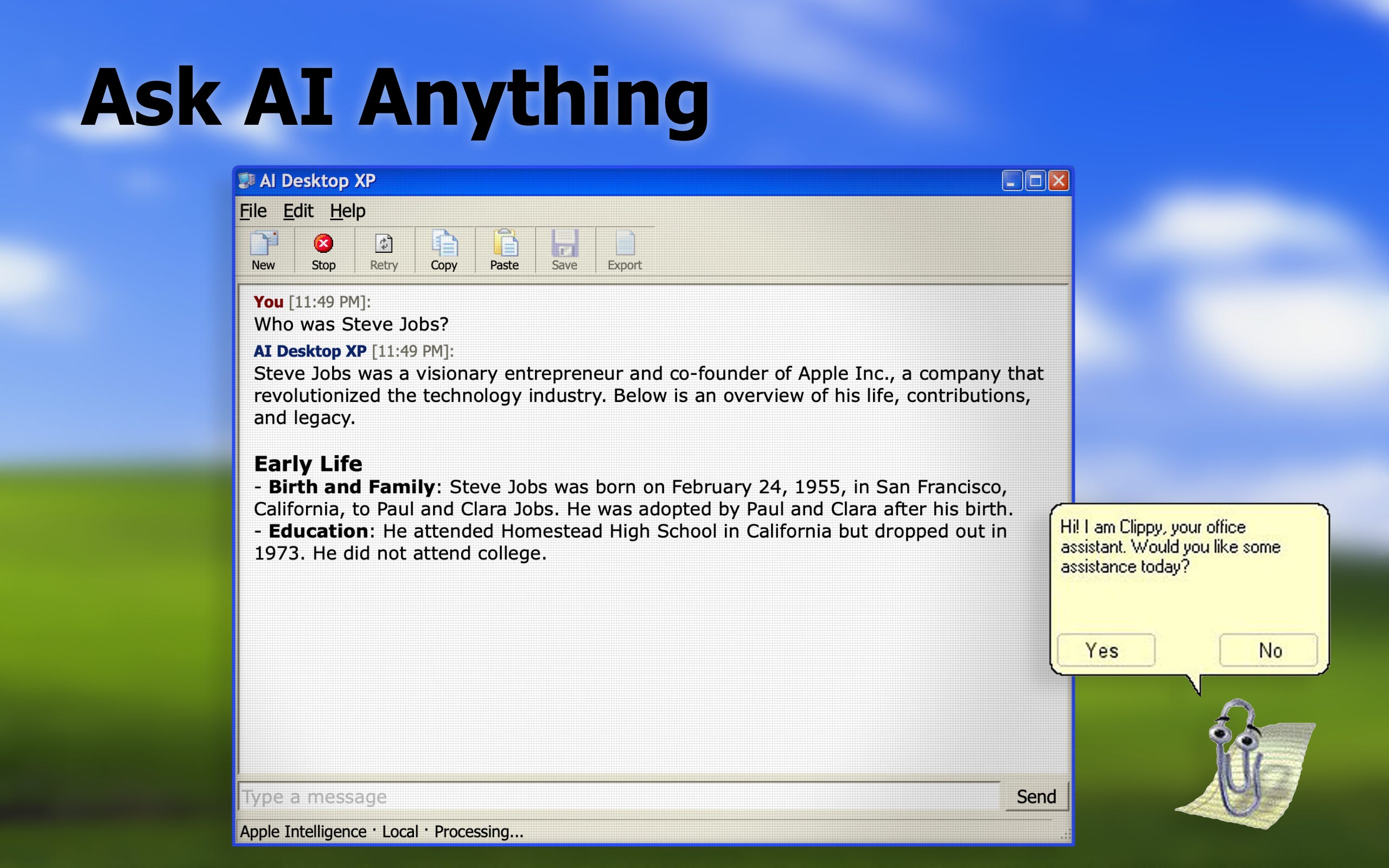 AI Desktop XP
Here’s a local AI app which runs those open-source AI modelsAI Desktop XP on your iPhone or MacBook for free! It even looks like Windows XP. 😂
We’ve seen this movie
It’s the asteroid-mining problem. Fly a rocket to an asteroid made of gold, bring it home, and you don’t become the richest person alive. You crash the price of gold, and your rocket never pays for itself.
None of this is new. History is full of people who made something precious abundant and then wondered where the money went.
- Spanish silver. Spain shipped mountains of silver out of the Americas. Silver lost its value, prices across Europe soared for a century, and the crown that owned the mines went bankrupt again and again.
- De Beers. For about a century, De Beers kept diamonds expensive by controlling supply, which is exactly the strategy the AI labs would need. Then lab-grown diamonds showed up, and the scarcity story collapsed. Swap “lab-grown diamonds” for “open-weight models” and you have the AI pricing problem in one sentence.
So who’s going to pay?
This is the question I want every AI executive to answer, slowly, without the word “agentic.”
Your plan was to collect the salaries of software engineers from the companies that employed them. Those companies made their money by charging tolls on software that was hard to build. You made software easy to build. You gave that power to everyone for less than the price of a pizza a week. And now the toll booths are on fire, the engineers are getting laid off, and the money that was supposed to flow to you is evaporating into a thousand free clones.
So who, exactly, is the customer? The hobbyist paying $20 while costing you far more? The toll booths you’re busy burning down? The enterprises whose own software margins you just torched?
The AI industry didn’t just build a tool to replace engineers. It built a machine that turns valuable things into free things, and then pointed it at the businesses it needed to stay alive. That isn’t a revolution. It’s a very expensive way of shooting yourself in the foot and sending the bill to your investors.
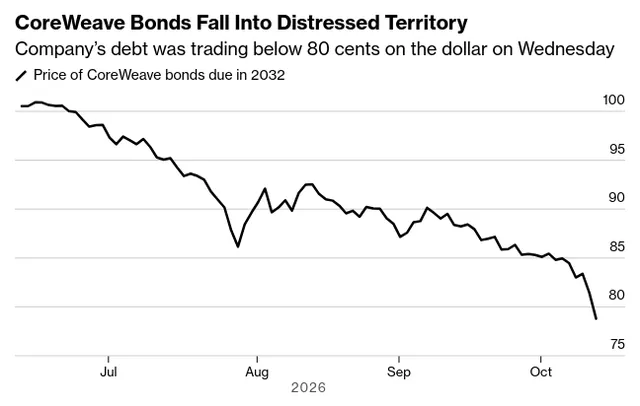
OpenAI and Anthropic are stuck because they don't sell pickaxes (Nvidia), they don't have a massive separate business to protect (Meta), and they aren't vertically integrating. They are just mining the asteroid, dumping the silver onto the market for $20, and watching the price of their own product plummet to zero.