OpenAI 发布 BioBasicsBench 评测智能体解读真实湿实验数据
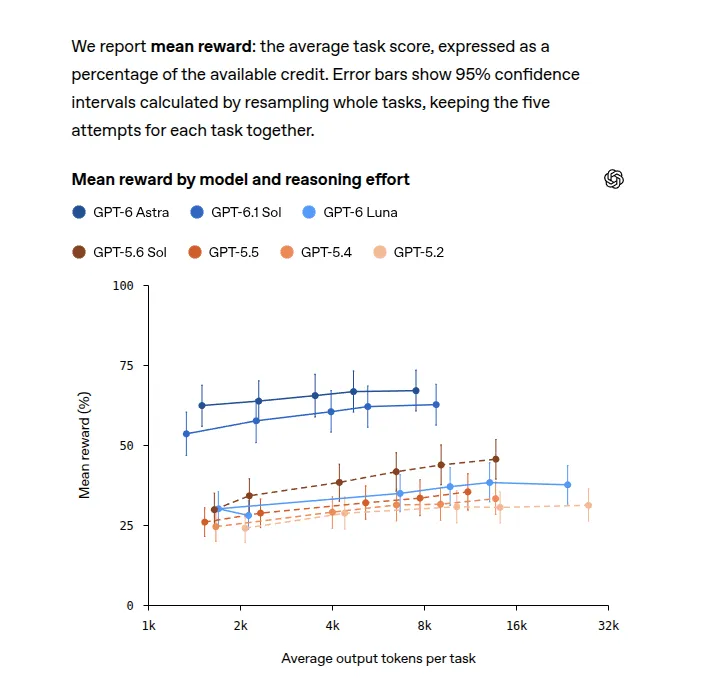
OpenAI 与酶设计公司 Ligo 合作推出 BioBasicsBench,用 100 个来自真实实验的凝胶图、菌落平板、显微视频和测序数据任务,考察 AI 智能体能否正确解读原始实验数据、发现错误并识别证据不足。GPT-6 Astra 在该基准上获得 66.7% 的可用分数,高于 GPT-5.6 Sol 的 43.8%,且在高算力设置下输出 token 仅为旧模型约一半,说明提升并非来自更长推理。
报道正文
Rohan Paul (@rohanpaul_ai) · 2026-11-06 19
OpenAI built BioBasicsBench, a test that gives AI agents the messy raw data of real lab work, like gel photos and microscope videos, and grades whether they read it correctly.
GPT-6 Astra earned 66.7% of available credit on a new wet-lab benchmark, versus 43.8% for GPT-5.6 Sol.
BioBasicsBench, built with enzyme-design company Ligo, draws 100 tasks from scientists’ raw gels, colony plates, microscopy, sequencing reads and bench videos.
Its rubrics give partial credit, including for spotting errors or saying evidence can’t support conclusions.
At the xhigh setting, Astra used 4,704 output tokens per task, about half the older model’s, so longer reasoning didn’t drive the gain.
↳ 引用 @OpenAI (OpenAI): A new way to measure how AI agents handle the routine analyses of wet-lab science—BioBasicsBench.
Developed with Ligo, a biotech company focused on enzyme design, the benchmark draws on 100 tasks from real experiments to test whether agents can interpret raw lab data, identify errors, and recognize when the evidence doesn’t support a conclusion.
Accelerating biological research starts with getting the everyday work right. BioBasicsBench shows where models need to improve, and helps us track what those gains mean for scientific progress, biosafety, and biosecurity.