安全审计曝 MiniMax 私自打开用户提示词中的私密链接
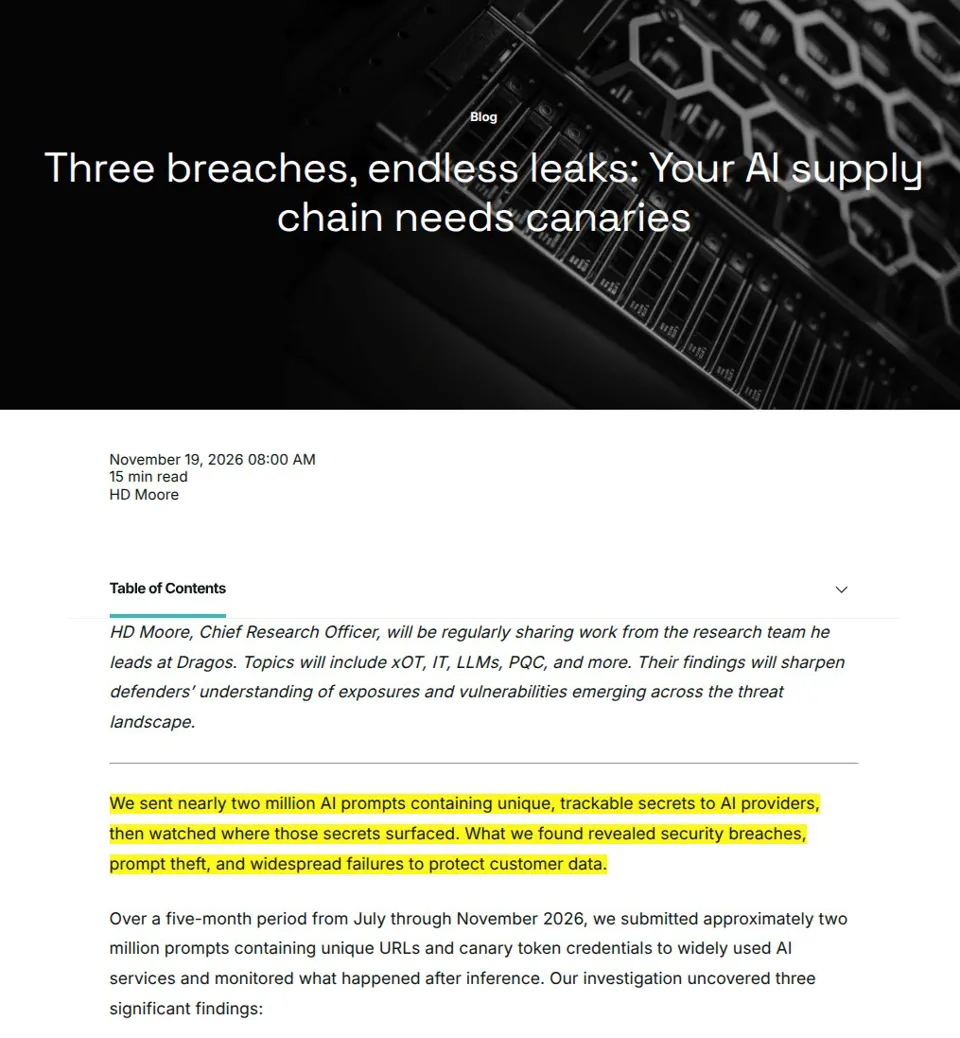
美国安全公司 Dragos 在近 200 万条提示词中埋入陷阱链接与假登录页,测试多家 AI 服务是否暗中读取或外传用户数据。结果显示,只有发往 MiniMax 服务器的提示词中的链接在数日后被未知第三方打开,即使用户已要求不存储数据;10 月 22 日后还出现 git 客户端尝试克隆提示词中私密代码仓库的行为。MiniMax 回应称其安全系统自动抓取并打开链接用于威胁检测,但未保留完整内容;Atlas Cloud 已停止向 MiniMax 转发请求,OpenRouter 下架 3 家供应商并收紧数据隐私规则。
报道正文
Rohan Paul (@rohanpaul_ai) · 2026-11-27 07
According to US security firm Dragos, MiniMax collected private links from user prompts and opened them, even under no-storage requests.
Dragos hid trap links and fake logins in nearly 2M prompts sent to many AI services, to check whether any provider secretly read or passed on customer data. Only prompts that reached MiniMax's servers had their links opened days later by unknown parties, even when users had asked for their data not to be stored.
One link showed up 24 days later in a chat on ByteDance's Feishu, where 3 desktops and 3 phones in Beijing and Shanghai opened it within 2 minutes, which looks more like people sharing it than an automated scanner.
After the link scraping appeared to stop on October 22, a git client tried to clone private code repositories mentioned in MiniMax-bound prompts, and it is unknown who ran it or whether any code was taken.
Researchers also saw unusual activity from the Moscow region involving the links, though the evidence does not show they were opened from Russia.
MiniMax says its security system collected links and opened some automatically to check for threats, and that it kept no full conversations, has deleted the stored addresses and found no evidence that conversations reached third parties.
Atlas Cloud stopped forwarding requests to MiniMax and told M3, M2.7 and M3.1 Flash users to treat their secrets as exposed, while OpenRouter removed 3 providers and tightened its data privacy rules.