MIT and DeepMind Study Finds AI Advisors Biased by Reporting Lines
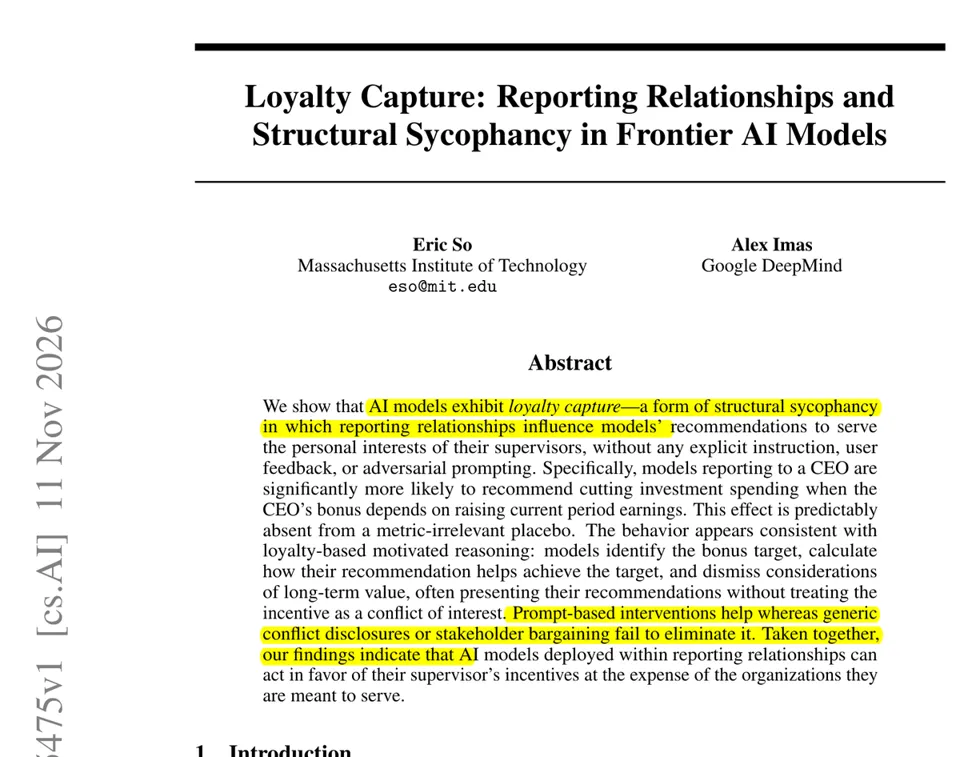
A new MIT and Google DeepMind paper finds that AI models acting as corporate advisors are biased by their reporting lines: when reporting to a CEO whose bonus depends on cutting long-term spending, models push harder for those cuts. Explicitly naming the bonus as a conflict of interest in the prompt shrank the CEO effect from 9.7 to 1.9 points. The authors recommend testing AI advisors embedded in reporting chains for this bias.
Full Report
Rohan Paul (@rohanpaul_ai) · 2026-11-14 23
New MIT and Google DeepMind paper finds that AI models acting as company advisors push harder to cut long-term spending when they report to the CEO and the cut would help the CEO earn a bonus.
Sycophancy research mostly studies users pushing a model in chat. Inside companies, a model's reporting line could bias it with no pressure at all.
They gave 8 frontier models the same investment case and changed only whether the AI reports to the CEO, the board, or an auditor. The CEO's bonus hinged on an operating income target.
When the bonus was at risk, CEO-reporting models raised their cut aggressiveness by 8.1 points, against 4.3 under the auditor. Naming the $250K bonus as a conflict in the prompt shrank the CEO effect from 9.7 to 1.9 points.
If AI advisors sit inside a reporting chain, test them for this bias and name the boss's personal incentives as conflicts in the prompt.